 look news india

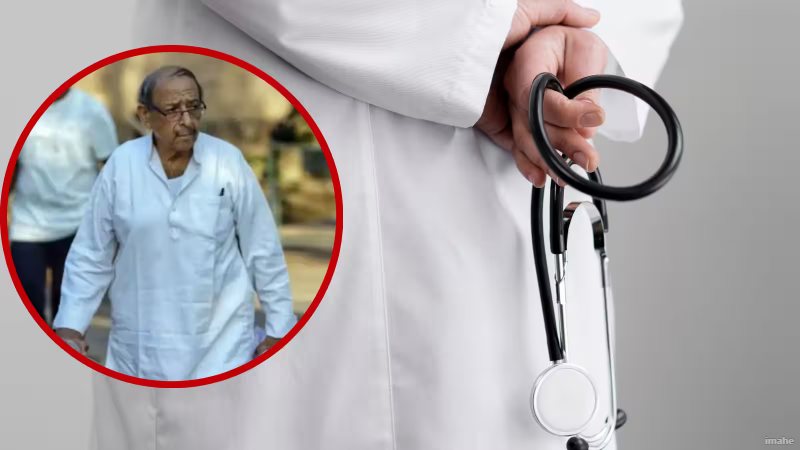
There is no age to fulfill dreams, but when it comes to the laws and administrative policies of the country, constitutional rules are supreme. One such unique and interesting case has come to light from Lucknow, Uttar Pradesh, where 71-year-old elderly candidate Ashok Bahar had raised the demand of giving 1 percent reservation to senior citizens for admission in MBBS after passing the National Eligibility cum Entrance Test (NEET-UG). However, the Lucknow bench of Allahabad High Court, while giving its verdict on this petition, has completely rejected it. After this strict stance of the court, this 71 year old NEET candidate has got a big blow, who was determined to fulfill his decades old dream of becoming a doctor even at this stage of his advancing age.
The division bench of Justice Rajan Roy and Justice Manjeev Shukla of Allahabad High Court, while disposing of the special appeal of petitioner Ashok Bahar, said in very clear words that there is no legal provision for reservation in medical seats for senior citizens. The court remarked that taking any new rule or policy decision related to reservation is the job of the competent legislature or the concerned government and not of any court. The judges made it clear that the demand for reservation for eligible senior citizens for admission to MBBS and other medical courses is not based on any legally enforceable right. Along with this, the High Court declared the earlier decision given by the Single Judge as absolutely right and justified in which this petition was rejected.
The life of 71-year-old Ashok Bahar, resident of Lucknow, is a unique example of struggle and dedication. He holds BSc degrees in Botany, Zoology and Chemistry and also has advanced qualifications in Law, Computer Applications and Management (MBA). He has worked at a high position in the government undertaking IDPL and is currently involved in advocacy. Ashok Bahar tells that his mother Savitri Devi’s dream was that he should become a doctor like his father. There are about 20 doctors in his family, including his wife (who herself is an experienced gynecologist), many of whom are serving abroad. Despite this, his inability to become a doctor always hurt him, after which he took the exam at the age of 71 when the Supreme Court removed the maximum age limit in NEET.
During the hearing in the court, Ashok Bahar’s lawyer Pankaj Dhir Singh Rana argued that when the Supreme Court has completely abolished the restriction of maximum age limit for NEET-UG examination, it directly means that senior citizens are also entitled to get medical education. He argued that just as the disabled, ex-servicemen, sportspersons and freedom fighters are given special quota or relaxation in medical admissions, senior citizens should also get the benefit of 1% reservation. In response to this, the lawyer of the National Testing Agency (NTA), while presenting his side in the court, said that NTA is only an examination conducting body and it works under the existing government laws related to MBBS admission. Since there is no provision for quota for the elderly in the existing rules, the court cannot interfere in it without government policy.
This historic petition of Ashok Bahar may have been rejected by the court, but it has definitely sparked a new national debate regarding age limit, opportunities and participation of senior citizens in the country’s medical education system. However, under the current rules, they can get a seat only on the basis of MBBS general category cut-off and merit and not under any special quota. After this decision of the High Court, it will now be interesting to see whether the petitioners approach the Supreme Court on this policy issue or whether the government prepares a new policy in higher education for senior citizens in the future. At present, even at the age of 71, Ashok Bahar’s hunger for studies and passion to become a doctor remains a great inspiration for the youth of the entire country.