 look news india

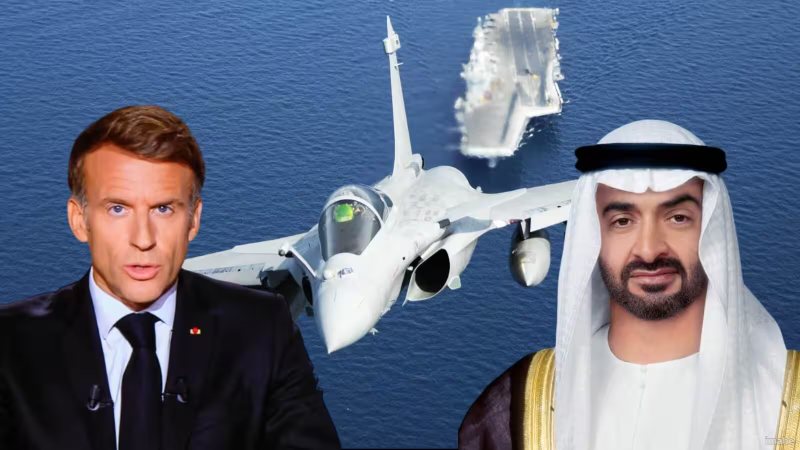
There was a sensation in the global defense market and fighter jet industry when a big and unexpected news came out regarding France’s state-of-the-art Rafale F-5 Super Fighter Jet project. France’s huge defense deal worth about $ 3.9 billion (about Rs 32,000 crore) with the United Arab Emirates (UAE) now seems to be falling apart due to huge disputes. This is being considered a huge strategic and financial blow for the French company Dassault Aviation, which manufactures Rafale, as the UAE has long been a major and reliable international buyer of Rafale jets.
The sudden deep differences that have emerged between the two countries have cast a dark cloud of uncertainty over this ambitious 5th Generation Stealth Super Jet project. After this deal has fallen into disrepair, now global defense analysts are closely assessing what was the real reason for the sudden derailment of such a big deal between two friendly countries and what effect it will have on the strategic balance of power in the Middle East.
There is not only one reason behind the rift in this $3.9 billion mega deal between France and UAE, but behind it are technical sovereignty, data sharing and geopolitical security concerns. According to reports, the main and major reason for the dispute is the access to the next generation state-of-the-art ‘Loyal Wingman’ stealth drone technology, avionics and its advanced codes used in the Rafale F-5 jet. The UAE wanted to participate in this project not just as a customer, but as a co-developer and technology partner.
The UAE demanded that it be given full access to the fighter jet’s critical software, radar systems and artificial intelligence-based weapon control systems and the freedom to assemble them locally. But the French Defense Ministry and Dassault Aviation were in no mood to share their intellectual property and core stealth technology with any outside country. The negotiations between the two parties on the terms of technology transfer and ownership rights got stuck and gradually the dispute escalated to such an extent that the deal reached the verge of collapse.
Not only the mutual differences between France and UAE are responsible for the breakdown of this high-profile defense deal, but the fierce trade and technology war going on behind the scenes between America and China has also had a deep impact. The UAE has been extensively using 5G network infrastructure from Chinese telecom giant Huawei and Chinese surveillance technologies in recent years. French and Western intelligence agencies had serious apprehensions that if the technology and data links of ultra-sensitive and state-of-the-art super jets like the Rafale F-5 went to the UAE, then China could steal or intercept these confidential technologies through its intelligence network.
France was under intense pressure to keep data from its most advanced fighter jets away from any networks that were linked to Chinese technologies. When France tried to impose stricter restrictions and conditions citing security, the UAE considered it an interference in its sovereignty and made up its mind to withdraw from the deal.
The collapse of this huge deal worth $3.9 billion is a huge blow to France’s aerospace and defense sector. The Rafale F-5 Standard is being considered as the most lethal fighter jet of the future, which is being specially designed to carry missiles and hypersonic weapons capable of carrying out nuclear attacks. The initial research and development (R&D) of this project is costing billions of dollars, for which France was largely dependent on funding from foreign partners.
After UAE withdrawing from this project or putting the deal on hold, France will now have to bear the heavy financial burden of this entire project on its own or will have to look towards another big buyer country like India. This development is also expected to have a negative impact on Dassault Aviation’s shares and the company’s future export order book.
After this impasse between UAE and France, the entire defense procurement strategy of the Middle East may take a new turn. After the hurdle in the Rafale F-5 deal, it is now believed that the UAE may consider other options to modernize its fighter aircraft fleet. On one hand, the UAE can exert fresh diplomatic pressure to acquire F-35 stealth fighter jets from the US, on the other hand, it can also turn its attention towards the ‘Global Combat Air Program’ (GCAP) partnered by Britain, Italy and Japan or South Korea’s KF-21 project.
On the other hand, this entire incident has given a clear message to defense experts around the world that in the era of modern war technology, it is no longer enough to just sell planes, but only transfer of technology and data security will decide the direction of big defense deals in the future.