 look news india

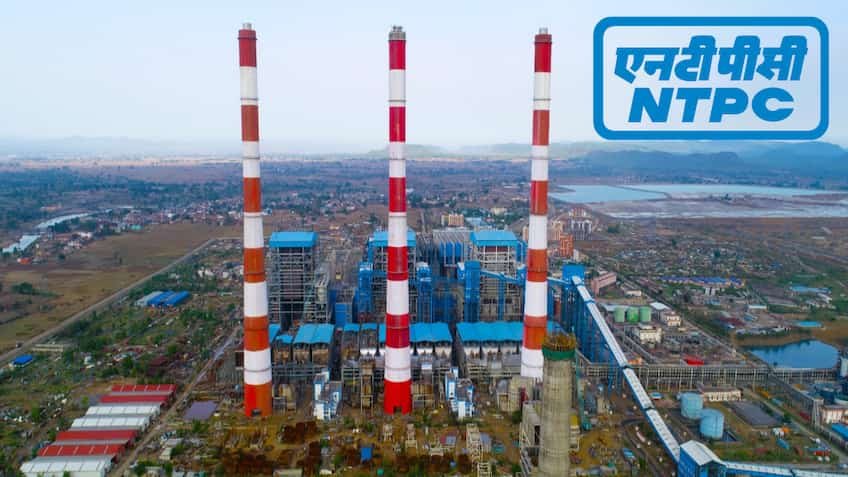
NTPC Limited, the country’s largest integrated power producer and a Maharatna central public sector company, has announced an unprecedented expansion plan to strengthen India’s future energy security. The company’s Chairman and Managing Director (CMD) Gurdeep Singh has clarified that NTPC is planning to make a huge capital expenditure (Capex) of about ₹ 17 lakh crore within the next decade (10 years). The focus of this ambitious investment will not be limited to just conventional coal-based power, but the company is going to increase its presence manifold in nuclear power (nuclear power), large-scale renewable energy (solar and wind power), advanced energy storage systems and future fuels like green hydrogen and ammonia. This investment will prove to be a milestone in the aim of making India a ‘Developed India’ by 2047 and ensuring 24×7 uninterrupted power supply.
The most revolutionary aspect of this mega investment plan is NTPC’s aggressive expansion into the nuclear power sector. The company has set a long-term target of developing a total of 30 gigawatt (GW) nuclear power capacity by the year 2047. The scheme will contribute about one-third to the Government of India’s national pledge to achieve 100 GW nuclear power capacity by 2047. As an interim phase, the company is working towards connecting about 6 GW of nuclear power to the grid by FY 2036-37. NTPC, through its joint venture company ‘Anushakti Vidyut Nigam Limited’ (ASHVINI) with Nuclear Power Corporation of India Limited (NPCIL), is moving forward in this sector by combining private and public technology. The company has identified suitable locations for setting up new nuclear plants in three major states of the country including Basai in Madhya Pradesh and Banka in Bihar and has sent the proposal to the Department of Atomic Energy (DAE) and Atomic Energy Commission (AEC) for their in-principle approval.
According to NTPC management, conventional thermal power (coal-based power), storage-supported renewable energy and nuclear power will act as a triangular defense shield (Three Legs of Energy Security) to keep the country’s energy system stable. At present the total installed capacity of NTPC Group is about 91 GW, while about 37 GW capacity is under construction, which includes about 17 GW coal based plants. The company aims to increase its total portfolio capacity to 150 GW by FY 2031-32 and to a whopping 250 GW by FY 2036-37. In this, the share of renewable energy will increase the fastest, which is planned to increase from about 12 GW at present to 60 GW by 2032 and 136 GW by 2037. Along with this, coal based capacity will also be increased from the current 67 GW to about 91 GW to handle the baseload demand.
NTPC is focusing on Energy Storage System (ESS) to meet the uncertainty of solar and wind energy and to meet the power demand during peak hours. The company believes that it is necessary to develop alternative technologies domestically instead of relying solely on lithium-ion battery imports. Under this, NTPC is working on pumped-storage hydro projects as well as carbon dioxide (CO2) based batteries and vanadium-flow batteries. The company is set to commission its first carbon dioxide battery project in the first fortnight of November. If this technology is successful, it will be deployed on a large scale by linking it with large solar parks across the country, significantly reducing India’s dependence on foreign raw materials and cell imports.
NTPC has moved beyond a conventional energy company and has entered the global supply chain of future clean fuels (Green Fuels). A green hydrogen hub is being developed at a plant in Simhadri, Andhra Pradesh, from where green methanol and green ammonia will be produced. Construction of a 20 km long dedicated pipeline to connect this hub with sea supplies and foreign buyers is underway. NTPC is in preliminary commercial talks with potential buyers from Japan, South Korea and Germany for export of this green ammonia and methanol. The company aims to transform green hydrogen beyond just a pilot project into a commercially and economically viable fuel on a large scale.
CMD Gurdeep Singh underlined that there has been an unexpected surge in electricity consumption due to economic expansion in the country, increase in manufacturing activities, extreme heat and above all Artificial Intelligence (AI) and establishment of new data centers. In such times, coordination of nuclear and thermal power becomes essential to provide clean and stable baseload power to the grid 24 hours a day. This record investment of ₹17 lakh crore by NTPC over the next decade will not only create millions of new jobs in domestic manufacturing, engineering and civil infrastructure, but will also position India as an energy-self-reliant superpower, taking it towards net-zero carbon emissions.