look news india

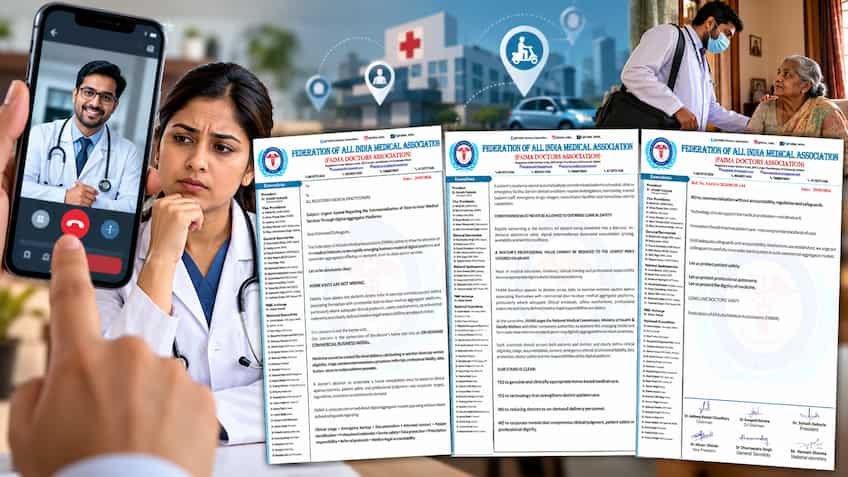
Federation of All India Medical Association (FAIMA), the country’s leading organization of doctors, has lodged a strong protest against the on-demand doctor service being launched through digital aggregator apps. The organization has written a letter to all the doctors across the country advising them to exercise extreme caution in joining such commercial platforms.
FAMA clearly says that the medical profession cannot be run like a food delivery or cab service, where a doctor can be sent to the patient’s home with just one click. This is not only posing a serious threat to the clinical safety of patients, but is also affecting the dignity of doctors. The organization has demanded the National Medical Commission (NMC) and the Union Health Ministry to examine this model and prepare national guidelines by October 2026.
Patient’s home is not an alternative to hospital
The doctors’ organization has made it clear in its official letter that home visit is not wrong. Home visiting the elderly, bedridden patients, disabled people and patients in need of palliative care has always been a part of sensitive medical practice. But there is concern that some private companies are converting this service into a commercial on-demand business model.
According to FAMA, a patient’s home can never be a substitute for a hospital, clinic or ICU. In many medical conditions, the patient requires immediate ECG, blood tests, continuous monitoring, oxygen support, life-saving medicines and emergency referral. Due to lack of these essential facilities at home, the life of a serious patient can be at stake. The organization has bluntly said that clinical safety cannot be compromised merely in the name of comfort or convenience.
Opposition to making doctors delivery staff
FAMA has also expressed strong objection to the fact that digital companies are presenting doctors as cheap on-demand delivery staff. These apps themselves decide the consultation fees of doctors, their availability and working conditions. The organization says that after years of rigorous education, training and experience, the professional value of doctors should not be limited to the cheapest price on an app.
There are many flaws in it
The organization has highlighted several serious shortcomings in the aggregator model:
Lack of clinical triage: No mobile app can decide whether a patient needs normal medicine or should be immediately admitted to emergency.
Medico-Legal Accountability: If the patient’s health deteriorates during treatment at home, it is not clear who will be responsible for the wrong prescription and the legal dispute.
Doctors’ safety: These platforms do not have any concrete arrangement for the security of doctors, especially women doctors, going to an unknown house.
Lack of data protection: There is no guarantee that patients’ personal medical records and sensitive disease data will remain safe on the servers of private companies.
Traditional Home Care vs. the Aggregator Model of 2026
In the traditional system, the family doctor knew the medical history of the patient’s entire family and visited homes only on the basis of clinical need. In case of any serious condition, he would immediately take the decision to send the patient to a big hospital. But in this era of 2026, digital aggregators are sending doctors under the pressure of corporate targets, incentives and algorithms. This difference directly hurts the quality of treatment.