 look news india

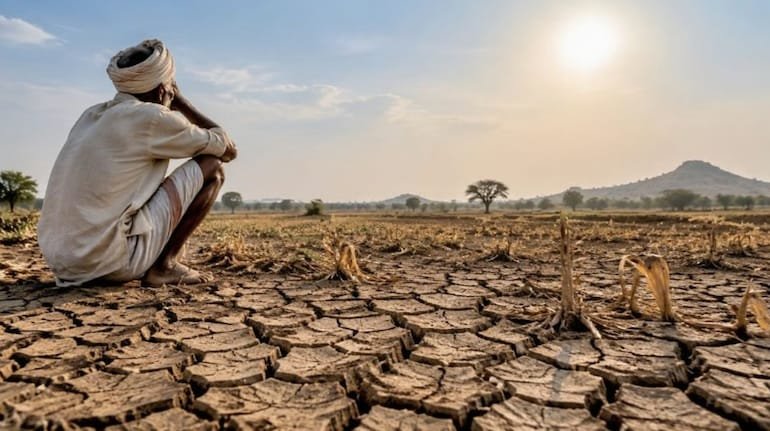
The serious problem of drought has once again taken a severe form in the rural and agricultural areas of Maharashtra. Severe rainfall deficiency, falling groundwater levels and drying up of reservoirs in more than 30 districts of the state, including Marathwada, Vidarbha, North Maharashtra and many parts of Western Maharashtra, have increased the troubles of farmers and common citizens. The crops standing in the fields are getting destroyed due to lack of water and the supply of drinking water in hundreds of villages and hamlets is completely dependent on water tankers. In such sensitive times, it is very important to know how any district, tehsil or block is officially declared drought-hit, what are the technical and scientific standards and what government relief is given to the affected farmers after the declaration.
The system of declaring any state or district as drought affected in India does not work on an arbitrary basis, but for this, strict scientific guidelines of ‘Manual for Drought Management 2016’ issued by the Union Ministry of Agriculture and Farmers Welfare are applied. Before this manual, the rules for declaring drought were quite subjective, but under the new rules of 2016, the entire process was linked to data, satellite remote sensing and ground surveys. Under this system, drought is divided into two main categories: Moderate Drought and Severe Drought. It is mandatory to go through prescribed steps and trigger matrix before any official announcement in any sector.
The process of declaring drought is mainly divided into two major phases, which in technical language are called Trigger-1 and Trigger-2.
The first phase i.e. ‘Trigger-1’ is completely based on rainfall data. If an area receives 60 percent or more rainfall deficit than normal, or no rainfall at all for three to four consecutive weeks (Dry Spell), the first trigger is considered active.
After activation of the first trigger, ‘Trigger-2’ carries out a detailed examination of four key agricultural and environmental indicators:
-
Agricultural sowing area: Has 50 percent or more of the sowing at the scheduled time been affected?
-
Satellite Based Vegetation Index (NDVI/NDWI): From remote sensing satellites it is seen what is the actual condition of moisture and greenery in the fields.
-
Soil Moisture Index: The moisture required for plant growth is left or lost in different layers of the soil.
-
Hydrological Indicators: According to the Central Ground Water Board, the water level of reservoirs, dams, rivers and underground water level has fallen below normal.
If at least three of these four scales indicate a serious condition, the case moves to the next stage i.e. ground verification.
After paper data and satellite images, the third and most important step is called ‘Ground Truthing’. Under this, joint teams of officials from the State Revenue Department, Agriculture Department and District Administration directly visit the farms in the affected villages.
This ground investigation in Maharashtra is also traditionally understood as a ‘neglect’ or peak cutting experiment. Officials conduct surprise inspections of at least 10 percent of the villages in each selected block. Here, through ‘crop cutting’, it is measured by how much crop production has decreased compared to normal years. If a direct loss of more than 33 per cent or 50 per cent of production is recorded, the District Collector prepares his detailed report and sends it to the State Disaster Management Authority and the Cabinet Sub-Committee of the State Government.
After reviewing the scientific reports received from the district level, the Council of Ministers of the state officially issues a Gazette Notification declaring the concerned districts, tehsils or revenue divisions as drought affected. Immediately after this the state government submits a formal memorandum to the central government.
On the basis of the memorandum an Inter-Ministerial Central Team (IMCT) is sent by the Central Government to visit the state. This central team directly inspects the affected taluks and submits its final report to the Union Home Ministry and the high level committee. After this, financial assistance is sanctioned in the form of relief packages from the National Disaster Response Fund (NDRF) and State Disaster Response Fund (SDRF).
When a district or block is declared drought-hit, the farmers and local people there get a number of direct administrative and financial concessions:
-
Moratorium on crop loan and recovery: Recovery of short-term agricultural loans taken by farmers is stopped immediately and they are restructured into medium-term loans.
-
Exemption in revenue and electricity bills: Electricity bills of agricultural pumps are subsidized and land revenue is waived off.
-
Exam fee waiver for students: The examination fees of schools and colleges of the children of farmers in the affected areas are borne by the state government.
-
Water supply and cattle shelters through tankers: In villages facing drinking water crisis, water tankers are installed at government expense and fodder depots and cattle camps are started to save the animals.
-
Increase in MNREGA works: To prevent migration in rural areas, under MGNREGA, immediate work is provided to the needy by increasing the limit of employment days.