 look news india

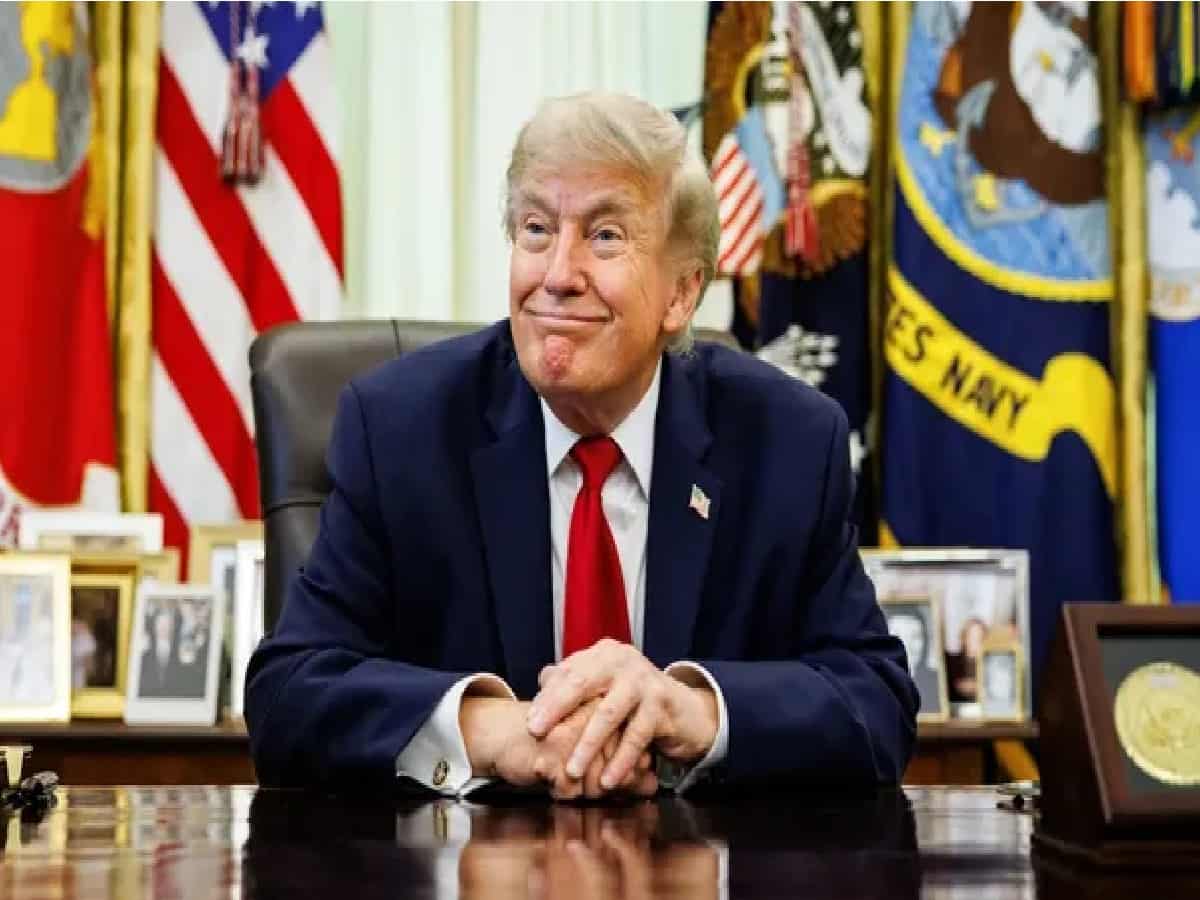
The relationship between United States President Donald Trump and the mainstream media there has once again reached an extremely explosive point. This equation between the American President and the press has always been like a complex ‘love-hate relationship’, where on one hand Trump likes to remain in the media headlines round the clock, while on the other hand, as soon as any media house raises sharp questions on his administrative policies or decisions, his anger comes to the fore in unprecedented form. Last Saturday, the US President created a global stir by sharing a highly offensive post on his personal social media platform ‘Truth Social’. Trump issued a formal order imposing a complete ban on America’s three largest and most influential news organizations—CNN, Politico and MS NOW—from entering the White House.
President Trump, in his public statement and later in a brief conversation with journalists, openly laid out the main reasons for this unprecedented ban. Trump alleged that organizations like CNN, Politico and MS NOW are systematically spreading ‘fake news’ against him and his administration instead of independent journalism. He claimed that these channels and digital platforms deliberately ignore his achievements and continuously create a one-sided, negative and malicious narrative. Trump clearly said that this step is not the result of a single day’s anger, but this administrative action has been taken only after a thorough review of continuous complaints received over a long period of time, biased reporting and habits of distorting facts.
The immediate impact of this White House order was seen at the ground level, where the hard passes (press credentials) of senior journalists doing regular coverage at the White House Press Complex were canceled or confiscated with immediate effect. These include Politico’s well-known political correspondent Cheyenne Haslett and CNN’s chief White House reporter Betsy Klein, who were barred from entering the complex. Not only this, President Trump has also indicated in a warning tone that this blacklist will not be limited to only these three institutions, but if other media houses also do not improve their attitude and continue with the so-called biased reporting, then in the coming days some other big news networks will also be included in this ban list.
Legal and constitutional experts clearly believe that this aggressive step of Trump will be very difficult to survive in the court. The history of American courts is witness to the fact that even during its previous tenure in 2018, the Trump administration had similarly canceled the press pass of CNN’s Chief White House Correspondent Jim Acosta. At that time, CNN had filed a lawsuit in federal court citing violation of the First (First Amendment) and Fifth Amendment (Due Process) of the US Constitution. In that historic case, the federal judge, rejecting the decision of the Trump administration, had given a clear ruling that the press credentials of any journalist cannot be arbitrarily withdrawn and after the direct intervention of the court, Jim Acosta’s pass had to be immediately restored.
White House Correspondents Association (WHCA) President Jackie Heinrich has strongly condemned this move of the President, calling it a direct attack on the basic principles of democracy. Heinrich clarified that the First Amendment of the US Constitution irrevocably protects the freedom of the press. The freedom of the press enshrined in the Constitution is not dependent on whether the President of the country likes the coverage of a particular channel or newspaper or not. The association bluntly said that in a democratic system, it is the fundamental right of the media to hold the executive accountable and such retaliatory action against journalists who provide unbiased information to the public cannot be tolerated.
According to official sources, Trump and his legal advisors are trying to try a new technical trick this time to avoid court rebuke. They plan to make this restriction appear to be limited specifically to the ‘Oval Office’ (the President’s official private office room) rather than the entire White House grounds, so as to bring it within the ambit of security and personal privilege of the President. However, legal experts and American constitutional lawyers argue that the courts have already made it clear that the President cannot bar select journalists from entering on the basis of his wish or personal grudge, because the presence of a press pool in matters of public importance is an established constitutional convention.
Donald Trump is one of the few presidents in modern history who likes to be in the media spotlight the most. He writes posts on social media dozens of times a day, talks to reporters for hours during long-haul flights on Air Force One and is constantly vocal in front of the cameras. But as soon as a journalist raises uncomfortable economic, diplomatic or legal questions, the tension reaches its peak. A vivid example of this was seen in November last year, when Bloomberg’s senior correspondent Katherine Lucy asked him a sharp and sensitive question, on which Trump used objectionable language during the press conference itself, which was later aggressively defended by the White House Press Secretary.
This controversy has sparked a serious debate on freedom of expression even at the international level. Global media organizations have described the imposition of such a direct ban on major news outlets by the top office of the world’s oldest democracy as indicative of dictatorial tendencies. The legal departments of CNN, Politico and MS Now are currently holding emergency meetings with their top lawyers, and it is quite likely that within the coming 48 to 72 hours an emergency petition (emergency injunction) will be filed in the federal district court of Washington DC against this administrative ban, thereby once again this battle of White House vs. Media will be fought in the arena of the US judiciary.