 look news india

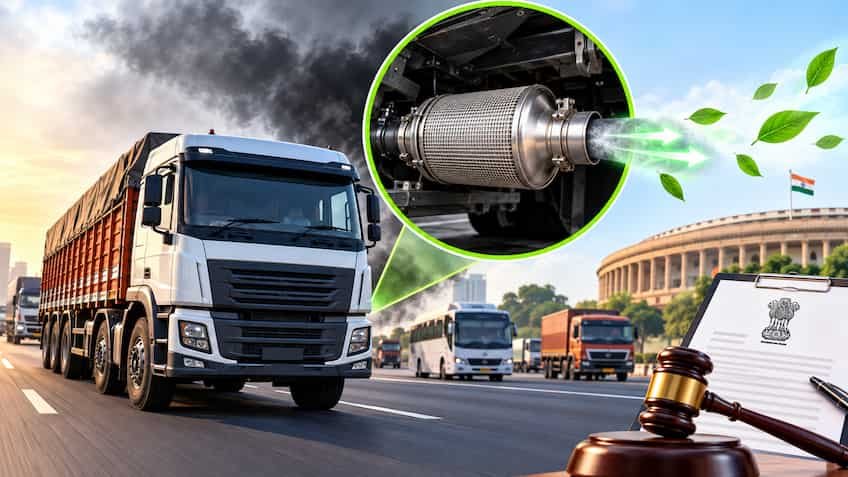
To curb the increasing air pollution in major cities and highways of the country, the Central Government has taken strict action against heavy diesel vehicles. The Union Ministry of Road Transport and Highways (MoRTH) has issued a new draft rule, under which it has been proposed to make it mandatory to install Retrofit Emission Control Device (RECD) in heavy diesel vehicles with gross vehicle weight more than 3,500 kg (3.5 tonnes). This step has been taken with the aim of preventing the release of toxic fumes, especially particulate matter (PM 2.5 and PM 10) from old and heavy commercial vehicles directly at the silencer and exhaust levels.
After the implementation of the proposed rules, owners of trucks, buses and heavy goods vehicles will have to install this pollution control kit in their vehicles. The government believes that only by improving the standards of new vehicles, pollution will not be completely stopped, but it is also very important to reduce the emissions of millions of heavy diesel vehicles already running on the roads.
According to the notification issued by the Road Transport Ministry, this new rule will mainly apply to M and N category motor vehicles running on Compression Ignition i.e. diesel engine. According to automotive standards, the M category includes passenger-carrying buses and heavy vans, while the N category includes medium and heavy commercial trucks, trailers and dumpers used for freight transportation.
According to the proposal, any diesel vehicle whose gross vehicle weight is more than 3,500 kg will be required to retrofit the RECD device as per the prescribed standards. Earlier RECD had been made mandatory for diesel generators (DG Sets) in the National Capital Region (NCR) and other industrial areas, but now it is being planned to be made applicable directly to the entire category of heavy commercial vehicles.
The government has drawn up amendments to the Central Motor Vehicles Rules, 1989 (CMVR) to give legal status to this system. Under the draft, a new rule ‘115-DA’ will be added to the rules. Under this rule, there will be a statutory requirement to install emission control equipment in heavy diesel vehicles and without this, there may be hindrance in renewing the vehicle’s fitness certificate or Pollution Under Control (PUC).
The draft clarifies that RECD devices installed in vehicles must be certified as per Indian Automotive Standard AIS-228. Only devices approved by recognized agencies like Automotive Research Association of India (ARAI) or International Center for Automotive Technology (ICAT) will be valid in vehicles. Additionally, future technical changes and amendments to the AIS-228 standard will also automatically apply to these retrofit devices.
A retrofit emission control device (RECD) is a modern after-treatment mechanical and chemical filter system that is installed in the exhaust pipe (silencer) of a vehicle. When smoke comes out from the engine after burning diesel, this device purifies that poisonous smoke before it spreads into the atmosphere.
In this technology, filters like Diesel Oxidation Catalyst (DOC) and Diesel Particulate Filter (DPF) are installed. This device absorbs 70 to 90 percent of the harmful particulate matter (soot and soot) present in diesel smoke. Apart from this, it removes poisonous gases like carbon monoxide (CO) and hydrocarbon (HC) by converting them into less harmful elements. This can bring emissions closer to BS-6 standards without any significant impact on the engine’s basic structure or fuel consumption.
Environmental experts have heaved a sigh of relief with the proposal of this rule, but concerns have also increased in the commercial transport sector. Transporters say that installing such certified equipment in heavy trucks and buses will incur additional financial costs per vehicle. Apart from this, the maintenance cost of old vehicles will also increase.
The Ministry has clarified that this is only a draft notification (proposal) at this time and it will be consulted with all stakeholders before finalizing it. The government has invited objections and suggestions from the general public, transport unions, vehicle manufacturers and experts within 30 days from the date of publication of the notification in the Gazette. The date for implementing the final rule across the country will be decided only after the completion of the 30-day period and review of the suggestions received.