 look news india

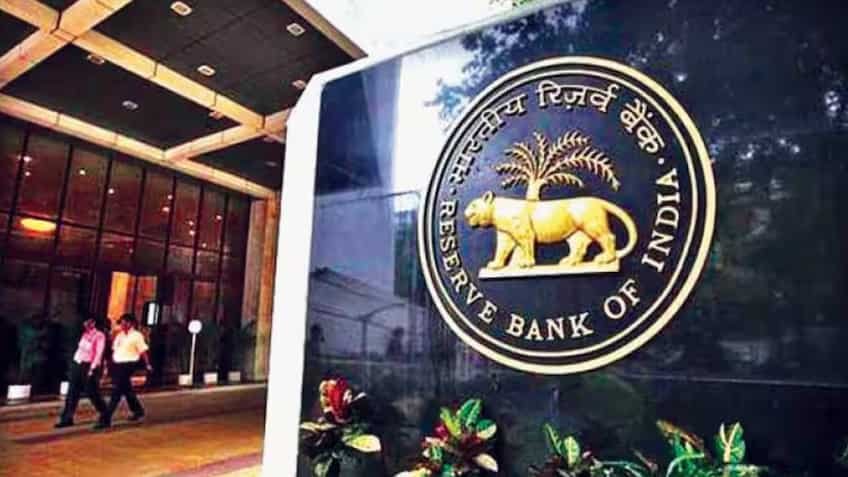
Amid the nationwide uproar following the National Payments Corporation of India (NPCI) circular imposing Merchant Discount Rate (MDR) on select merchant transactions above ₹2,000 from October 15, 2026, the Reserve Bank of India (RBI) has issued a very important and official clarification late in the night. The country’s banking regulator has made it clear through its official social media handle ‘X’ (formerly Twitter) and press note that this policy decision is an essential step taken towards strengthening the long-term sustainability and security of India’s digital payments ecosystem.
The Reserve Bank completely rejected all the rumors and misconceptions running on social media, in which it was being claimed that now common citizens will have to empty their pockets if they make payments through UPI. The central bank bluntly underlined that UPI will remain completely secure, accessible and 100 percent free for common consumers. At the same time, an equitable and transparent distribution of MDR from large merchant payments will open the way for new investments in digital infrastructure, server capacity and cyber security.
This statement of RBI has made it clear who is going to get the biggest institutional benefit from this new MDR system. Due to the ‘Zero MDR’ policy implemented from the year 2020, banks, National Payments Corporation of India and payment service providers (like Google Pay, PhonePe, Paytm and Razorpay) were working under huge financial pressure. The annual expenditure on server maintenance, downtime management and cyber fraud prevention of this huge network, which processes 15 to 16 billion transactions every month, had reached thousands of crores of rupees, to compensate for which the central government had to give a subsidy of about Rs 2,000 crore from the budget every year.
According to the central bank, the implementation of the MDR regime will directly benefit the following institutions:
-
Financial strength of banks: The customer’s bank (Issuing Bank) and the merchant’s bank (Acquiring Bank) will get a larger portion of the MDR, which will enable them to upgrade their main banking servers and UPI switches.
-
Fintech Apps and Payment Aggregators: Payment service providers will get fresh capital to expand innovation, artificial intelligence fraud detection and modern soundbox and POS networks.
-
Rural and Tier-3 Merchant Funds: A special fund (Dedicated Acceptance Development Fund) will be created from a part of the MDR raised, which will be used to connect small traders in rural and semi-urban areas with digital networks and provide them incentives.
RBI has made it clear that this fee will not be collected from the common buyer or customer under any circumstances. Its entire financial liability will be solely on large commercial merchants who accept large transactions worth more than ₹2,000. Under the new rules, from October 15, 2026, standard person-to-merchant (P2M) transactions above ₹2,000 will attract a standard MDR of 0.40 percent, capped at ₹300 per transaction.
Its direct calculation is as follows:
-
If a customer purchases goods worth ₹ 3,000 in a big electronics or clothing showroom and pays through UPI, then only ₹ 3,000 will be deducted from the customer’s account.
-
Only ₹12 MDR will be deducted by the merchant’s bank at the rate of 0.4% and the merchant’s account will be credited with ₹2,988.
-
If a customer buys a mobile or TV worth ₹50,000, the merchant will have to pay a fee of ₹200 @ 0.4%.
-
If a customer pays a large bill ranging from ₹75,000 to ₹1,00,000 or more, a maximum of ₹300 will be charged from the merchant despite the 0.4% rate being applicable.
By law, no shopkeeper or showroom owner can tell a customer that “0.4% extra will be charged on payment through UPI.” If a merchant does this, it will be considered a direct violation of RBI and consumer protection law.
In its statement, the Reserve Bank has assured complete security to the common citizens of the country and small businessmen in the unorganized sector. Citing data, the central bank said that about 95 to 96 percent of the total UPI merchant payments in India are worth less than ₹2,000. Under the amendment made in the Gazette Notification by the Finance Ministry, a complete legal ban has been imposed on charging any kind of direct or indirect charge on all digital deals up to ₹ 2,000.
Additionally, the levy will have no impact on the following categories:
-
Person-to-Person (P2P) Transfer: There will be 100% zero charges on sending money to friends, family, relatives or transferring funds from one account to another.
-
Grocery, fruit-vegetable and street vendors (P2PM): All those small traders whose monthly digital turnover is up to ₹1 lakh will remain completely out of the purview of MDR.
-
Daily essential services (Utilities): Only a flat ₹5 token charge has been fixed instead of 0.4% on payments above ₹2,000 on electricity, water, piped gas, railway tickets (IRCTC), government school-college fees, insurance premiums and petrol pumps.
-
Stock market and mutual funds: For capital market (Demat, Mutual Funds, Securities), a very minimum rate of 0.02% (maximum cap of ₹ 300) has been kept and SIP AutoPay will be completely free.
As per RBI guidelines, this MDR to be collected from large merchants will be distributed among various parties in the digital payment ecosystem in a fixed ratio. According to Reuters and banking sources, about 40 percent of the revenue will go to the bank where the customer has a savings account (the Issuing Bank), as it has the primary responsibility for customer authentication, server processing and SMS alerts. The remaining 60 percent amount will be divided equally between the merchant’s acquiring bank, payment aggregator (like Pine Labs, Paytm, Razorpay) and third-party payment apps (like Google Pay, PhonePe) depending on their role. NPCI will receive a fixed minimum fee for network switching and security clearance. This revenue distribution model will ensure that private fintech companies can build profitable and sustainable businesses without relying solely on the free model.
RBI in its analysis also showed that UPI will remain India’s most affordable and merchant-friendly digital payment instrument even after the new MDR framework is implemented. Even today, merchants have to pay a huge MDR ranging from 1.5% to 2.5% for accepting credit cards. At the same time, under RBI’s 2017 rules on debit cards, MDR of up to 0.90% (maximum ₹ 1,000 cap) is charged on large merchants with turnover of more than ₹ 20 lakh.
In comparison, UPI has a rate of only 0.40% and a maximum cap of ₹300. This means that for any merchant, taking a payment of ₹50,000 or ₹1 lakh through UPI will be about 70 to 80 percent cheaper than swiping a credit or debit card. This is the reason why instead of opposing it, even the business class is considering it as better than cards.
This late night statement of the Reserve Bank of India makes it clear that India’s digital payment model has now come out of its ‘infancy’ and has entered a ‘mature and self-reliant era’. No global scale technological system can be run for free for decades only on the basis of subsidies from the public treasury.
The masterplan by the RBI and the central government has been cleverly crafted: 100% free transaction protection for more than 95% of the public and small merchants, while a nominal 0.4% charge is levied on large corporate retailers and luxury stores, and the money will be invested in strengthening the security wall of Digital India. Common citizens now do not have the slightest need to be afraid of any WhatsApp rumor or misleading video; Your PhonePe, Google Pay and BHIM UPI will continue to work for free even after October 15, just like it is working today.