 look news india

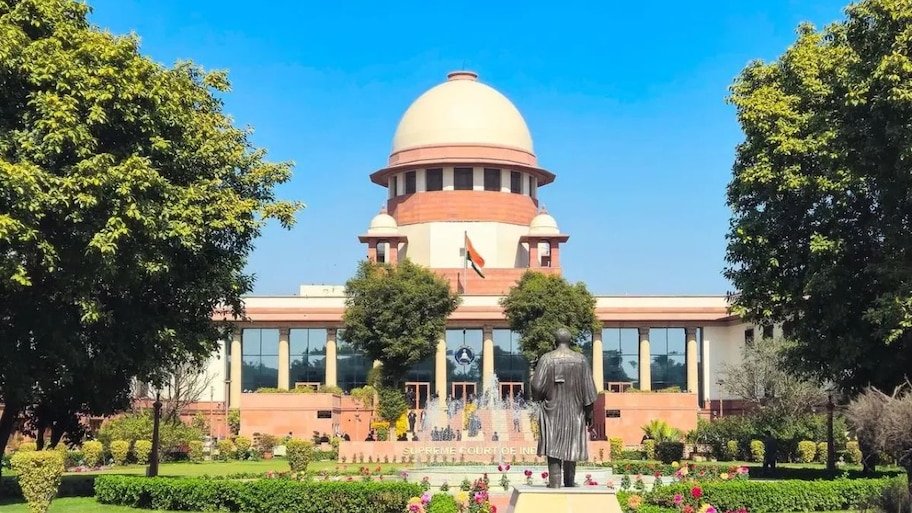
The controversy arising over the exercise of Special Intensive Revision (SIR) of the voter list in the country’s capital Delhi has now reached the threshold of the Supreme Court of the country. The Supreme Court has strongly reprimanded the Election Commission of India (ECI) over the manner in which notices were served to more than one-third of the total 97.53 lakh voters in Delhi, i.e. more than 33.12 lakh voters, by considering them as suspicious.
A three-member special bench of Chief Justice Surya Kant, Justice Joymalya Bagchi and Justice V. Mohana, while hearing the case, raised serious questions on the functioning of the Election Commission. The court, while making oral remarks, said that the manner in which notices have been issued to lakhs of citizens without adequate ground investigation and human consideration, prima facie appears to be that these notices are completely ‘mechanical’ and ‘machine-generated’ (automatically generated by algorithm).
Senior advocate Prashant Bhushan had filed a petition in the Supreme Court on behalf of social workers Anjali Bhardwaj and Amrita Johri. The petition alleged that the Election Commission did not make it clear on the basis of which parameters and algorithms a voter would be selected. ‘Logical Discrepancy’ Or ‘Unmapped’ (not matching old record from 2002) Has been included in the category of.
During the hearing, the court asked direct questions of the Commission:
-
Grounds for vague notice: Justice Joymalya Bagchi asked the Election Commission’s counsel whether it was clearly explained to the common citizen receiving the notice what exactly was the error in his record? How can a person prove that he is right just by writing ‘logical discrepancy’?
-
Lack of filters and human checking: The bench asked whether no additional checks or verification filters could have been put in place before sending notices to lakhs of people? By sending wholesale price notices like this, unnecessary panic and trouble is being spread among the general public.
-
Name rejoined in 91% cases: The petitioners argued that of the voters who lodged objections, the names of about 91% were found to be correct again and added. This proves that the primary basis for issuing the notice was very weak.
The anomalies in this process can be gauged from the fact that the list of notice recipients also includes VIPs who hold and have held top constitutional posts in the country:
-
Foreign Minister Dr. S. Jaishankar And his wife received a notice under ‘unmapped’ category at Sunehri Bagh address.
-
Delhi Chief Minister Rekha Gupta The notice was served citing the discrepancy of age difference between him and his parents.
-
Former Chief Minister Arvind Kejriwal And his family name was flagged for not matching the old 2002 record.
-
Former Deputy Prime Minister Lal Krishna AdvaniNames like former Vice President Jagdeep Dhankhar, senior advocate Kapil Sibal, Abhishek Manu Singhvi, Foreign Secretary Vikram Misri and CBI Director Praveen Sood were also found included in this list.
It was argued in the court that when even three-time Chief Ministers, current Chief Ministers and Union Ministers are receiving such notices, then how painful it would be for slum dwellers, tenants and ordinary citizens to make rounds of verification centers collecting documents.
Giving clarification on the questions of the Supreme Court, the senior lawyer appearing for the Election Commission said:
-
Objective: To make the voter list error free: According to the Chief Electoral Officer (CEO), there are 13.79 lakh voters in Delhi whose data is not being mapped with the previous SIR of 2002, while clerical discrepancies have been found in the name, age or address of 19.33 lakh voters.
-
Name will not be cut directly: The Commission assured the bench that mere issuance of notice does not mean that the name of the concerned voter will be struck off. No one’s name will be removed unless the voter gets adequate opportunity to express his views and submit documents.
-
Willing to extend the date: The last date for disposal of notice is fixed as 29 October 2026. The Commission told the court that since there are no immediate elections in Delhi, the deadline for verification can be extended if necessary.
Chief Justice Surya Kant suggested the Election Commission to make the process citizen-friendly:
-
Digital and Online Verification: The court said that the Election Commission should make arrangements to ask for documents through WhatsApp, email or dedicated online portal, so that the elderly, employed and poor people do not have to stand in long queues at ERO offices.
-
BLO help: Booth level officers should be instructed to go to the voters’ homes and provide active support in filling the forms and clearing the objections.
The Supreme Court has issued a formal notice to the Election Commission and ordered it to file a detailed status report and an affidavit detailing the parameters of ‘logical discrepancy’ within two weeks. The next hearing of the case will now be held after two weeks.