 look news india

Unified Payments Interface (UPI) has completely changed the way transactions are done in India. From vegetable market to big shopping malls, today it has become common to make payment by scanning QR code. But the biggest limitation of UPI is that for its smooth operation, it is mandatory to have active internet connection, mobile network and bank servers of both the parties to be online. Many times UPI transactions get stuck due to lack of network, missing signal in the basement or bank server being down.
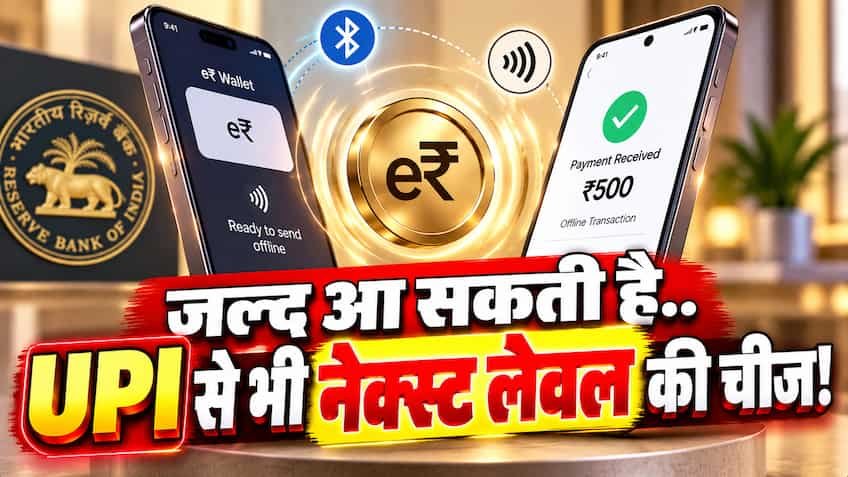
The Reserve Bank of India (RBI) is now working on technology one step ahead of UPI to find a permanent solution to this problem. The central bank is hosting its flagship global hackathon. ‘Harbinger’ (HaRBInger – Innovation for Transformation) Fully for digital rupee (e₹/CBDC) through Offline peer-to-peer (P2P) payment architecture Is preparing. After its implementation, digital cash can be transferred directly by just bringing two phones together (NFC) or Bluetooth without any internet data or Wi-Fi.
‘Harbinger’ is an international global innovation hackathon organized by the Reserve Bank of India. Its main objective is to bring together fintech startups, developers, technical institutions and scientists from across the world on one platform to find practical solutions to the most complex problems of India’s financial infrastructure.
RBI under Harbinger “Offline CBDC (e₹)” Was kept as a primary problem statement. In this, tech innovators from around the world were asked how citizens can safely spend their digital currency (e-Rupee) even in remote rural areas, on ships, flights, in basements or during a natural disaster when the cellular network is completely disrupted.
Offline digital rupee transactions will work in the same way as a paper note of Rs 100 or Rs 500 is taken out of the pocket and handed over to another person. The technical mechanism of its working is extremely safe and fast:
-
Software and Hardware Secure Element: In the prototype developed by Pune-based innovators (Team A-SPARSH) and leading banks in the RBI Hackathon, a secure encrypted safe (Secure Enclave) is created inside the phone’s in-built chipset or app.
-
Near Field Communication (NFC Tap-and-Pay): Just as the ticket is deducted by simply tapping the Metro card or contactless credit card on the POS machine, in the same way the e₹ tokens are transferred from one wallet to another in a nano-second as soon as the buyer and the shopkeeper touch their smartphones.
-
Bluetooth Low Energy (BLE Proximity Transfer): Two devices within a range of 1 to 5 meters can pair securely via Bluetooth and exchange cryptographically signed digital tokens.
-
No Internet, No Server Dependency: At the time of this transaction, neither the sender nor the recipient needs internet. The core banking system (CBS) of the bank is not in the picture at this time, thereby reducing the scope for server failure to zero.
The biggest technical threat facing offline digital currencies is “double spending”—that is, if there is no internet, how can a person not give ₹500 worth of digital tokens from his phone to two different people offline?
The solutions selected in RBI’s Harbinger Hackathon have Cryptographic Ledger and Secure Element Authentication Have used. Whenever an offline token is transferred, that unique token is immediately ‘burned’ (permanently destroyed/locked) in the sender’s secure vault and registered with a cryptographic signature in the receiver’s secure element. Whenever either device comes into contact with the network any time in the future, this data will automatically sync with the Central Bank’s ledger in the background.
Many people confuse UPI and digital rupee (e₹) as one and the same, but the financial and legal nature of both are completely different:
| scale | UPI | Digital Rupee (e-Rupee / CBDC) |
| true nature | Only one payment channel (Payment Rail) | Sovereign Legal Tender |
| money owed | Commercial Bank Liability | Legal liability directly of Reserve Bank of India (RBI) |
| need a bank account | Bank account and debit card mandatory | Token directly into digital wallet, no bank account required |
| internet dependency | Generally 100% active internet and server required | Completely offline possible with Bluetooth and NFC |
| transaction settlement | Inter-bank settlement (money moving from one bank to another) | Final instant settlement (like hand over cash) |
| risk of bank failure | Insurance cover only up to ₹ 5 lakh in case of bank collapse | RBI backed, so zero risk of failure |
Successful implementation of offline CBDC will take India’s financial inclusion to a new level:
-
Hilly and remote areas: Digital transactions will be possible without interruption even in Ladakh, North-Eastern states, forests or rural areas where there are no mobile towers.
-
Flights and Cruises: Shopping can be done in airplanes or on ships without satellite internet.
-
Crowds and Fairs: In Kumbh Mela, big concerts or stadiums where mobile networks get jammed due to the presence of lakhs of people, purchases can be made instantly through offline NFC tap-to-pay.
-
Cost of printing and transportation of notes eliminated: There will be huge savings in the thousands of crores of rupees that are spent on printing physical notes, refilling cash in ATMs and replacing worn out notes.
-
Solution for feature phones: Apart from smartphones, work is also underway to add this technology to feature phones with normal keypad through NFC card or special SIM overlay.
This new model prepared by RBI’s Harbinger shows that India is no longer just following the world’s digital payment trends, but is writing its own future of digital cash and sovereign currency.