 look news india

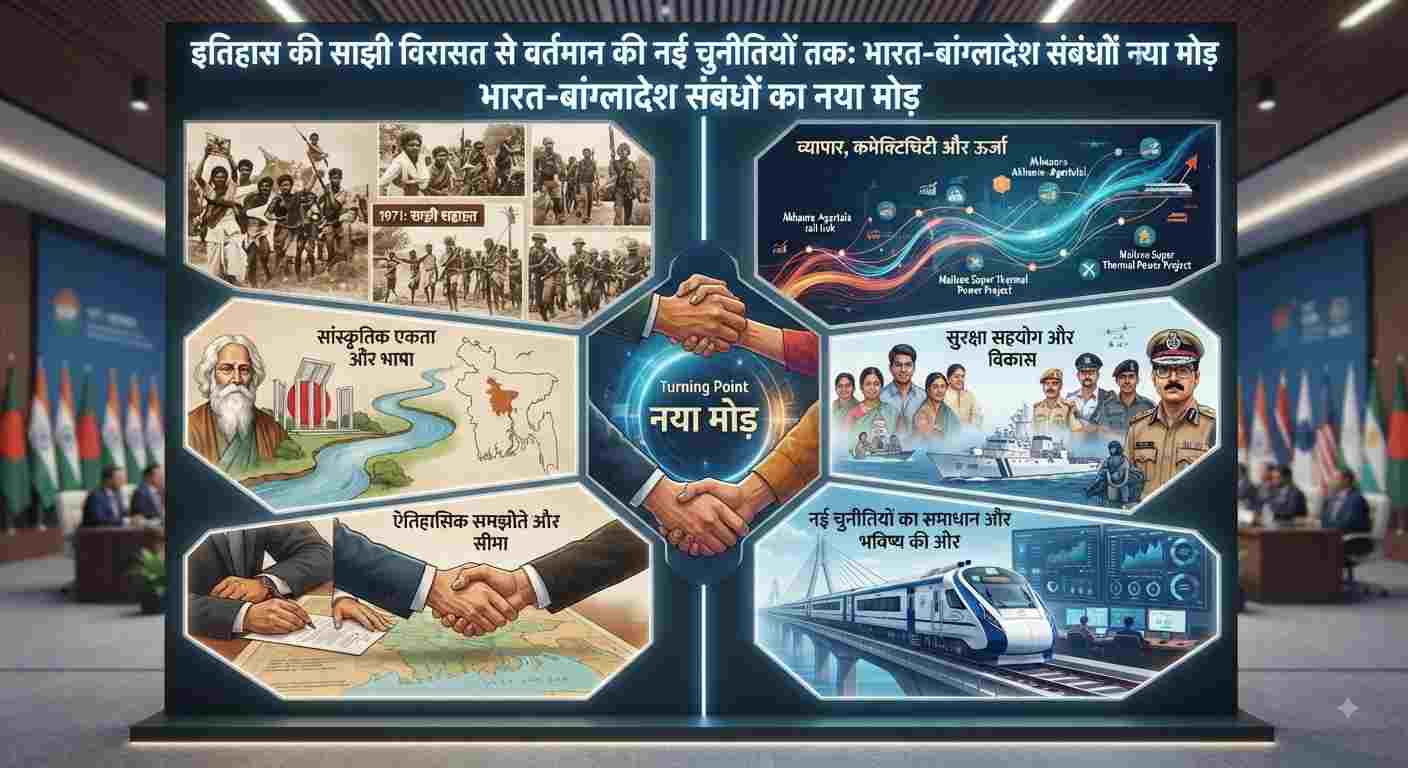
Relations between India and Bangladesh are not limited to the formal diplomacy of the two neighboring countries, but are bound by common sacrifices in the 1971 Liberation War, language, culture, geographical proximity and a 4,096 km long international border. The historic role played by India at the birth of Bangladesh in 1971 laid the foundation of an unbreakable strategic partnership between the two countries. The last one and a half decade of relations between the two countries has been diplomatically termed as ‘Sonali Adhyay’ (Golden Chapter), during which the historic Land Boundary Agreement (LBA) of 2015, peaceful resolution of the maritime boundary dispute and expansion of the vast rail-road connectivity network connecting the North-Eastern states.
Bilateral relations witnessed many unexpected diplomatic discomforts and complications after the major political turmoil in Dhaka in August 2024 and the then Prime Minister Sheikh Hasina taking refuge in India. Since the change of regime in Dhaka, back-channel and direct diplomatic efforts have been continuing to bridge the gap of distrust between the two sides, restore people-centric foreign policy and get strategic dialogue back on track. Bangladesh’s central role at the heart of India’s ‘Neighbourhood First’ and ‘Act East’ policy remains as indispensable today as it was then.
30-year renewal of Ganga Water Treaty in December 2026: The biggest test of river water diplomacy
There are 54 rivers between India and Bangladesh that cross the borders of both the countries. The most sensitive and important topic among these is the renewal of the historical ‘Ganga Water Sharing Treaty’ (Ganga Water Sharing Treaty 1996). This historic treaty, signed in 1996 for a period of 30 years, expires in December 2026. Millions of farmers and environmental sustainability in both countries depend on the future of this treaty that determines the sharing of water flows at the Farakka Barrage in West Bengal.
Apart from the Ganga Water Treaty, sharing of the waters of the Teesta River, which flows between North Bengal and the northern districts of Bangladesh, has been an unresolved political and strategic issue for decades. Due to the objections of the West Bengal government, the Teesta Agreement could not be finalized in 2011. Currently, China’s growing interest in the Teesta River Rejuvenation and Management Project has raised security concerns in New Delhi’s strategic circles, leading to India taking parallel initiatives for technical and financial cooperation in the region.
Security, border management and geopolitical sensitivity of ‘Siliguri Corridor’
India and Bangladesh share the world’s fifth longest land border. Coordination between Border Security Force (BSF) and Border Guard Bangladesh (BGB) is the mainstay of maintaining peace on the border:
-
Stopping illegal infiltration and smuggling across the border: Real-time intelligence sharing is essential to dismantle the movement of illegal migrants, animal smuggling and Counterfeit Indian Currency (FICN) networks along the borders with Assam, Meghalaya, Tripura, Mizoram and West Bengal.
-
Monitoring North East Militancy: It has been of utmost importance for India that Bangladeshi soil is not used as a safe haven by anti-India elements like ULFA or Naga extremist groups.
-
Security of Siliguri Corridor (Chicken Neck): This narrow 22 kilometer wide corridor of North Bengal connects main India with eight states of the North-East. Any military or surveillance presence by any third country (especially China) in Lalmonirhat and northern areas of Bangladesh is considered a direct strategic risk to this sensitive corridor of India.
Trade, transit and energy cooperation: India’s largest trading partner in South Asia
From an economic perspective, Bangladesh is India’s largest trading partner in South Asia and fifth largest globally. The size of bilateral trade between the two countries remains at the level of 14 to 16 billion dollars. India exports raw cotton, petroleum products, electricity, grains and machinery to Bangladesh, while readymade garments, jute products and leather are imported from Bangladesh.
Infrastructure and connectivity cooperation between the two countries rests on several key pillars:
-
Port Transit: The transit facility for Indian cargo ships to deliver goods to Assam, Tripura and Meghalaya through Chittagong and Mongla ports of Bangladesh has significantly reduced the logistics cost and time of the North Eastern states.
-
Rail and road connectivity: The Agartala-Akhaura Rail Link, Petrapole-Benapole Integrated Check Post (ICP), and Maitri Setu (Sabroom-Ramgarh) have provided unprecedented momentum to trade movement between the two countries.
-
Energy and Grid Connectivity: Supply of over 1,100 MW of power by India and transportation of high-speed diesel from Numaligarh Refinery in Assam to Parbatipur depot in Bangladesh through the India-Bangladesh Friendship Pipeline (IBFP) ensures uninterrupted energy security.
Diplomatic entanglement: Sheikh Hasina’s extradition, internal politics and security of minorities
After the political change in Dhaka, some sharp disputes have also emerged in the diplomatic relations between the two countries. The demand for formal extradition of former Prime Minister Sheikh Hasina is being raised on the basis of cases registered against her by the current administration of Bangladesh and the courts there. The 2013 India-Bangladesh Extradition Treaty contains specific exceptions for political crimes and humanitarian grounds, making the issue a complex legal and diplomatic standoff between the two countries.
Along with this, India has consistently raised its serious humanitarian concerns at the diplomatic level regarding the security of lives, property and religious places of Hindu, Buddhist and Christian minority communities in Bangladesh. India’s official position has been clear that the democratic process, rule of law and protection of minority rights are essential prerequisites for a stable and secure neighbourhood.
Global Powers Triangle: China-Pakistan’s Influence and India’s Strategy
Bangladesh’s strategic location is at the head of the Bay of Bengal, a major sea route in the Indo-Pacific region. In recent times, Beijing has made strong efforts to increase its influence in Bangladesh through infrastructure projects, deep sea ports (Payra and Cox’s Bazar) and defense supplies under its ‘Belt and Road Initiative’ (BRI). At the same time, the increase in maritime and diplomatic contacts with Pakistan has become important from the point of view of regional balance.
India is responding to this strategic competition by providing more practical and sustainable options rather than through confrontation, through transparent development assistance, faster implementation, and multilateral forums—such as BIMSTEC, SAARC and BBIN (Bhutan-Bangladesh-India-Nepal Motor Vehicles Agreement). India’s policy is to ensure that Bangladesh’s foreign policy is based on regional balance and sovereign priorities and not under the influence of any one group.
The way forward: building practical diplomacy and people-centred partnerships
Geography cannot be changed; India and Bangladesh are interdependent on each other for development, security and economic prosperity. The direction of relations between the two countries in the coming times will depend on how much priority they give to practical interests rather than sensitive political issues.
Reaching a timely agreement on the 1996 Ganga Water Treaty, taking forward negotiations on the proposed ‘Comprehensive Economic Partnership Agreement’ (CEPA) to remove trade barriers, and simplifying visa procedures for youth, students, businessmen and medical tourists from both countries can reinvigorate bilateral trust. Only an open, mature and transparent dialogue between New Delhi and Dhaka will prove to be the strongest guarantee of lasting peace and shared economic progress in South Asia.