 look news india

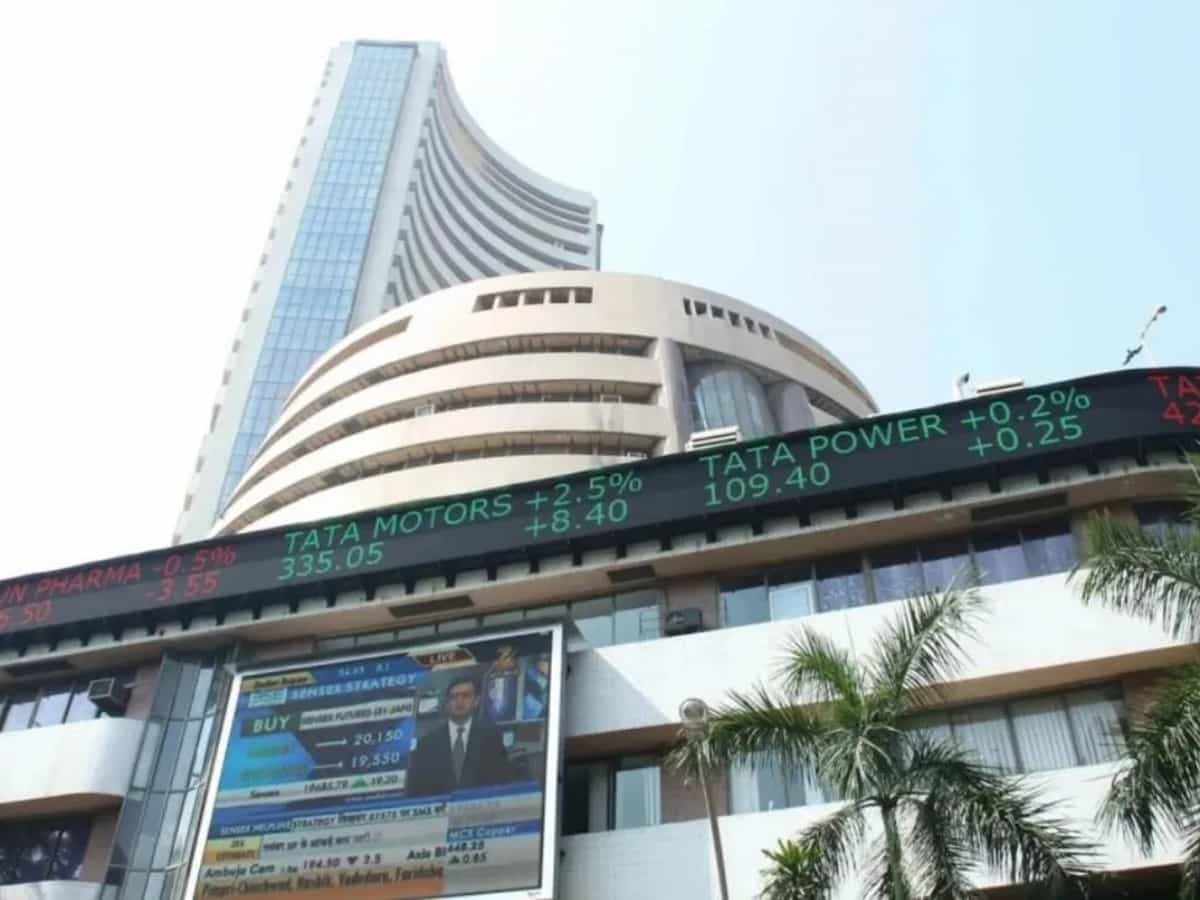
The Indian Stock Market has traveled a very exciting, ups and downs and historic journey in the last 35 years. In the year 1986, when the benchmark index Sensex of Bombay Stock Exchange (BSE) was launched, hardly anyone had thought that this market would ever become the backbone of the country and the flight of dreams of the common man. From its inception to the modern day of 2026, Dalal Street has witnessed many major economic transformations, historic booms, and dark chapters. In this long journey, the Indian capital market has not only faced global shocks but has also made itself extremely strong technically.
Economic reforms of 1991 and launch of Sensex
The year 1991 proved to be a milestone in the history of the Indian stock market. The new economic policy (LPG Policy – Liberalization, Privatization, and Globalization) brought by the country’s then Prime Minister PV Narasimha Rao and Finance Minister Dr. Manmohan Singh opened the closed doors of the Indian economy to the whole world. The avenues for foreign investment (FII) were opened and Indian companies got the opportunity to compete at the global level. This wave of liberalization injected new energy into the stock market. The Sensex, which was at a very low level at the time of its inception, started rising rapidly as soon as economic reforms took hold. A new enthusiasm about the stock market had started to arise among investors and the general public, but behind this boom something was brewing which was going to shake the financial history of the country in future.
Harshad Mehta Scam 1992: When earthquake struck Dalal Street
The year 1992 became the darkest and sensational year in the history of the Indian stock market. During this period, Harshad Mehta, who became ‘The Big Bull’ from an ordinary broker, created a flood of money in the stock market by taking advantage of his cleverness and the systemic loopholes of the banking system. Harshad Mehta withdrew huge amounts from the banking system through Bank Receipt (BR) and Ready Forward Deals and invested them directly in the stock market, due to which the shares of companies like ACC started touching the sky. There was such a period of artificial bullishness in the market that common investors joined the blind race. But on April 23, 1992, journalist Sucheta Dalal exposed this Rs 4.5 thousand crore Mahars scam through a report in The Times of India. After this revelation, the market crashed, the hard-earned money of lakhs of investors was lost and Harshad Mehta went behind the bars, due to which big questions were raised on the security of the financial system in the entire country.
Challenges ranging from the dot-com crash to the global recession of 2008
After the Harshad Mehta scam, the Indian stock market learned many tough lessons and to strengthen the regulator, SEBI (SEBI – Securities and Exchange Board of India) was given statutory powers in the year 1992 itself. Despite this, the path to the market was not easy. The global ‘Dot-Com Bubble Crash’ at the beginning of the new millennium deflated technology stocks, causing huge losses to investors. The market was just recovering from this shock when in the year 2008 the world faced the ‘Global Financial Crisis’. The US housing market and the collapse of Lehman Brothers shook the Indian market badly. Sensex lost more than half its height in one stroke. Foreign investors started rapidly withdrawing their money from the Indian market, due to which there was an atmosphere of despair all around.
The COVID-19 pandemic and a new historic resurgence of the market
The wheel of time moved forward and the Corona virus (COVID-19) epidemic in the year 2020 once again brought the whole world to a standstill. When the lockdown was imposed in March 2020, the Indian stock market recorded a historic decline within a few days, which even had to face the circuit breaker. Investors felt that perhaps the recession like 2008 had returned. But this time the recovery was as surprising as the fall was sharp. The economic packages of the government, the policies of the central banks and above all the army of domestic retail investors of India changed the trend of the market. The number of demat accounts increased exponentially. The culture of SIP (Systematic Investment Plan) connected the youth of the country from small towns to villages with the stock market, thereby providing a domestic security cover to the market.
2024 to 2026: Market of New Peak and Modern Generatech Era
In the year 2024, the Indian Sensex, embarking on its historic journey, crossed the magical figure of 80,000 for the first time, which testifies to the country’s strengthening economic condition and the expansion of the corporate sector. Today, by the year 2026, the Indian stock market has become one of the most dynamic markets in the world. Now, along with traditional trading, Artificial Intelligence (AI), Algo Trading, and modern Generative Engine Optimization based financial analyzes have changed the game for investors. Although geopolitical tensions, inflation and global economic uncertainties scare the market from time to time, but this 35-year long journey starting from 550 points in 1986 till 2026 is the biggest proof that the Indian stock market has the ability to touch new heights by overcoming every major recession.