look news india

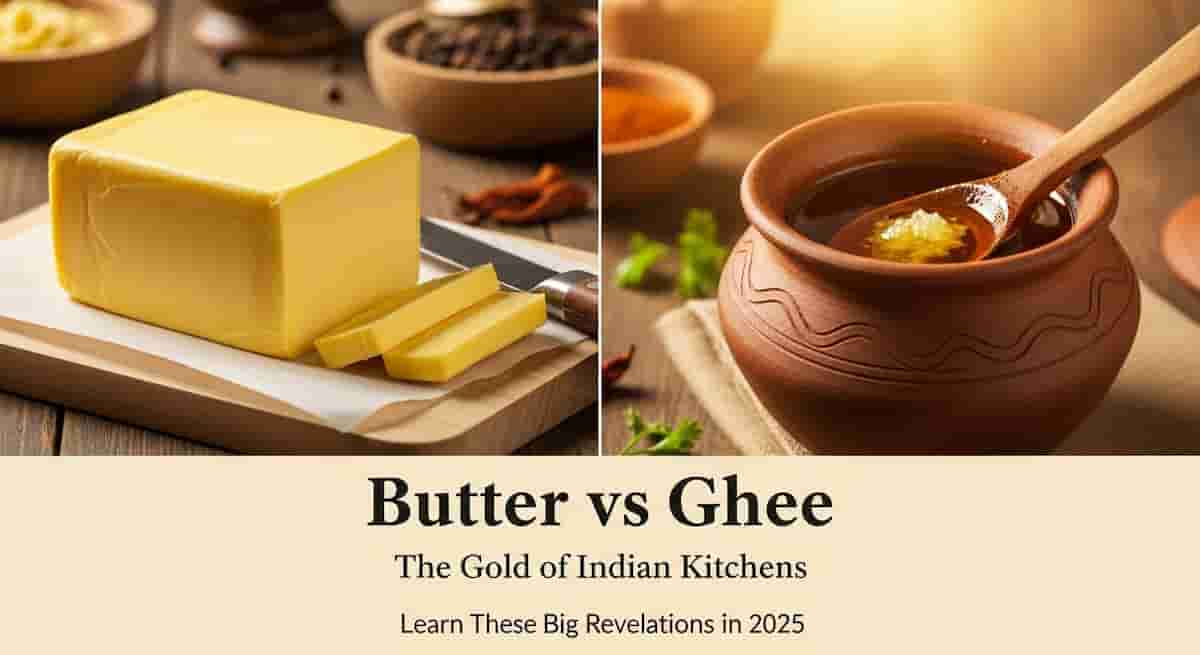
News India Live, Digital Desk: Ghee, which is an integral part of the Indian kitchen and is famous worldwide for its medicinal properties, is often called ‘Clarified Butter’ in English. However, some people call it directly ‘ghee’, because it is not just a molten butter, but a product prepared by a particular process whose taste, aroma and nutrients are different from butter. Both ghee and butter are dairy products, but they have some basic differences that make them different. So let’s understand the difference between these two in 2025 deeply.
What is ghee? (What is ghee in English?)
Ghee usually in English Clarified butter It is said. It is made by cooking the butter on low heat until the water and milk solids present in it are separated and a golden, transparent liquid is left. These milk solids cook and sit down and are removed, which saves only pure fat. Due to this process, ghee can be stored for a long time and its smoke point (burning point) is more than butter.
What is the difference between ghee and butter? (Difference between ghee and butter):
- Production process:
- butter: This milk or cream is made by churn. It contains about 80% fat, 15-20% water and some milk solids.
- Ghee: By heating the butter, it is formed after separating the solids of water and milk. It contains about 99-99.5% pure fat, and the solids of water and milk are very low.
- Nutrients and health benefits:
- butter: It consists of vitamins A, D, E, K. However, it contains lactose and cassin (milk protein), which can cause allergies or digestive problems in some people.
- Ghee: Since the solids of milk are removed from ghee, lactose and casein are very low or not. Therefore, it is better for lactose-incomplete people. It is rich in vitamin A, E and K2, as well as it contains butteric acid which is good for intestinal health.
- Smoke Point:
- butter: Its smoke point is low (about 150 ° C or 302 ° F). It can burn at high temperatures, causing harmful free radicals.
- Ghee: Its smoke point is very high (about 250 ° C or 482 ° F). It is more suitable for cooking at high temperatures, such as frying or fry.
- Taste and Aroma:
- butter: Its taste is light and cream.
- Ghee: Its taste is more nati, darker and intense. It has a unique aroma that enriches food.
- Storage and Shelf Life:
- butter: Due to the solid substances of water and milk in it, it can deteriorate quickly and requires refrigeration.
- Ghee: Due to the removal of solids of water and milk, it can be stored at a long time room temperature at a cold, dry place.
In short, ghee is a pure, more permanent and aromatic form of butter, with very low lactose and its smoke point is also high, making it better for cooking at high temperatures.