 look news india

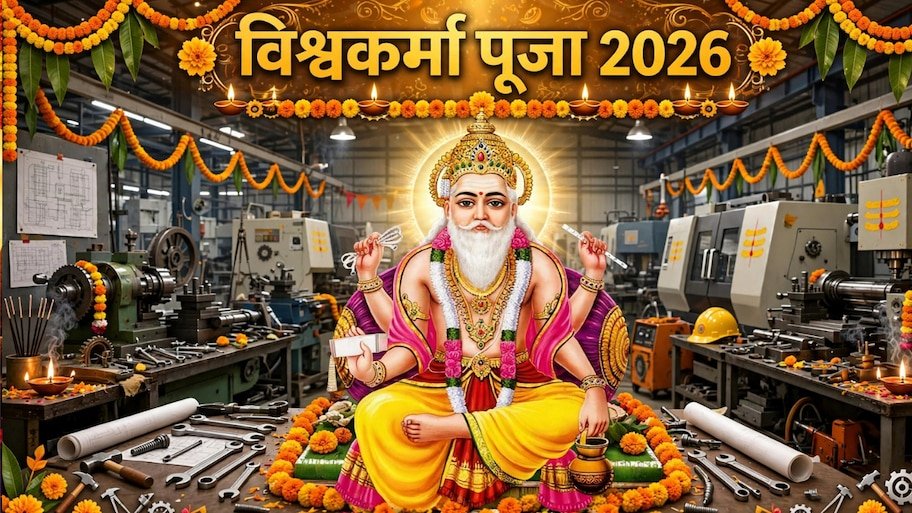
Every year on the auspicious occasion of Kanya Sankranti, the birth anniversary of Lord Vishwakarma, the first architect of the universe, the god of crafts and construction, is celebrated with devotion and enthusiasm. This day is not only a festival of mythological faith but also of expressing gratitude towards industry, construction, engineering, technical skills and labour. On this day, everything from factories, motor garages, IT offices to small tools and vehicles kept in homes are worshiped with special cleanliness and rituals.
In the tradition of Vishwakarma Puja, a scene is common everywhere – from heavy factory machines to household hammers, screwdrivers and two- and four-wheeler vehicles, turmeric paste or Swastika tilak is applied. There is a deep religious and practical reason behind this.
In religious beliefs, turmeric is considered a symbol of Lord Vishnu, Devguru Brihaspati and positive energy:
-
Auspiciousness and prosperity of Jupiter: In Vedic astrology, iron and heavy machinery are considered the factors of Shani Dev, while turmeric represents Devguru Jupiter (the factor of knowledge, expansion and wealth). By applying the touch of Jupiter’s turmeric on Saturn’s equipment, the problems of technical failure, sudden accident and economic recession are mitigated and there are chances of continuous progress in the workplace.
-
Freedom from negative energy and evil eyes: Turmeric is considered the greatest purifier in the Hindu Sanatan tradition. When Swastika is made with turmeric and roli on machines that run throughout the year, it is believed that the evil eye of the establishment is removed and divine energy is infused at the workplace.
-
Scientific and practical importance: Turmeric is a natural anti-oxidant, anti-fungal and anti-septic element. In ancient times, when weapons and tools made of metal were stored, a coating of a mixture of turmeric and oil acted as a protective layer to protect the metal from rusting and atmospheric moisture. This scientific process became an integral part of religious tradition with time.
At the time of puja, it has special significance to offer these 7 traditional offerings to please Lord Vishwakarma, the presiding deity of craftsmanship and for all-round blessings in business:
| Sl. | Name of the offering | Religious importance and belief |
| 1 | Boondi or gram flour laddus | Yellow color is very dear to Jupiter and Lord Vishwakarma; It brings sweetness and stability in work. |
| 2 | Panchamrit (milk, curd, ghee, honey, Ganga water) | Symbol of purification of soul and equipment, thereby maintaining peace in the workplace. |
| 3 | Pudding made of semolina or flour with pure ghee | A symbol of the sweet fruits of hard work, which is offered as a special offering. |
| 4 | white peda or khoya sweets | It is offered to increase satvik energy and mental concentration. |
| 5 | Panchmeva (cashew nuts, almonds, raisins, makhana, dates) | Prayers for continued good fortune, good health and long-term strength of the industry. |
| 6 | Seasonal fruits (especially bananas and apples) | Gratitude for natural production; Banana is the favorite fruit of Lord Vishnu and Vishwakarma. |
| 7 | kheer or jaggery rice lapsi | Traditionally, sweets are offered at the inauguration of new constructions and crafts. |
It is considered mandatory to follow certain classical rules while performing puja for prosperity and protection from accidents in the workplace:
-
Cleaning and restaging of equipment: Before puja, wipe and clean all machines, computers and tools. It is believed that on the day of Vishwakarma Puja, he should be given complete rest by not using his main tools.
-
Kalash installation and resolution: At the place of worship, make an octagonal lotus from Akshat and install a pot filled with water on it. Install the statue or picture of Lord Vishwakarma, take water and flowers in hand and take a pledge for business growth.
-
Rakshasutra and Havan: Apply turmeric, roli and sandalwood tilak on the machines and tie Mauli (Kalava). after this ‘Om Aadhar Shaktape Namah’ And ‘Om Kumayi Namah’ Or ‘Om Shri Vishwakarmane Namah’ Chant the mantra 108 times.
-
Prasad Distribution: In the end, after performing the Aarti, offer all the seven offerings and respectfully distribute the Prasad among all the workers, artisans and employees of the factory, because only the labor seekers are considered to be the real messengers of Lord Vishwakarma.