 look news india

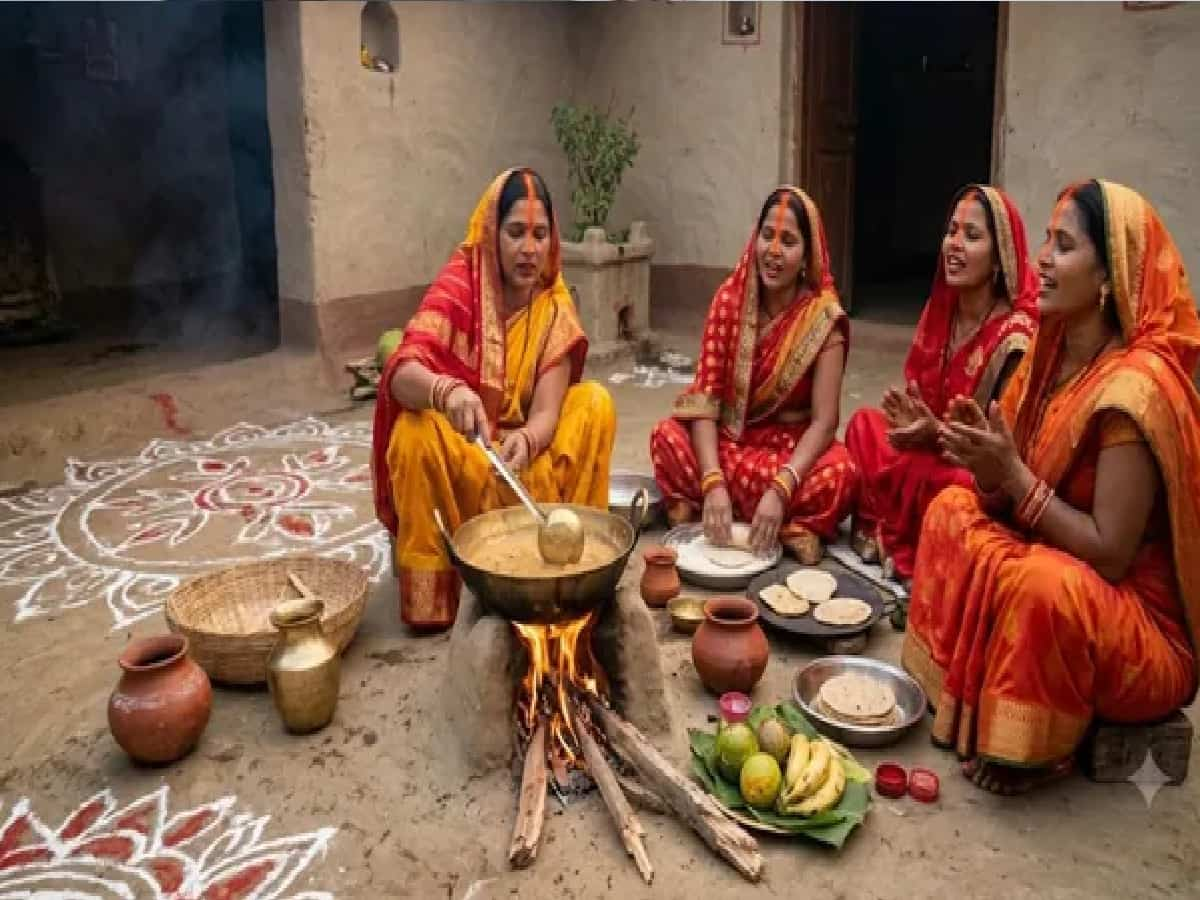
Indian Sanatan Culture, great festivals of folk faith and the biggest rituals of Eastern India Chhath Puja The entire country is painted in its colours. Every day of this extremely difficult and sacred festival of faith, which lasts for four days, has a special and deep religious significance in itself. The second day of this ritual starting with Nahay-Khahay i.e. ‘Kharna’ It is considered the soul of the festival. According to the Panchang, this sacred ritual of Kharna is being celebrated today on 14th November, due to which echoes of traditional and melodious folk songs of Chhathi Maiya are being heard in every village and locality of the city. Among all these songs, there is one such folk song without which the evening of Kharna is considered incomplete – that is “Mai Kharna made kheer on the earthen stove…”. As soon as this folk song comes on the lips of women, the entire environment is filled with devotion, simplicity and sentimentality. Let us know in detail what is the secret of worshiping Chhathi Maiya hidden in the lyrics of this sacred folk song and what is the deep importance of the tradition of Kharna in our life and religion.
Why is the evening of Kharna considered incomplete without this immortal folk song?
This folk song resonates in homes and surrounding areas on the occasion of Kharna, the second day of Chhath festival. “Mai Kharna made kheer on the earthen stove…” It is not just a song, but it is a living document of the immense purity, inner purification and strict discipline of Chhath Vrat, which the fasting women observe with complete devotion. The main purpose behind singing this folk song on the day of Kharna is to pay our respects to Chhathi Maiya and express gratitude towards her.
The lyrics of this folk song keep resonating throughout the entire process from preparing Kharna Prasad to offering it, which makes the atmosphere completely spiritual. In this song, it is beautifully described how the fasting woman prepares the divine kheer of jaggery and rice by lighting the flame of dry mango wood on a new earthen stove with a very pure and sacred heart. As soon as this Prasad is ready, the whole house echoes with the cheers of Chhathi Maiya and the sound of these folk songs. Along with accepting this special Prasad of Kharna, the fasts 36 hours of hard and waterless fasting (Nirjala Vrat) It begins, which ends only after offering Arghya to the rising sun on the last day of the great festival.
Religious and scientific importance of new earthen stove and mango wood
In every line of this famous folk song, a unique confluence of scientific and spiritual viewpoint of Sanatan culture can be seen. The thing mentioned in the song that ‘Mai Kharna ke Kheer Banaye on Mati ke Chulha’, has a very deep meaning hidden behind it. According to Hindu religion and folk traditions, soil is considered to be the most sacred entity of the earth element and free from impurities. Unlike modern metal or gas chulhas, cooking on new earthen chulhas preserves the purity of the food and its natural qualities.
Also, those used for cooking Prasad Mango Wood Are also considered very special. Since Vedic times, mango wood has been said to be the best in ancient rituals and yagyas for its purity and the positive energy emanating from it. Through folk songs, the message is given that Chhathi Maiya loves not the expensive or pretentious dishes, but the prasad prepared completely satvik, pure and close to nature. This festival teaches us that there can be no greater worship in life than simplicity and truth.
What and how is made in Kharna Prasad
The second day of Chhath Puja i.e. the day of Kharna is a day of spiritual peace and restraint for the fasting people. On this day, after fasting throughout the day, special Prasad is prepared in the evening. Among the main offerings of Kharna Jaggery and Rice Kheer and greased with pure ghee wheat flour breads are made. At many places, instead of flour, rotis or puas made from rice flour are also included as bhog.
Special care is taken to make this Prasad. After taking bath, fasting women wear new clothes and cook this kheer on a new earthen stove with complete purity. Traditional instead of sugar in kheer sugarcane jaggery Is used, which increases both its sweetness and nutritional value. After the Prasad is prepared, it is first offered to Chhathi Maiya by placing it on new banana leaves or in clean new utensils. After offering Bhog, the devotee herself consumes this Prasad and then it is distributed among other family members and relatives as ‘Mahaprasad’. After receiving this Prasad, a period of completely disciplined and strict waterless fasting begins in the family for the next 36 hours, which is the real identity of this great festival of folk faith.