 look news india

A very beautiful and historical news is coming out related to the wonderful confluence of Indian Sanatan culture, ancient folk culture and customs settled in the lap of Devbhoomi. While the festival of Diwali ends with great pomp across the country with lights, crackers and festivities, in many remote hilly areas of Devbhoomi Uttarakhand, a very unique and traditional festival is celebrated exactly one month after Diwali, which is called ‘Budhi Diwali’ Known as. There is immense enthusiasm among the local people regarding this sacred and traditional festival. There are many interesting historical, mythological and cultural beliefs associated with celebrating this unique tradition. This entire festival is not celebrated for a single day, but for about four days with full grandeur. Let us know in detail why this Budhi Diwali is celebrated a month after Diwali in the mountains of Uttarakhand and what is the mythological story behind it.
This ancient story of Budhi Diwali is related to Treta Yuga and Shri Ram’s return to Ayodhya.
According to experts of hill culture and folk beliefs, celebrating ‘Budhi Diwali’ in these inaccessible hilly areas of Uttarakhand is directly related to Treta Yuga and the saga of Lord Shri Ram. According to mythology and folk beliefs, in ancient times, when modern means or technology of communication, transportation and media were not available like today, it would take weeks or months for any big news or message to reach from one corner of the country to another.
It is said that when Maryada Purushottam Lord Shri Ram returned to his city Ayodhya after conquering Lanka after fourteen years of exile, the people of Ayodhya celebrated Diwali by lighting ghee lamps. But due to the geographical location of the mountains and difficult roads, the good news of the victory of Ayodhya and the return of Lord Ram reached the people living in the hilly areas very late. By the time this message reached the people of the hills, the main celebrations of Diwali in the rest of the country had ended.
When the people of the mountain got the news, they considered that day as their Diwali.
According to historical and folk tales, the day the people of the hilly areas of Uttarakhand came to know that their beloved Lord Shri Ram had returned safely to Ayodhya, their joy knew no bounds. Even though they were not able to celebrate on the main date due to delay in communication, they accepted the same day as their Diwali as soon as they received the message.
The mountain people lit lamps on a large scale, sang traditional folk songs and celebrated to express their happiness and joy at that very moment. From then till today, that is, this folk tradition that has been going on for centuries has been followed by the people of the hills. Since this festival is celebrated exactly a month after the main Diwali (and in some areas after Ekadashi i.e. 11 days), it is celebrated over time. ‘Bidi Diwali’ Got recognition by the name of. This is proof of how deeply the people of Devbhoomi are connected to their faith and culture.
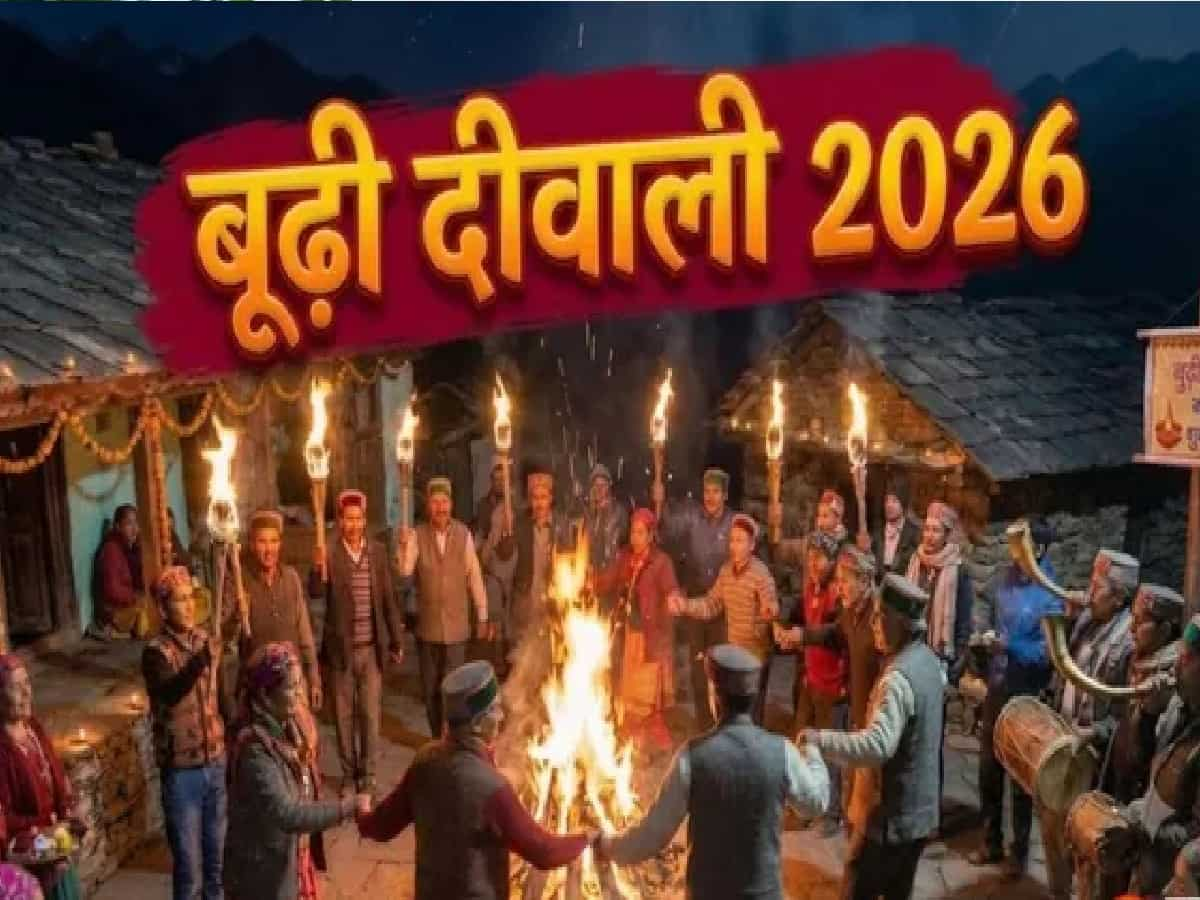
How is ‘Budhi Diwali’ celebrated in Devbhoomi? The night is decorated with torchlight and folk dances
When this festival of Budhi Diwali arrives in the hilly districts of Uttarakhand, the entire atmosphere there becomes drenched with a different cultural and spiritual energy. This four-day festival has its own distinct characteristics and traditions. On this day, a unique culture of celebrating in traditional ways instead of modern firecrackers is seen.
On the main night of the festival, people in the hilly areas eat special pots made of dry pine or other trees. Torches (Mashal / Bhallu) They burn them and rotate them with traditional tunes. At night, when hundreds of torches burn simultaneously in the mountain valleys, the complete darkness becomes illuminated and presents a wonderful sight. During this time, the village people sing folk songs to the beats of traditional musical instruments like drums and hudki and perform traditional folk dances like ‘Chhopati’ and ‘Tandi’. All the villagers gather at one place, prepare traditional dishes and wish each other a happy Diwali. Even in this era of modernity, the people of Uttarakhand have kept alive this ancient and heritage-related tradition, which keeps the coming generations connected with our rich culture.