 look news india

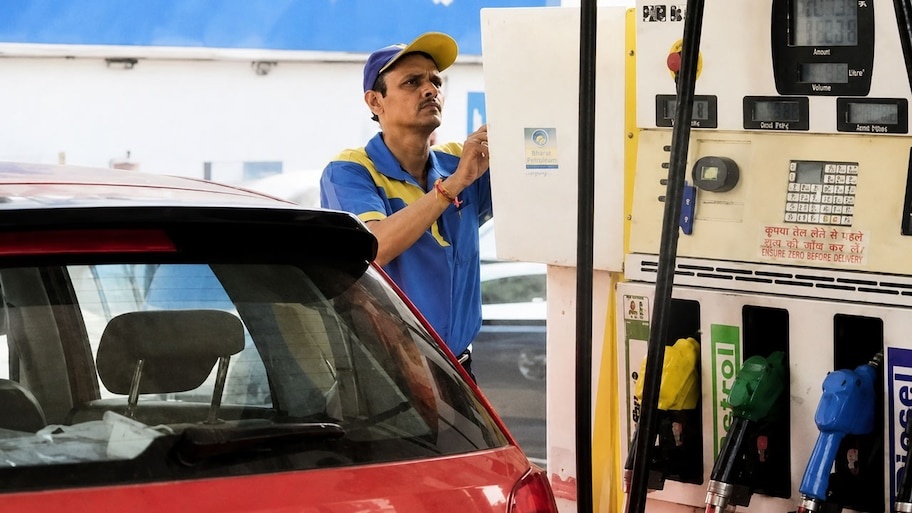
To reduce pollution in the country and to reduce the import of crude oil from abroad, the process of ethanol blending in petrol is going on war footing. But meanwhile, there is a big question in the minds of the general public and vehicle owners that why are they not being given the option to choose E10 (10% ethanol) or E20 (20% ethanol) petrol as per their choice at petrol pumps? The Ministry of Petroleum and Natural Gas (MoPNG) has completely clarified the situation on this. The ministry says that maintaining multiple grades of petrol in such a large distribution network of the country is not practical and it will create huge logistics challenges.
More than one lakh petrol pumps, impossible to manage different stocks
The government rejected the demand for keeping separate fuels at petrol pumps and cited the country’s large logistics system:
-
Supply chain constraints: India’s current fuel distribution system is not designed to supply multiple types of base fuels simultaneously.
-
Expenses will increase: At present there are more than 1 lakh petrol pumps in the country, which are directly connected to a huge network of refineries, terminals, depots and pipelines. If separate supply chains of E10 and E20 are created for each pump, the cost of handling the oil will increase drastically and managing the stock will be very difficult.
-
Wrong comparison with premium petrol: The government clarified that it cannot be compared with premium petrol, because premium petrol is a niche product sold in very limited quantities, whereas the volume of ordinary petrol is very large.
There is no danger to old vehicles, data from Maruti and Hero MotoCorp proved this.
The ministry has completely addressed the concerns of those vehicle owners whose vehicles are old and were made compatible only with E10 fuel. The government clarified that this historic decision of mixing ethanol in petrol has been taken only after long discussions, intensive planning and technical evaluation with vehicle manufacturers (SIAM) and testing agencies.
Companies Experience: The country’s largest car manufacturer Maruti Suzuki serviced a record 2.84 crore cars during the financial year 2025-26. Of these, about 1.5 crore vehicles were old which were not E20 certified. Despite this, the company did not receive a single complaint of rust or engine damage due to ethanol mixed petrol. Two-wheeler sector giant Hero MotoCorp has also had the same experience. Vehicle manufacturing companies are giving full warranty on both old and new vehicles.
Slight reduction of 3-5% in mileage, but the pick-up will be excellent.
The government has honestly admitted that the use of E20 petrol as compared to E10 can result in a very slight reduction of 3 to 5 percent in the fuel efficiency of vehicles. But fuel quality should not be measured only by mileage.
of E20 petrol Octane Number It is much better, due to which the combustion of fuel takes place very well inside the engine. Due to this, the vehicle gets excellent pick-up (acceleration), the engine remains completely clean from inside and the most important thing is that there is a huge reduction in carbon emissions (pollution). The government stressed that this shift towards E20 is not only to strengthen the environment and energy security of the country, but it is also leading to a big increase in the income of the country’s farmers.