 look news india

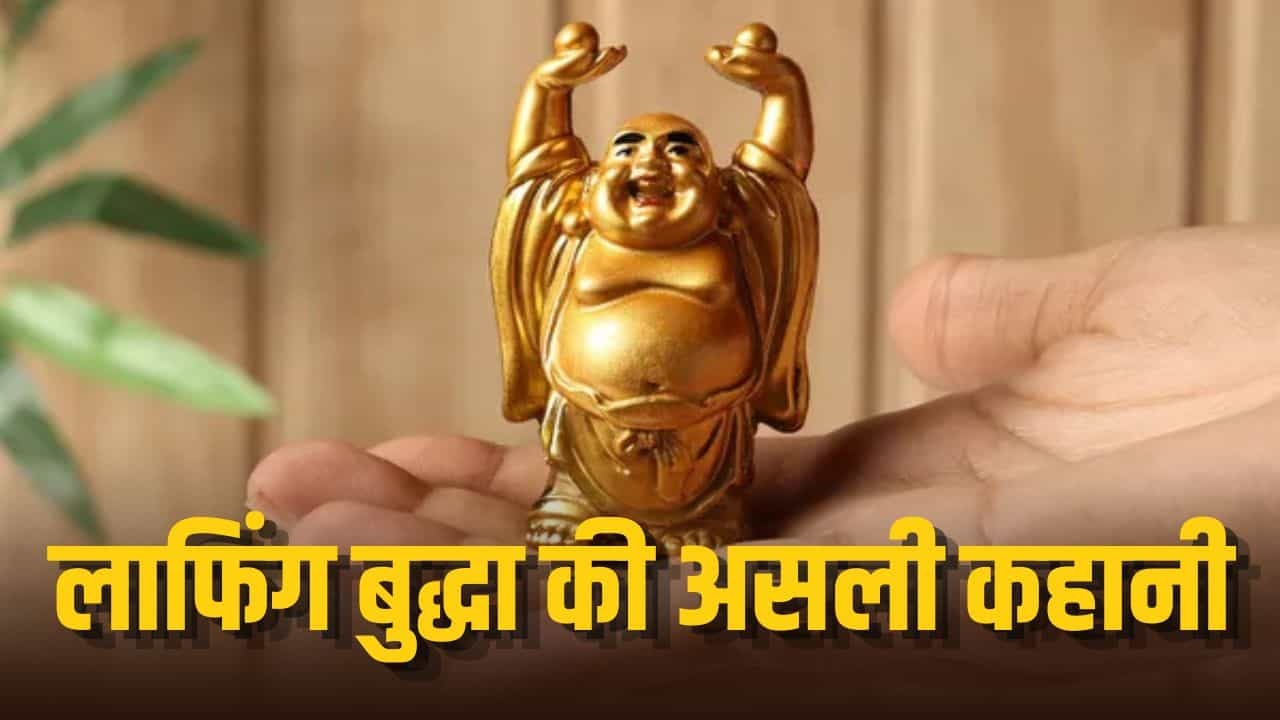
Be it the living room of the house, the reception table of the office or the cash counter of the shops – the statue of ‘Laughing Buddha’ with a bundle in his hands, a chubby stomach and a cheerful smile on his face, has today become an integral part of homes all over the world. In Vastu Shastra and Feng Shui, Laughing Buddha is considered to be the most powerful symbol of happiness, prosperity, positive energy and good luck.
But there is a huge misconception in the minds of most people that Laughing Buddha and the founder of Buddhism, Lord Gautam Buddha (Siddhartha Gautama) are the same person. According to historical and religious facts, these two are completely different personalities. While Lord Gautam Buddha attained enlightenment (nirvana) after rigorous penance in India in the 6th century BCE and is seen in a calm, meditative posture, the Laughing Buddha was a historical Buddhist monk from 10th century China who became famous for his unique lifestyle, selfless service and boundless happiness.
The real story of Laughing Buddha: Who was ‘Hottei’, the 10th century Buddhist monk?
According to Chinese history and Buddhist tradition, the real name of the Laughing Buddha was ‘Qieci’. He was a Zen (Chan) Buddhist monk who lived in the 10th century during the Liang Dynasty of China.
them in Chinese ‘Budai’ and in japanese culture ‘Hotei’ Known as. The Chinese word ‘Budai’ literally means ‘cloth sack’ or ‘bundle’. Hotei’s nature was completely different from that of traditional monks. Instead of staying confined to any one monastery or cave, he was always traveling from one village to another. He always had a big bag of clothes hanging on his shoulder and he had such a magical and infectious smile on his face that whoever saw him would forget all his sorrows and pain and start laughing.
The deep spiritual secret of the bundle and the round stomach
There is a deep symbolic and philosophical meaning hidden behind the large bundle hanging on the laughing Buddha’s shoulder and his huge round belly:
-
The bundle that contains the sorrows of the world: According to folklore, Hotei used to bring sweets, fruits and toys in his bundle and distribute them to the village children. At the same time, from a spiritual point of view, it is believed that he took the stress, anxiety, negative energy and sorrows of people’s life in his bundle and in return provided them only happiness, humor and positivity.
-
Huge belly (symbol of generosity and tolerance): The big belly of the Laughing Buddha gives the message that man’s heart and outlook should be so big that he can laughingly absorb all the bitter experiences, criticisms and hardships that come in life and never lose his patience and smile.
-
Incarnations of Maitreya Buddha: In the Chinese Mahayana Buddhist tradition, the monk Hotei is considered to be the living incarnation of the future Buddha i.e. ‘Maitreya Buddha’, who came to give the message of love, generosity and hope to the world.
6 major postures of Laughing Buddha and their miraculous effects
Statues of Laughing Buddha with different gestures are available in the market. The correct posture statue should be selected according to your specific desire or problem:
-
Laughing Buddha with both hands raised: This mudra symbolizes immense victory in life, promotion in career and success in every field. If your business or job has come to a standstill, then placing an idol with both hands raised is considered best.
-
Laughing Buddha with a bag on his shoulder: This is the most popular form. It is a symbol of increasing the flow of wealth and new opportunities by removing financial constraints, poverty and negative energy from the house.
-
Laughing Buddha with gold coins, ingots or bowls: Those who hold a gold coin, Chinese yuan or bowl (Ingot/Bowl) in their hands directly attract prosperity and lasting wealth like Kubera, the goddess of wealth. It is very auspicious to keep it at the cash counter of business establishments.
-
Laughing Buddha surrounded by children: The statue in which 5 small children are seen playing around the Laughing Buddha, is a symbol of ‘child happiness’, progeny growth and mutual love in the family. Childless couples should keep it in their living room.
-
Laughing Buddha with fan in hand: In Chinese belief, the fan is called ‘Osu’, which blows away all kinds of worries, evil eye and misfortune from the house.
-
Laughing Buddha (Wu Lu) sitting on a Kamandalu or Dragon: Laughing Buddha holding a gourd/kamandal (Wu Lou) in his hand or sitting on a dragon turtle protects the family members from serious diseases and bestows longevity and good health.
Correct direction and Vastu rules for keeping Laughing Buddha in home and office
Laughing Buddha Statue’s full positive benefits are achieved only when it is installed as per the exact rules of Feng Shui and Vastu:
-
Right opposite the main entrance (at I-level): Laughing Buddha should always be placed in front of the main entrance of the house in such a way that as soon as the door opens, the first sight of the person entering the house falls on his smiling figure. Due to this, the negative energy entering the house is immediately converted into positive waves.
-
Eye-level installation: The idol should never be placed on the floor or too low. Set it up on a sturdy table, console table, or shelf at least 30 to 36 inches off the ground, so you can look directly at their face as you walk by.
-
East Direction (Health and Family Harmony): The east direction of the house is the area of sun and health. By keeping Laughing Buddha here, discord in the family ends and the health of the members remains good.
-
South-East Direction (Corner of Wealth and Prosperity): In Vastu and Feng Shui, South-East is considered a wealth corner. Placing an idol with gold coins in this direction opens up new avenues of inflow of money and gets back the stuck money.
-
Study or Work Desk (North-West): Placing a small Laughing Buddha statue on children’s study table or office working desk increases concentration, reduces stress and improves work efficiency.
Don’t make these mistakes even by mistake: Keeping idols at these places can cause harm
Laughing Buddha has been given the status of a revered spiritual saint in the scriptures and Feng Shui. Therefore ignoring some rules in their installation can cause huge Vastu defects:
-
Never keep in bedroom, kitchen and bathroom: Laughing Buddha should never be kept near the wall of bedroom, kitchen, bathroom, washroom or toilet. It is considered extremely insulting and inauspicious.
-
Do not place directly on the ground: The idol should never be placed directly on the floor; Always keep it on a clean cloth, wooden stand or table.
-
Avoid keeping shoes and slippers under the stairs: Even near the main entrance, keep in mind that the idol should not be above the shoe rack or just below the stairs.
-
Do not place above electronic devices: One should avoid placing the idol above a TV, fridge, washing machine or Wi-Fi router, as the electromagnetic waves of the appliances destroy the positive energy of the idol.
Tradition of caressing the stomach of Laughing Buddha: What is its truth?
It is a very famous folk belief in Chinese culture that if you rub the belly of the Laughing Buddha once a day with love and reverence, your wishes for the day will be fulfilled and good luck will come to your house. The psychological aspect of this is that when you wake up in the morning and touch a smiling face and positive energy, your subconscious mind becomes free from the stress and negative thoughts of the day and is filled with hope and enthusiasm.
Laughing Buddha is not just a decorative toy or an object of superstition, but he is a symbol of the great art of living which teaches us that no matter what the circumstances of life are – maintaining a smile on the face, generosity in the heart and contentment in the mind is the greatest nirvana and happiness in the world. By placing Laughing Buddha in your home with the right direction and devotion, you can fill your surroundings with the energy of happiness, peace and immense joy.