 look news india

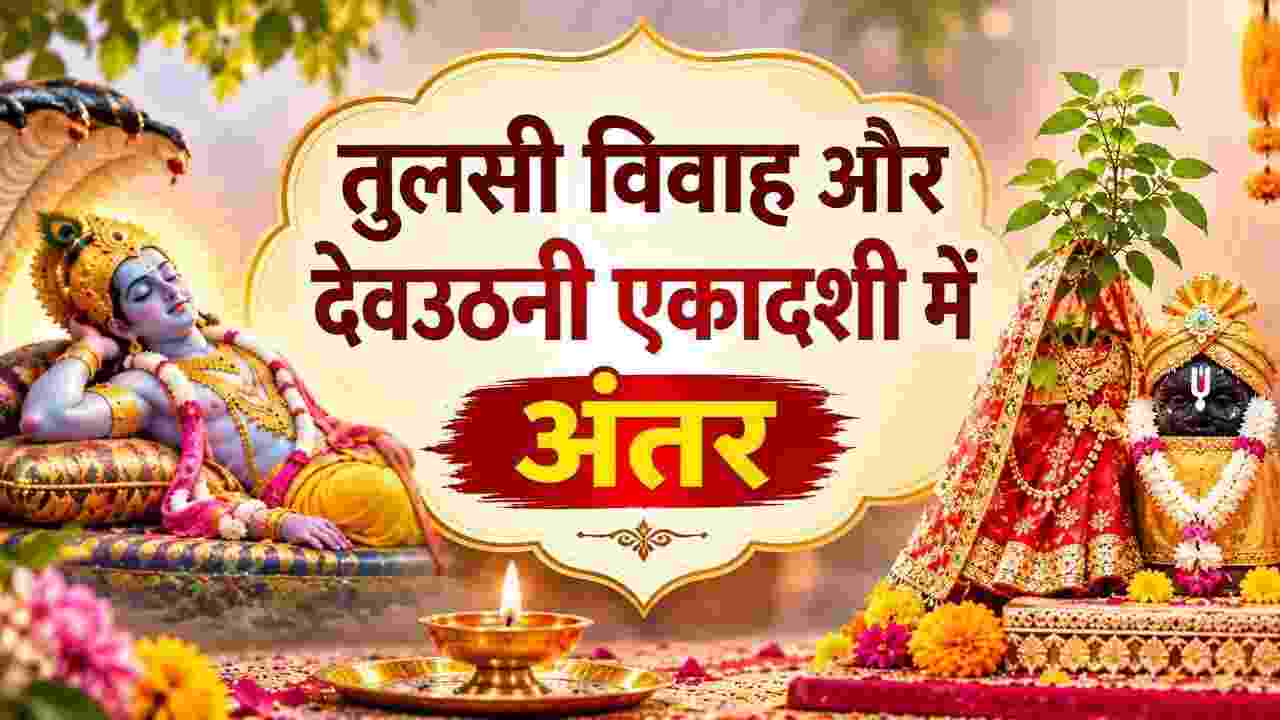
Two very important religious festivals – Dev Uthani Ekadashi / Prabodhini Ekadashi and Tulsi Vivah – are celebrated in the Shukla Paksha of Kartik month, one of the most sacred months of the Hindu calendar. Since both these festivals fall in the same time period and on nearby dates, being associated with Lord Shri Hari Vishnu, there is often confusion among the common devotees whether Devuthani Ekadashi and Tulsi Vivah are the same festival or there is some major scriptural difference between the two. According to the religious texts, Padma Purana and Nirvana Sindhu, both the festivals mark the end of Chaturmas and the beginning of auspicious activities, but there is a clear difference in their date, method of worship and mythological purpose. They are celebrated with devotion on different dates as per folk traditions in different parts of the country including Uttar Pradesh, Bihar, Madhya Pradesh, Rajasthan, Gujarat and Maharashtra.
Devuthani Ekadashi, also known as Prabodhini Ekadashi or Devotthan Ekadashi in the scriptures, is celebrated every year on the Ekadashi date of Shukla Paksha of Kartik month. According to mythological belief, on Ashadh Shukla Ekadashi (Devshayani Ekadashi), Lord Vishnu, the creator of the universe, goes into Yoga Nidra (Cosmic Sleep) for four months in Kshirsagar. During these four months (Chaturmas), all auspicious and auspicious activities like marriage, housewarming, mundan and sacred thread are prohibited. On the day of Kartik Shukla Ekadashi, Lord Vishnu wakes up from his four months of yoga sleep and again takes charge of running the universe. On this day, devotees observe a waterless or fruitless fast, make a sugarcane pavilion in the courtyard of the house and wake up the deities by chanting the mantra “Uttisthottistha Govind…” along with the sound of conch-bell.
On the other hand, Tulsi Vivah is a complete marital ritual, in which the marriage of Mother Tulsi (Vrinda) is solemnized with Lord Shaligram, the idol form of Lord Vishnu. According to the legend of Padma Purana and Shiv Purana, after the killing of her husband Jalandhar, Sati Vrinda cursed Lord Vishnu to turn into stone (Shaligram) and burnt herself to ashes, from whose ashes originated the sacred Tulsi plant. Then Lord Vishnu, pleased with Vrinda’s purity and devotion, gave a boon that he would always remain with her in the form of Shaligram and she would be married to Tulsi in the Kartik Shukla Paksha. On this day, devotees decorate the Tulsi plant in their house like a bride with red chunri, sixteen adornments and jewellery, dress Lord Shaligram in yellow clothes and sit as a groom and complete the ritual of alliance and Kanyadaan with Vedic mantras and auspicious songs. It is believed that by performing Tulsi marriage one attains great virtue like Kanyadaan and the obstacles in marital life are removed.
The most important question is whether Devuthani Ekadashi and Tulsi Vivah happen on the same day? The direct answer is – No, the main classical dates of both are different, although in some areas Tulsi Vivah starts on Ekadashi also. According to the scriptures, Devuthani Ekadashi is always celebrated on Kartik Shukla Ekadashi, whereas Tulsi Vivah is mainly celebrated on the next day i.e. Kartik Shukla Dwadashi. In many calendars and regional traditions (especially in Gujarat, Maharashtra and many parts of North India), the Tulsi Vivah festival is celebrated for five days, starting from Kartik Shukla Ekadashi and ending with Kartik Purnima (Dev Diwali). If in any year according to the Panchang calculations, the decay or coincidence of Ekadashi and Dwadashi tithi occurs on the same day in Pradosh Kaal (after sunset), then at some places both the rituals are performed on the same date, otherwise observing Dev Jagran Vrat on Ekadashi and Tulsi Vivah on Dwadashi is considered most scriptural.
The first difference is of date: Devuthani Ekadashi falls only on Kartik Shukla Ekadashi, while the main day of Tulsi Vivah is scheduled for Kartik Shukla Dwadashi (and in some traditions till the full moon). The second difference is of the main worship and form: the focus of Devuthani Ekadashi is the awakening of Lord Vishnu from Yoganidra and the breaking of Ekadashi fast, whereas in Tulsi Vivah, the main ritual is the formal marriage ceremony of Mother Tulsi and Lord Shaligram (the alliance, sindoor donation and pheras). The third difference is of the rules and food: on the day of Ekadashi, consumption of rice is prohibited and fasting is observed, whereas after the completion of Tulsi Vivah on Dwadashi, the marriage festival is celebrated by offering Satvik food, Kheer-Puri and Rituphal. The fourth difference is of social belief: Devuthani Ekadashi opens the door to auspicious times with the awakening of the gods, but in Hindu society most of the families start the marriage of their children only after solemnizing the marriage of Lord Shaligram and Mother Tulsi.