 look news india

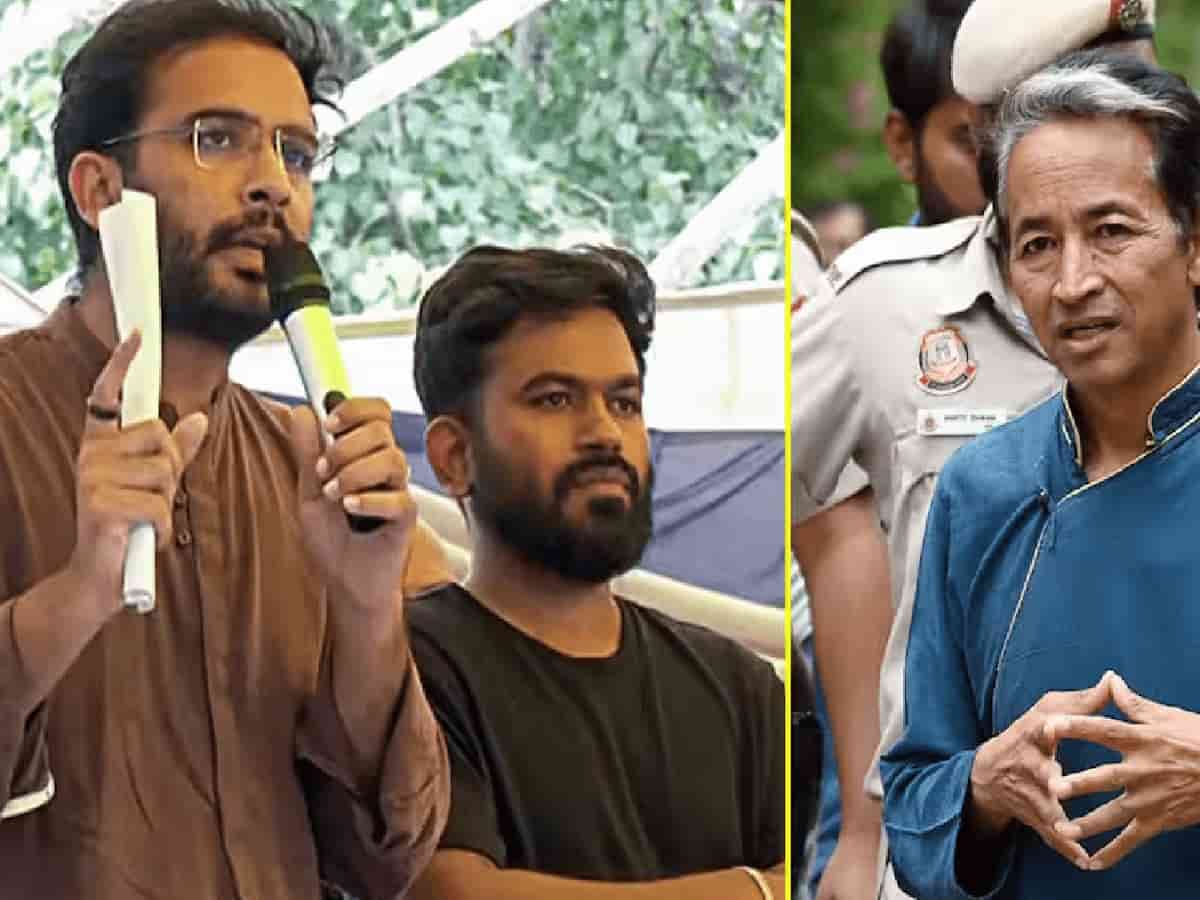
The country’s well-known educationist and environmental activist Sonam Wangchuk has recently expressed her opinion openly about the political ambitions of the founding members of ‘Cockroach Janata Party’ (CJP) and their entry into politics. During an exclusive podcast interview with Prakhar Gupta, Sonam Wangchuk candidly discusses the political future and thinking of CJP’s founders—Saurav Das, Abhijit Dipke and Ashutosh Ranka. After this statement of Wangchuk, a new discussion has started in political circles and social media whether the entry of young activists into politics can prove to be a positive change for the democratic structure of the country.
Sonam Wangchuk, who spent time closely with these young leaders during the recent protests at Jantar Mantar in Delhi, made it clear that people may have many apprehensions and questions about these founders, but the reality needs to be seen from a different perspective. He emphasized that having one’s ambitions in politics or being a part of politics is not a crime or a bad thing, provided its objective is the interest of the country and society.
CJP’s founder is not a saint, his desire to enter politics is natural
Sonam Wangchuk said in very clear words during the podcast that the founders of CJP are not spiritual saints who have gone beyond this world and attachments and have come down only for social service without any personal motive. He said that when he observed and examined these youth very closely, he was fully convinced that they all have their own political ambitions. However, he was quick to add that there was nothing wrong with it. According to Wangchuk, every young citizen has every right to participate in the mainstream politics of the country and prove his leadership abilities.
Sharing his past experiences, Wangchuk said that when he became a part of the student protest and the dharna regarding the demands related to the Education Ministry, many critics had raised before him that CJP founder Abhijit Dipke had earlier been associated with the Aam Aadmi Party (AAP). Critics believed that this could be part of a hidden political agenda, but Wangchuk rejected these criticisms outright. He believes that working with a political party in the past or belonging to an ideological background does not diminish a person’s qualifications nor does it detract from the validity of the social issues being raised in the present.
Assessment on political future during sit-ins and protests
Sonam Wangchuk has worked shoulder to shoulder with these youth for almost two months during the long protests demanding the removal of Education Minister Dharmendra Pradhan from his post. During this time he closely observed the working style of these founders, their commitment and their visionary vision. Wangchuk believes that in today’s era, when the young generation of the country runs away from politics or considers it dirty, if educated and aware youth come forward with their political ambitions, then it is a healthy sign for Indian democracy.
He also admitted that in the future, young leaders like Saurav Das, Abhijit Dipke and Ashutosh Ranka can be seen playing a bigger role in active politics. However, in the present context he also gave an important condition and advice. According to Wangchuk, even though these youth may have personal political ambitions, it is extremely important that they do not allow their current platform to be used to further the agenda of any political party or for electoral gains. He expressed satisfaction that till now these founders have maintained the sanctity and transparency of their platform and they are firm on the fact that their movement should rise above any party politics and focus only on the issues of public interest and education.
Sonam Wangchuk’s perspective on youth leadership and future politics
This statement of Sonam Wangchuk has come at a time when the youth of the country are continuously taking to the streets demanding change and demanding their political participation. He also expressed his desire in the interview that he personally wants to see more and more youth of the country join the mainstream political parties or, if necessary, directly intervene in the policy-making process of the country by forming new political parties of their own. He believes that unless the youth come into politics, it will not be possible to bring radical changes in the old system.
This comment of Wangchuk in the context of CJP founders is also a befitting reply to all those critics who try to suppress every social movement by claiming that some political party is behind it. This viewpoint of the activist underlines that social service and political ambition are not opposed to each other, but if both are mixed with honesty and integrity, then it can become a powerful medium of nation building. In the coming time, it will be interesting to see whether these founders of CJP prove Sonam Wangchuk’s assessment correct and formally step into electoral politics or not, but for now, this statement has again brought the role of youth at the center of the country’s political discussion.