 look news india

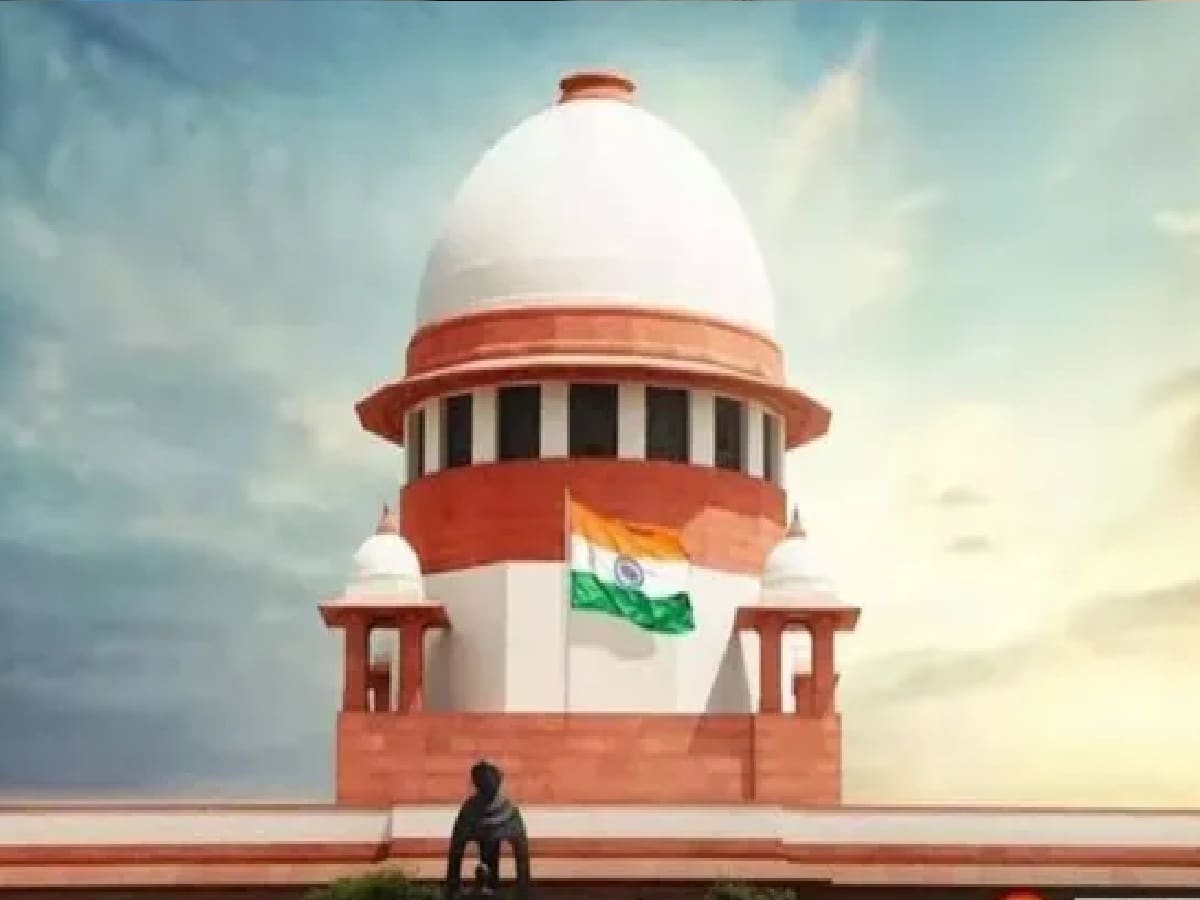
The Supreme Court on Friday took a very tough and historic stand in the ongoing legal battle over alleged paper leaks and administrative irregularities in the country’s most prestigious medical entrance examination, NEET (NEET-UG). The apex court not only ordered to radically change the entire functioning of the National Testing Agency (NTA) and give it a permanent institutional form, but also made it clear that both the judges of the bench would themselves conduct a ground visit to the upgraded office of NTA to test the reality of the new arrangements. Justice P.S. After hearing the arguments of the Central Government, the special bench of Justice Narasimha and Justice Alok Aradhe made it clear that to stop playing with the future of lakhs of students in future, the only option is to create a foolproof, permanent and transparent mechanism instead of ad-hoc arrangements.
During the important hearing held on Friday, Solicitor General Tushar Mehta, appearing for the Central Government, informed the bench that the high-powered Nandan Nilekani Committee constituted to chalk out structural reforms in competitive examinations has completed all its extensive discussions. He assured the top court that this high-level expert panel will submit its first detailed interim report to the government by the end of this month. The Solicitor General also informed the court that the panel led by Nandan Nilekani had examined former Indian Space Research Organization (ISRO) chief Dr. K. Deep discussions have also been held with senior members of the former committee headed by Radhakrishnan, so that a common and effective roadmap of technical and administrative reforms can be implemented.
Considering the seriousness of the matter, a two-member bench of the Supreme Court has directed the Joint Secretary of the Department of Personnel and Training (DoPT), who is providing administrative support to the Nilekani panel, to submit a formal affidavit. The bench directed that in this affidavit, it should be clearly and pointwise recorded what concrete steps have been taken so far to make the examination conduct system safe and on the basis of the recommendations of both the committees. The court made it clear that mere formation of committees will not suffice, rather it will be mandatory to present before the court documentary evidence of the actual changes that have taken place on the ground.
Pointing out fundamental weaknesses in the examination system, Justice P.S. A bench of Justices Narasimha and Alok Aradhe told the Solicitor General that the entire focus of the central government should be on completely institutionalizing the process of conducting the NEET exam. The bench said in blunt words that the stability of the entire system is the basic key to this serious problem. The court remarked that the NTA should have a permanent infrastructure setup, full-time permanent staff and well-organized independent verticals. Expressing displeasure, the bench underlined that in highly sensitive processes like examinations, the number of employees coming on deputation should be negligible, because unless there are permanent and accountable human resources, a strong and impenetrable security framework cannot be created.
An unprecedented situation was witnessed during the hearing when Justice Narasimha, while expressing the intention of the bench, said that both he and Justice Aradhe wanted to personally visit the facility equipped with new and modern technology of the National Testing Agency (NTA). The bench said that they want to go directly to the office and see with their own eyes what system has actually been prepared by the agency for paper preparation, digital locking, data transmission and monitoring of examination centres. On this, the Education Ministry told the court that a new upgraded system has been prepared. Meanwhile, Solicitor General Mehta assured the bench that it has been ensured that the functioning of the new structure is made permanent, although at present the availability of human resources has been completed only partially, which will be completed soon.
It is noteworthy that the Supreme Court is conducting a detailed hearing on a joint batch of petitions from various student organizations and doctors, including the petition filed by advocate Tanvi Dubey on behalf of the Federation of All India Medical Associations (FAIMA). Earlier, on August 19, the apex court had stressed the urgent need to institutionalize radical reforms in the NTA and directed the Center to submit a progress report on the implementation of the recommendations of the Radhakrishnan Panel and the Nilekani Committee. Lakhs of medical aspirants and their parents across the country are now eyeing this direct intervention of the Supreme Court and the upcoming interim report, which has raised hopes of a transparent examination system.