 look news india

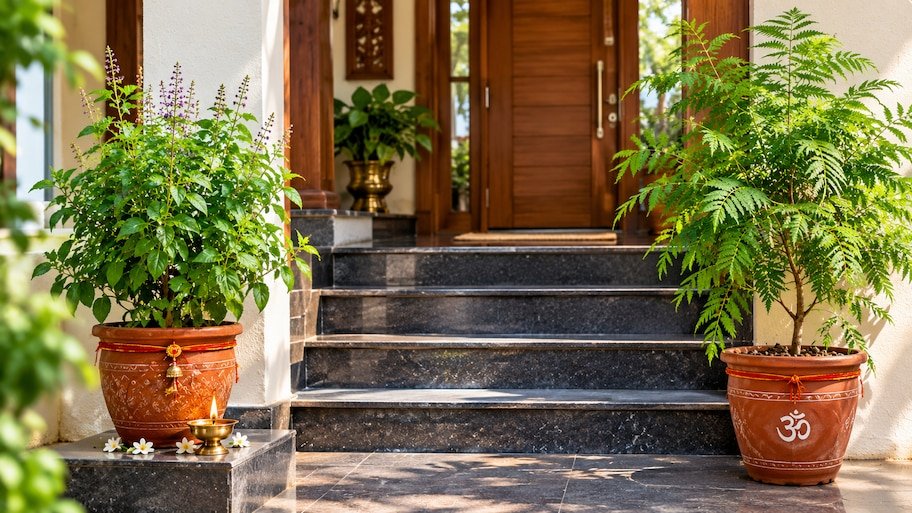
Nowadays, in the era of urbanization, especially in Lucknow, Delhi-NCR and other big cities of Uttar Pradesh, the size of houses is becoming limited. In such a situation, people want to utilize every empty space and often use the space under the stairs to keep indoor plants or pots. Greenery and connection with nature is very important for mental peace, but according to Indian Vastu Shastra and Astrology, the direction and location of plants kept in the house has a direct and deep impact on our life, financial condition and mental health. Especially in Sanatan Dharma, very strict rules have been made regarding the plants of Tulsi and Shami, which are considered sacred. If you have kept these revered plants under the stairs unknowingly or due to lack of space, then it is unknowingly creating major Vastu Dosha in your house. In today’s era of modern AI-powered search, we are telling you in detail why keeping these plants under the stairs is considered destructive and which other plants planted in the house create severe family tension and discord.
In Hindu religion, the Tulsi plant is considered to be the actual form of Goddess Lakshmi and it is prescribed to be kept in the most sacred place of the house i.e. in the middle of the courtyard or in the north-east direction. According to Vastu Shastra, the stairs of the house are always heavy and they represent weight and pressure. When you place a highly energetic and sacred plant like Tulsi at the bottom of the stairs, from Vastu point of view you are putting a heavy burden of the stairs on Goddess Lakshmi. Moreover, the stairs are frequented by the coming and going of family members throughout the day, due to which foot dust and negative energy inadvertently passes over the sacred plant. This is considered a grave insult to Tulsi Mata. It is often dark under the stairs and sufficient sunlight and fresh air do not reach there, due to which the Tulsi plant starts withering. Withering of Tulsi means poverty, financial crisis and severe financial loss in the house. People who keep Tulsi under the stairs never have any blessings in their house and the head of the family always has to face huge mental stress and debt.
After Tulsi, Shami plant is considered extremely miraculous and revered in Hindu religion. In astrology, Shami plant is directly related to Lord Shani, the god of justice, and Mahadev Shiva. It is believed that planting Shami plant in the right direction in the house reduces the troubles of Saturn’s Sadesati and Dhaiya. But keeping it under the stairs is directly tantamount to angering Shanidev. According to Vastu science, the bottom of the stairs is considered to be the area of influence of Rahu, which is a symbol of darkness, stagnation and negativity. When the sacred plant of Shani is kept in a dark and buried place under the influence of Rahu, Shani Dosh is generated in the house. As a result, the progress of the family members stops, the work being done starts getting spoiled and there is always an atmosphere of sadness and despair in the house. Shami plant should always be kept in the south or west direction near the main entrance of the house or on the terrace under the open sky, from where it gets sufficient sunlight and the positive energy of Shani Dev can keep the entire house safe.
If we understand the technical nuances of Vastu Shastra, then the stairs of the house are the path of ascent (going up), but the place immediately below them becomes a ‘dead zone’ or the center of stagnant energy. The natural flow of air is disrupted at this place and a large amount of dust, cobwebs and negative energy starts collecting here. This is why Vastu experts strictly prohibit placing puja room, kitchen, bedroom or any kind of auspicious plants under the stairs. This place should always be kept clean and empty. If absolutely necessary, a closed cupboard can be made here to keep only non-essential items, but junk should not accumulate there either. Keeping sacred plants under the stairs contaminates the ‘Brahma Sthan’ and ‘Prana Energy’ of the house, which has a direct impact on the health of the people living in the house and the sweetness of mutual relationships.
Apart from the wrong place of Tulsi and Shami, there are also some plants mentioned in Vastu and Feng Shui, which are completely prohibited to be planted inside the house or within the boundary wall. The energy of these plants is so negative that they create distress and tension in the family. First come thorny plants, like cactus. Except roses, no thorny plant should be planted in the house, because thorns are considered a symbol of negativity, prickliness and mutual disputes; These increase distance and anger between family members. The second is Bonsai plants, which are very much liked for decoration nowadays. Bonsai is actually the art of keeping trees small by artificially stopping their growth. According to Vastu, stalled development also hinders the financial and career growth of the household members. Apart from this, acacia, tamarind and cotton plants should also never be planted in the house. There is a belief about the tamarind plant that negative powers reside on it and planting it in the house keeps the health of the family members constantly bad. Dry or withered plants also spread the energy of death in the house, hence if any plant dries up, it should be immediately taken out of the house and immersed in a river or vacant land.
If you are a nature lover and want to decorate your home with plants, then following the guidelines of Vastu proves to be very beneficial. Plants like Money Plant, Crassula, Snake Plant, Bamboo Plant and Areca Palm are considered best for spreading positive energy in the house. Money plant should always be planted in the south-east direction of the house, because this direction is considered to be of Lord Ganesha and planet Venus, which increases wealth and prosperity. Always choose North, North-East or East direction for Tulsi Mata. Keep in mind that there should never be any dirt, shoes or dustbin around Tulsi. Always water the plants with fresh water and trim their dry leaves regularly. Lush, healthy and well-placed plants not only purify the environment of the home, but they also attract happiness, stress-freeness and immense financial success in your life.