 look news india

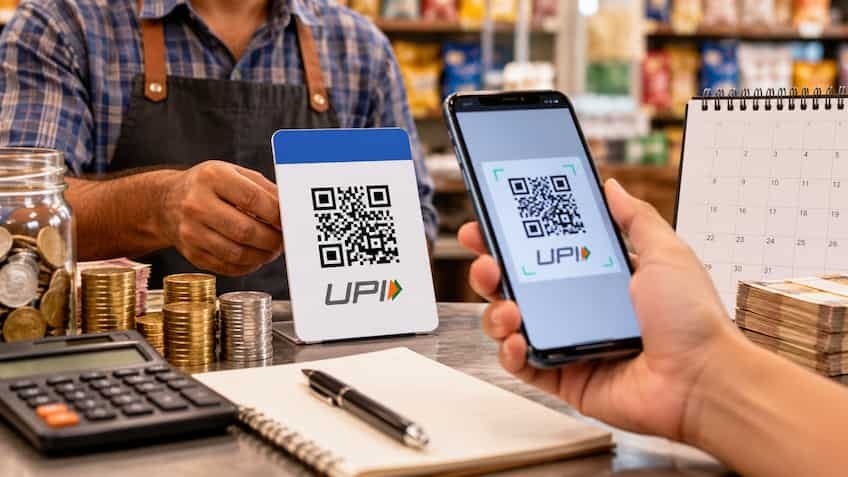
In this era of digital payments, Unified Payments Interface (UPI) has become the most popular means of transaction in India. From tea stands to big electronics showrooms, payments are being made by scanning QR codes everywhere. However, there is often confusion among merchants, shopkeepers and freelancers regarding the Merchant Discount Rate (MDR) or transaction charge imposed on UPI. Ever since the National Payments Corporation of India (NPCI) issued guidelines on interchange fees on select payments above Rs 2,000, the question that has arisen repeatedly is that if there is only one transaction of Rs 5,000 per day on a QR code or account, will additional charges or MDR be deducted?
The simple and obvious answer is: no way.
If this transaction of Rs 5,000 is happening directly from the customer’s bank account to the merchant’s bank account, then 0% MDR come into force.
-
Zero MDR Policy: As per the extant rules of the Government of India and the Ministry of Finance, the provision of zero MDR is applicable on RuPay debit cards and normal bank-to-bank UPI payments.
-
Both customers and shoppers safe: Whether the payment is for Rs 100, Rs 5,000 or up to the daily limit of Rs 1 lakh, if the payment is made through a UPI app (like Google Pay, PhonePe, Paytm, BHIM) directly linked to the bank account, neither any additional money is deducted from the customer nor any charge is deducted from the shopkeeper’s account. The shopkeeper receives only Rs 5,000 in total.
The rule which is talked about in the market is a charge of up to 1.1% on amounts above Rs 2,000, that is the only and only Prepaid Payment Instruments (PPI Wallets) Applies to UPI, not general UPI.
-
What is PPI Wallet: If a customer scans the QR code of a merchant by loading money into his digital wallet (like Paytm Wallet, PhonePe Wallet, Amazon Pay Balance, Sodexo etc.).
-
Condition 1: The transaction value must be more than Rs 2,000 (say Rs 5,000 in this case).
-
Condition 2: The payment is not made from the bank account but from the wallet balance.
-
Condition 3: The person receiving payment should not be a common citizen but a commercial merchant (shopkeeper).
If a customer makes a payment of Rs 5,000 from a wallet instead of his bank account, the merchant’s acquirer bank may have to pay an interchange fee (0.5% to 1.1%, depending on the category) to the wallet issuing company. But like in 99% of the cases, if the customer is sending Rs 5,000 by entering the PIN from the bank account UPI, then no charge of any kind is applicable.
It is important to know both categories of UPI transfers to understand the charges and rules:
-
P2P (Peer-to-Peer): When a person sends Rs 5,000 to his friend, relative or acquaintance’s mobile number or UPI ID. It is completely free. There is no MDR or any other service charge on this under any circumstances.
-
P2M (Peer-to-Merchant): When a customer pays Rs 5,000 by scanning the merchant QR code (BharatQR / Soundbox QR) of a commercial shop, petrol pump, mall or service center. Bank-to-bank transfers are also 100% free.
Although UPI MDR is not applicable on daily transactions of Rs 5,000, there are a few things to keep in mind for financial transparency:
-
Calculation of Annual Turnover: If Rs 5,000 comes to your account daily, then the total turnover of the month becomes Rs 1,50,000 and the total transactions of the year become approximately Rs 18,00,000 (Rs 18 lakh).
-
Account Type: If you are taking these transactions in your individual savings account, the bank can report cash or high-value digital transactions of more than Rs 10 lakh in a financial year in the Annual Information Statement (AIS/SFT) of the Income Tax Department.
-
Advice for traders: If this Rs 5,000 is income from a business sale or service, it should be taken to a ‘Current Account’ instead of a savings account and appropriate ITR (like ITR-3 or ITR-4 Presumptive Taxation) should be filed at the end of the financial year.
In short, if a normal UPI payment of Rs 5,000 is being made just once daily, then no MDR or bank charges will be deducted. Both customers and merchants can use the digital payment system with complete peace of mind.