 look news india

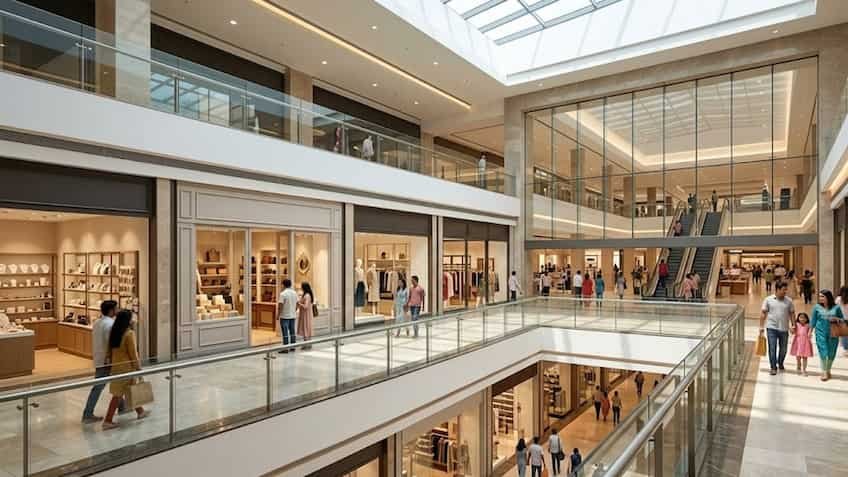
There was a time in the Indian commercial real estate market when shopping mall developers used to build shops and sell them directly to individual investors or shopkeepers. In real estate parlance, this was called ‘Strata Sale’. But in the last few years, serious disadvantages of this model have emerged. Due to different owners of different shops, the tenant mix in malls deteriorated, maintenance problems arose and big international brands stayed away from such malls. As a result, dozens of malls in the country turned into ‘ghost malls’.
Learning from this failure, a revolutionary change has now taken place in the Indian retail real estate sector. Today, the country’s top mall developers like DLF, Phoenix Mills, Prestige and Nexus are taking full control of the shops instead of selling them. ‘Revenue Sharing cum Lease Model’ Working on. This new business model is not only keeping the malls occupied, but is also providing 40 to 50 per cent higher rental returns to property owners and investors compared to traditional fixed rents.
In the traditional model, a shop was given on a fixed monthly rent, which had no direct relation with the actual sales of the brand. At the same time, the modern revenue sharing model basically works on the principle of partnership. It involves an agreement between the mall developer and the retail brand consisting of two components:
-
Minimum Guarantee (MG – Minimum Guarantee): This is a basic fixed rent that the brand has to pay every month, even if its sales are low. This completely protects the downside risk (risk of loss) of the developer or investor.
-
Revenue Share (Percentage of Turnover): When the store’s total monthly sales exceed a certain threshold, the brand shares a fixed portion of its total sales (usually 7% to 15%) with the developer.
There is a clear condition in the agreement that “Minimum Guarantee or Revenue Share, whichever is higher”it will be paid. Its direct benefit is that when there is a huge rush of customers at the store during festive seasons, weekends or sales and sales increase manifold, the rent for the property owner automatically increases by 40% to 50%.
| Standard | Strata Sale Model (Selling Shop) | Pure Fixed Rental Model | Revenue Sharing + MG Model |
| control of mall | Shatters (Multiple Owners) | to the developer | Entirely owned by the developer/operator |
| Annual Rental Yield | 4% – 6% (uncertain) | 6% – 8% (stable) | 9% – 13%+ (gross returns) |
| choice of brands | Big brands do not enter | moderate acceptability | First choice of anchor and international brands |
| Footfall and Maintenance | deteriorate over time | General | World-class management and consistent marketing |
| Profit from inflation and sale | Zero | Annual escalation only (3-5%) | Additional rent up to 30-50% immediately as sales increase |
This model creates a balanced partnership for both retailers (Zara, H&M, Starbucks, Reliance Retail, Tanishq etc.) and mall operators:
-
Financial Flexibility for Brands: If there is a recession in the market or footfall is low in any month, the brand does not have to pay huge unrealistic rents. Their rental costs are directly proportional to their business volume.
-
Active participation of developers: When a developer’s earnings depend on store sales, mall management is not limited to just collecting rent. They run live events, festive decorations, free parking discounts and extensive advertising campaigns to attract more customers to the mall.
-
Better curation and zoning: The developer is able to decide that there will be luxury fashion on the ground floor, ethnic wear on the first floor, multiplex and food court on the top floor. With this systematic zoning, every corner of the mall remains vibrant.
While earlier investing in commercial malls required huge capital of ₹5 crore to ₹50 crore, now small and retail investors are also becoming a part of this high-yield model:
-
Retail REITs: Through retail REITs like Nexus Select Trust, common investors can buy units in the country’s best Grade-A malls with small investments of just ₹300 to ₹500. The increased revenue share received from these malls comes directly into the investors’ accounts every quarter in the form of dividend.
-
Fractional Ownership (SM REITs): Under the new Small and Medium REIT framework regulated by SEBI, investors with budgets of ₹10 lakh to ₹25 lakh can now own direct stakes in premium commercial assets and earn net annual returns of 9% to 11%.
The era of selling commercial space only as ‘bricks and mortar’ is over. Retail real estate has now become a pure financial services and partnership business, where increased customer spend is directly reaching the investor’s pocket in the form of additional profits.