 look news india

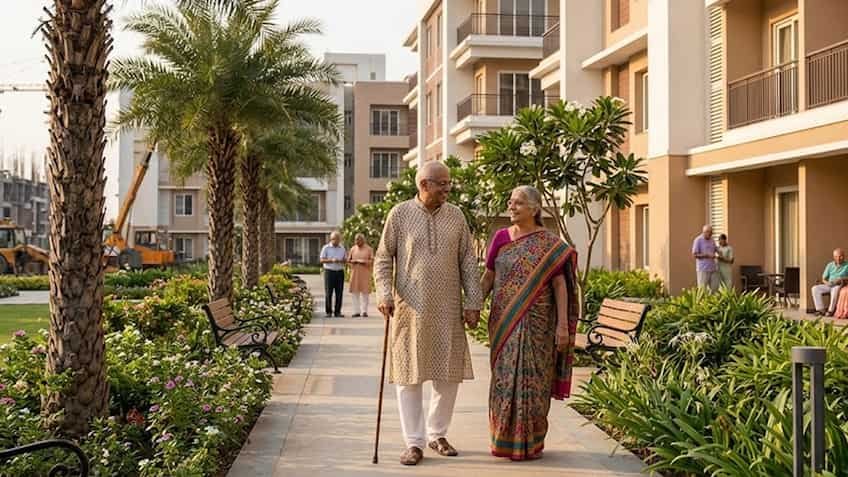
Till now, products in real estate, tech and consumer markets have been designed keeping in mind the Millennials and Gen Z, but a silent change in the demographic structure of India is now proving to be a gold mine for investors. India’s senior living housing sector is set to become a huge market worth $10.1 billion (approximately ₹84,000 crore to ₹1 lakh crore) by 2030, according to a joint report by the Association of Senior Living India (ASLI) and global real estate consultancy firm JLL. The population above 60 years of age in the country has currently reached 16.69 crores, which is estimated to cross 19.15 crores by 2030 and 34.6 crores by 2050. Increasing age, nuclear families and desire for an independent lifestyle have skyrocketed the demand for special housing projects for the elderly.
The report’s data highlights the severe shortage of organized senior housing in India and the historic supply-demand imbalance:
-
Current Supply: Only for senior citizens in organized market across India till June 2026 25,050 units It is ready.
-
Estimated need by 2030: At least by 2030 under the policy-supported growth model 74,000 units There will be a direct requirement of Rs. 100 crore, which will require a capital investment of about ₹73,100 crore ($7.7 billion).
-
Penetration rate only 1.5%: Compared to developed countries like the US (6-7%) and New Zealand (14-15%), the access rate to senior housing in India is only 1.5% Is. This simply means that the country’s 98.5% potential market is completely empty right now Is lying.
-
Occupancy Rate 80-85%: Vacant flats are almost nil in well-run existing senior living projects and most are experiencing a stable occupancy of 80 to 85 per cent.
In this entire market of senior citizens, the highest earning and demand is being seen in the field of ‘Assisted Living’ (care services).
-
The elderly population above 75 years of age is growing at a compound annual growth rate (CAGR) of 7.8%, requiring nursing and caregivers for daily routine and health monitoring.
-
Today in the country only 2,100 assisted living beds are available, while at least until 2030 11,000 beds There will be immediate need.
-
This is why not only real estate builders, but also big hospital groups and healthcare operators are now entering into senior living projects by forming joint ventures.
Earlier senior living projects were limited only to the outskirts of big IT cities like Bengaluru, Chennai or Pune. But now new projects are moving towards small, quiet and religious cities:
-
30 to 40% of the upcoming new senior housing projects are going to be launched in Tier-2 and Tier-3 cities.
-
pet City: Coimbatore, Dehradun, Mysore, Jaipur, Bhopal, Chandigarh and spiritual centers like Rishikesh, Haridwar, Vrindavan and Varanasi Emerging as the first choice of the elderly.
-
Pollution in these cities is low, cost of living is affordable and land prices are practical compared to big cities, making it easier for developers to offer projects in affordable rental or ownership models.
While the annual rental yield in commercial and general residential real estate is only 2.5% to 3.5%, this yield in specialized senior living units is 6% to 9% Can reach. The main reason behind this is that the rent here is not only for brick and stone houses, but also for premium lifestyle services like 24-hour medical backup, ambulance, doctor-on-call, housekeeping, centralized mess, physiotherapy and wheelchair-friendly infrastructure.
Additionally, new financing structures like reverse mortgage loans and insurance-linked care models are enabling seniors who own homes but lack liquid cash to move into these projects. Senior living is going to prove to be the fastest growing and safest investment segment of the real estate sector in India in the coming 4-5 years.