 look news india

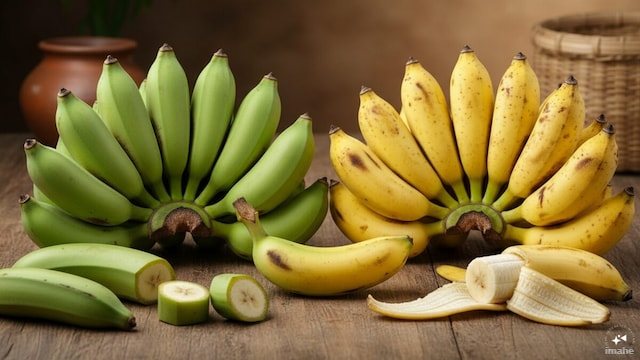
Banana, which has gained popularity as the king of fruits, is a superfood which is easily available in every household across the world. From children to the elderly, everyone consumes bananas to maintain their health. But when it comes to eating bananas, there is often a confusion in the minds of people whether it is better to eat raw (green) banana or whether fully ripe (yellow) banana is more beneficial for our health? Do you know that as the banana ripens, there is a world of difference in the nutrients, sugar content and digestibility of the banana? If you are also cautious about your fitness, weight loss or stomach problems, then it is very important for you to know which banana is the best option according to the needs of your body. Let us understand deeply from the perspective of a health and nutrition reporter what is the scientific difference between raw and ripe banana and what is the effect of consumption of both on our body.
When banana is green and unripe, the amount of natural sugar in it is very less and in its place a large amount of ‘Starch’ is found. This type of starch is called ‘Resistant Starch’ in the language of nutrition science. Resistant starch works in the same way as soluble fiber works for our body. It takes a long time to digest, due to which the stomach feels full for a long time and there is no desire to eat again and again. Raw banana has a very low glycemic index (GI), which means that the blood sugar level in the body does not increase suddenly after eating it. This is the reason why raw banana is considered an excellent and miraculous option for diabetic patients and people who want to lose weight. Apart from this, the prebiotics present in raw banana nourish the good gut bacteria, which strengthens the digestive system and provides relief from problems like constipation.
As the banana ripens and its peel turns from green to yellow or starts getting black spots on it, the resistant starch inside it starts naturally converting into simple sugars i.e. glucose, fructose and sucrose. This is the reason why ripe banana becomes very sweet and soft in taste. The biggest feature of ripe banana is that it provides very fast digestible energy to the body. For players, athletes or gym goers who want to get instant energy just before or after a workout, ripe banana is no less than a boon. The amount of antioxidants in ripe banana increases significantly compared to raw banana, which helps in strengthening our immune system and fighting free radicals. Also, ripe banana is very easily digested, so even people with sensitive stomach or sick people can digest it without any problem.
If you are trying to control your weight or have type-2 diabetes, then eating ‘raw banana’ or light green banana will be more beneficial for you. Due to low glycemic index and high fiber, raw banana does not allow blood sugar to spike and improves insulin sensitivity. On the contrary, if you are worried about being thin, want to gain weight, or need instant energy, then ‘ripe banana’ is suitable for you. However, diabetic patients should avoid consuming sweet bananas that are overripe or have dark spots as they contain very high sugar levels, which can rapidly increase blood glucose.
From the point of view of digestion, due to the high fiber and starch content in raw banana, some people may complain of some heaviness or gas while digesting it, especially if their digestive system is already weak. Such people should eat raw banana by boiling it, making vegetable or kofta. On the other hand, ripe banana becomes easy to digest during the ripening process. People who often have constipation, acidity or digestive problems can keep their stomach calm by eating ripe banana. Rich amount of potassium is found in ripe banana, which proves to be very effective in controlling our heartbeat, keeping blood pressure normal and removing muscle cramps.
In conclusion, raw or ripe banana, both are a treasure of nutrition in their own place. None of these bananas are completely ‘bad’ or ‘useless’, rather it entirely depends on your physical condition, age and health goals as to which banana you should eat at what time. If you want to control sugar or reduce belly fat, include raw or boiled banana in your diet. At the same time, if you want instant energy, better mood and easy digestion, then enjoy sweet ripe bananas. By choosing the right diet at the right time, you can keep your body healthy, energetic and fresh.