 look news india

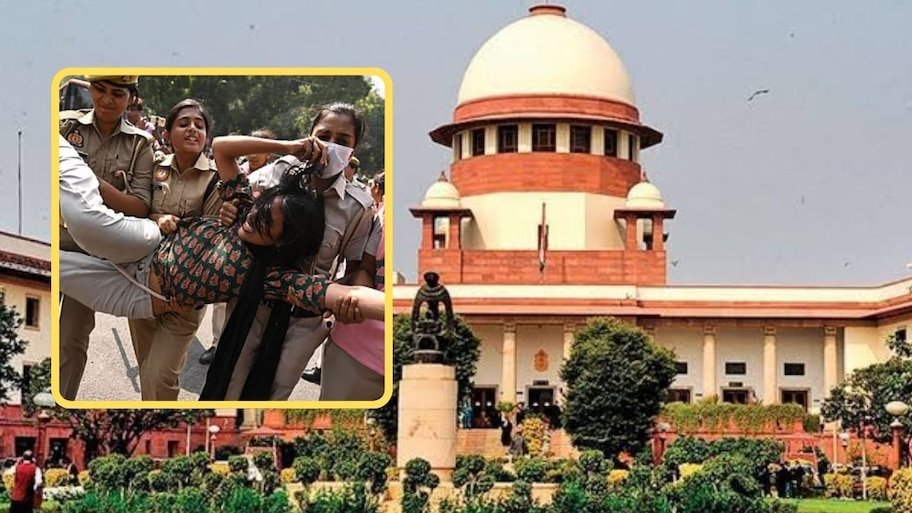
The Supreme Court of the country has expressed strong objection to the public demonstrations in the national capital Delhi and the administrative style of suspending internet services and closing the entry and exit doors of metro stations in the name of law and order. The special bench of the Supreme Court has termed this issue as a very serious matter related to the basic fundamental rights of the citizens and freedom of movement in daily life. The court clearly remarked that it is the responsibility of the police administration to maintain law and order, but stalling the public transport system and shutting down the internet during every small or big protest is causing undue harassment to the general public. Taking cognizance of this matter, the apex court has issued a formal notice to the Home Secretary of the Union Home Ministry (MHA) and the Delhi Police Commissioner and directed them to file a detailed affidavit.
During the hearing, the bench headed by Justice said in oral observations that in a democratic system, peaceful protest is the constitutional right of the citizens, but under its guise or to stop it, the life of the entire capital cannot be held hostage. The court said that the mere call of protest in Lutyens Delhi, Central Delhi or sensitive areas leads to closure of many major DMRC metro stations for hours or the entire day. Due to this, patients going to hospitals, school-college students, candidates of competitive exams and working people going to offices have to face heavy traffic jams and mental stress. The court asked in a stern tone whether shutting down infrastructure and communication means is the only administrative option left to maintain law and order?
Presenting detailed data before the court, the petitioners argued that in a sensitive metropolis like Delhi, Telecom Suspension Rules (Internet Suspension Rules) and Section 144 have started being used as regular administrative weapons. Expressing deep concern over this, the Supreme Court asked whether the ‘Doctrine of Proportionality’ is tested at any level before closing the station or blocking mobile internet data? The court reiterated the precedent of the landmark judgment in Anuradha Bhasin vs. Union of India that the right to internet is an integral part of the freedom of thought and expression under Article 19(1)(a) of the Constitution and its suspension can be done for a minimum period only in case of unavoidable national security crisis. The sudden closure of metro stations increases the pressure of vehicles on the roads, resulting in hours-long traffic jams across Delhi.
The Supreme Court has issued notice to the Central Government and Delhi Police leadership in the case and asked them to file a comprehensive reply before the upcoming hearing. The court has mainly sought clarification on three points:
-
Legal process of decision making: By which level of officer is the decision to close a metro station or suspend telecom services in an area taken and is there any Standard Operating Procedure (SOP) for the same?
-
Lack of prior information system: Why is the general public not able to get information about closure of stations or diversion of routes in real-time, due to which lakhs of passengers get stuck midway?
-
Alternative Security Strategy: Does the Capital Police not have modern technology and strategic measures to control huge crowds and protesters without affecting the daily movement of common citizens?
It has been highlighted in the petition that due to closure of gates of major interchanges and central metro stations like Rajiv Chowk, Central Secretariat, Mandi House, ITO, Patel Chowk and Udyog Bhawan, the entire routine of daily commuters coming from National Capital Region (NCR) i.e. Noida, Ghaziabad, Gurugram and Faridabad gets disrupted. Online delivery services, UPI and digital payment mechanisms, ambulance services and emergency connectivity of hospitals are severely disrupted due to the internet shutdown. The lawyers argued that in many cases students missed online examinations and essential health services were delayed, for which the administration should take responsibility.
The Supreme Court has indicated that it may prepare a national level guideline or SOP (Standard Operating Procedure) regarding controlling communication and public transport during protests for the entire country instead of being limited to Delhi only in this matter. The court is of the view that security agencies should be trained in modern crowd management techniques, so as to maintain security as well as fundamental rights of common citizens and ensure smooth functioning of public services. The next hearing of the case has been scheduled in the coming few weeks, on which the eyes of legal experts and common citizens across the country are fixed.