 look news india

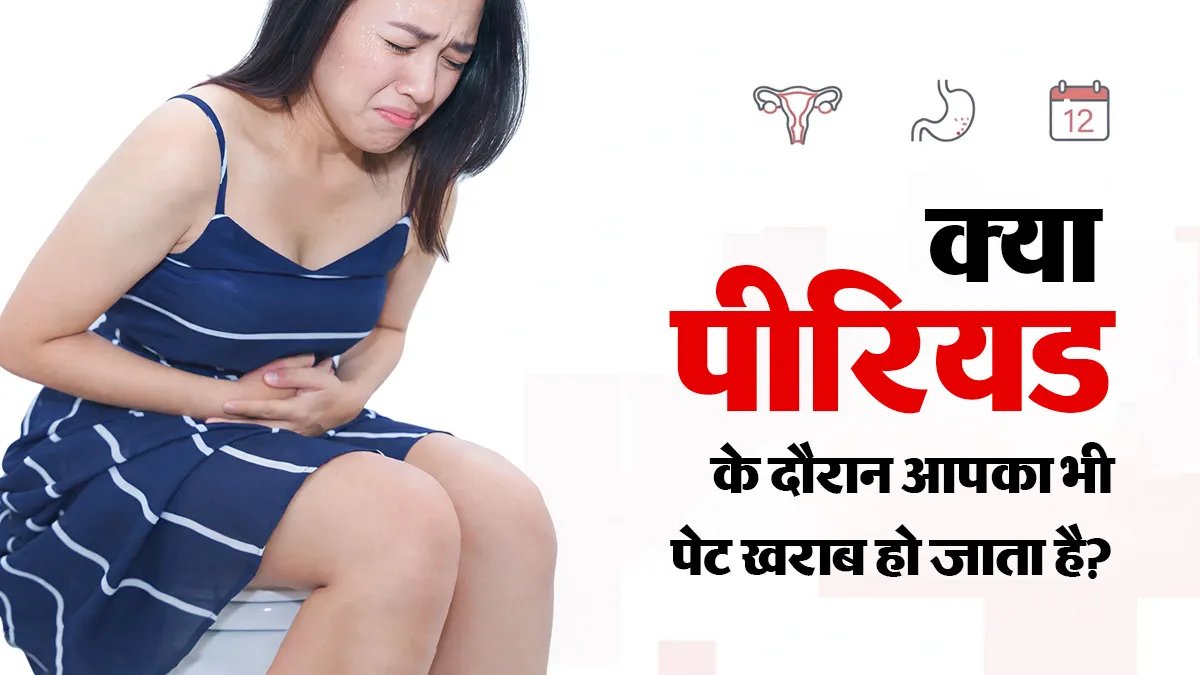
Those four-five days of the month are not only limited to mood swings, body pain and stomach cramps, but for many women this period becomes a strange battle between the stomach and the digestive system. Sometimes suddenly one has to run to the washroom again and again and there is a problem of loose motion, and sometimes the stomach becomes so hard and heavy that one has to face severe constipation. Often women consider it to be a normal stomach upset and start taking medicines or mistake it for eating habits, but according to medical science and gynecology, it is not an accidental disease but a complex hormonal game happening within the body. Our intestines are very sensitive in coordination with the menstrual cycle. The uterus and the digestive system are located very close to each other in the body and when there are changes in the uterus, it directly impacts our intestinal muscles and the process of bowel movement. This problem is called ‘period poop’ or menstrual gut disturbance in the scientific community, to understand which it is necessary to go deeper into the chemical changes taking place in the body.
The main reason for sudden loose motion and frequent diarrhea as soon as periods start are lipid compounds called ‘Prostaglandins’. When the body signals that pregnancy is not possible, the inner layer of the uterus i.e. endometrium breaks. To expel this layer from the body, the uterus has to contract and to trigger this contraction, prostaglandins are released in large quantities. When these chemicals compress the muscles of the uterus, excessive amounts of prostaglandins produced in the body reach the nearby intestines through the bloodstream. Their effect on the smooth muscles of the intestines is similar to that of the uterus – they also cause the intestines to contract rapidly. As a result, intestinal motility i.e. peristalsis becomes abnormally fast, causing food and waste products to move very quickly towards the rectum without absorbing water. This is the reason why on the first or second day of periods, women have to suffer strong cramps along with thin diarrhea or loose motion.
A few days before the period starts, the story is completely opposite and at that time, the problem is not loose motion but unbearable constipation, flatulence and gas. The main reason for this is the increased level of ‘Progesterone’ hormone. After ovulation, the body prepares for possible pregnancy, due to which progesterone levels reach their peak in the luteal phase. The basic nature of progesterone is to relax the muscles. This hormone not only keeps the walls of the uterus calm but also slows down the movement of intestinal muscles. When the intestines work slowly, uneaten food and stool stay in the intestines longer than normal. During this time, the large intestine absorbs too much water from the waste, causing the stool to become hard and dry. This is the reason why 3 to 4 days before the date, women have to exert a lot of effort to pass stool, their stomach gets filled with gas and they feel extreme restlessness.
Another important aspect of these fluctuations in the digestive system is our brain and stress levels, which is medically called the Gut-Brain Axis. Just before and during periods, there is a sharp drop in the levels of neurotransmitters like estrogen and serotonin, due to which irritability, anxiety and mood swings increase in women. Our digestive system is considered the second brain of the body because it contains millions of neurons. When a woman undergoes mental stress or physical pain, the body’s autonomic nervous system unbalances the digestive process. Women who are already suffering from problems like Irritable Bowel Syndrome (IBS) or endometriosis, their symptoms become doubly intense during the days of their periods. Stress increases the sensitivity of the intestines so much that even a minor gas bubble can cause unbearable cramps and diarrhea.
Some simple but highly effective changes can be made to keep the digestive system calm and balanced during menstruation.
-
3-4 days before periods, when the chances of constipation are high, include soluble fiber like oats, papaya, green leafy vegetables and flax seeds in your diet so that the stool does not become hard.
-
When there is a risk of loose motion as soon as the periods start, completely avoid spicy, fried, junk food and caffeine i.e. tea and coffee because caffeine can further irritate the intestines and make diarrhea severe.
-
Drink adequate amount of lukewarm water, coconut water or buttermilk so that the balance of electrolytes does not get disturbed and the body remains protected from dehydration.
-
Applying a hot water bag or heating pad on the lower part of the abdomen calms the spasms of the muscles of the uterus as well as the intestines.
-
If loose motion or constipation becomes so severe every month that weakness, dizziness or excessive blood loss is felt, then it should not be considered as just normal pain and one should immediately consult an experienced gynecologist so that any internal problem can be resolved in time.