 look news india

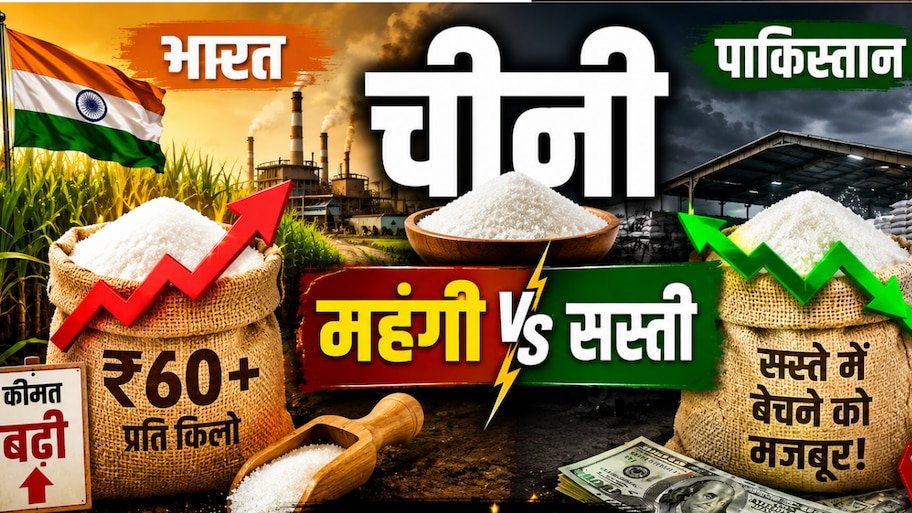
At present, two neighboring countries of South Asia – India and Pakistan – are witnessing a completely opposite and surprising economic picture regarding the sugar market. While in India, sugar prices in the retail market have crossed the level of ₹ 60 per kg and are putting pressure on the pockets of common consumers, Pakistan, which is facing a serious economic crisis, is forced to sell its expensively produced sugar at cheap prices in the international market due to huge losses and subsidies. This contradiction has arisen due to the agricultural policies, government priorities and foreign exchange needs of both the countries.
Why did sugar prices cross ₹60 in India?
India is the largest consumer and major producer of sugar in the world. Several policy and seasonal factors are responsible for the recent surge in prices in the domestic market:
-
Ethanol Blending Program (EBP): The Government of India has diverted a large portion of sugarcane juice and B-heavy molasses directly to ethanol production to meet the target of 20% ethanol blending in petrol. This has led to a proportionate reduction in the production of pure sugar for the domestic market.
-
Impact on production in major states: Irregular monsoon rains and drought last season affected total sugarcane production in major sugarcane producing states like Maharashtra and Karnataka.
-
Increase in Fair and Remunerative Price (FRP) of sugarcane: To ensure remunerative prices to farmers, there has been a continuous increase in the FRP announced by the Central Government, which has increased the input cost of the mills.
-
Strict restrictions on exports: To control festive demand and food inflation in the domestic market, the government has imposed strict rules on uncontrolled export of sugar.
Why is Pakistan forced to sell expensive sugar cheaply?
On the contrary, the situation in Pakistan is completely opposite. Despite high local production costs, the government and mill owners are exporting sugar to the international market at throwaway prices:
-
Severe shortage of foreign currency: There is a serious shortage of foreign exchange reserves in the Central Bank of Pakistan. The country urgently needs dollars to pay import bills and avoid default, due to which exports are being carried out even after incurring losses.
-
Domestic Surplus and Storage Crisis: In Pakistan, huge stock got accumulated after excessive crushing of sugarcane locally. The mills were left short of cash to pay for the next crop, forcing the government to allow exports by giving per kilogram subsidy.
-
Mill lobby and political pressure: Pakistan’s sugar industry is dominated by its big political houses and influential mill owners. To maintain the liquidity of the mills, sugar is being sold at low prices globally by giving subsidies worth billions of rupees from taxpayers’ money.
Gap in policy priorities: food security versus foreign exchange compulsions
This contrasting situation of the two countries reflects the priorities of their economies.
India’s strategy is to ensure energy security (reducing oil imports through ethanol), providing better prices to farmers and securing buffer stock for the 140 crore citizens within the country. Even though this sees prices in the range of ₹55-₹62 per kg in the near term, the domestic supply chain is completely stable.
On the other hand, Pakistan, due to its weak economy and urgent need of dollars, remains helpless to make losses in the international market by burdening its own country’s treasury with subsidies.