 look news india

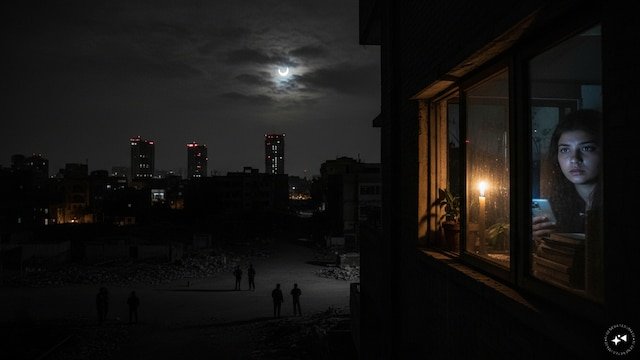
Neighboring country Pakistan, which is struggling with economic poverty and political instability, is facing the threat of biggest energy collapse ever. The country’s power transmission and generation system has reached the verge of complete collapse. Due to lack of foreign exchange reserves, shortage of imported fuel and unresolved circular debt worth trillions of rupees, dozens of major power plants of the country have either been completely closed or are producing much less than their capacity.
Experts and energy analysts have warned that if this huge gap between demand and supply is not bridged immediately, Pakistan may once again become a victim of nationwide mega-blackout like in 2021 and 2023 due to excessive frequency fluctuations on the National Grid (National Transmission & Despatch Company – NTDC). This situation has arisen at a time when the daily demand for electricity in the country has crossed its highest level due to extreme humidity and heat.
Forget about the rural areas of Pakistan, now even the biggest industrial and business cities of the country are immersed in darkness. According to the unofficial schedule released by power distribution companies (DISCOs), daily life has come to a complete standstill in several key areas:
-
Karachi: In Karachi, considered the economic backbone of the country, K-Electric is carrying out load shedding of 8 to 12 hours in various industrial and residential areas, due to which production in hundreds of export-oriented textile mills has stopped.
-
Lahore and Punjab Province: The situation is worse in Lahore Electric Supply Company (LESCO) and Faisalabad (FESCO) areas. Electricity is missing for 14 to 16 hours in rural and semi-urban areas of Punjab.
-
Khyber Pakhtunkhwa and Balochistan: The situation is out of control in remote areas under the jurisdiction of Peshawar (PESCO) and Quetta (QESCO), where there are reports of power outages for 18 to 20 hours. Emergency surgeries are being postponed in hospitals and drinking water supply has been completely disrupted.
Despite Pakistan having an installed generation capacity of more than 40,000 MW, the country is able to generate only 18,000 to 21,000 MW of electricity in real time. The main reason for this huge discrepancy is the massive non-availability of fuel:
-
RLNG and furnace oil crisis: Most of the modern thermal power plants in the country depend on imported liquefied natural gas (RLNG) and furnace oil. Due to acute shortage of dollars with the State Bank of Pakistan (SBP), the government is unable to buy new cargoes of expensive fuel from the global market and open Letters of Credit (LCs) for them.
-
Coal supply disruption: Large coal based power plants like Port Qasim and Sahiwal are not getting the consignment of imported South African coal to run them, due to which several MW capacity units are standing on standby.
-
Hydropower fluctuations: Due to low inflow of water and problems of silt, hydropower generation from major dams like Tarbela and Mangla is also proving inadequate to meet the demand.
The real root of the ruin of Pakistan’s power sector is its ‘Circular Debt’, which has crossed the dreadful figure of 2.6 trillion Pakistani rupees (about Rs 2.6 lakh crore).
The most controversial aspect of this crisis is the ‘Capacity Payments’ (Capacity Charges) made to Independent Power Producers (IPPs). Under agreements signed between the 1990s and 2015, the government has to pay a fixed amount to private and foreign power companies at the dollar rate, whether it buys power from them or not. The Government of Pakistan has failed to pay the old dues of these companies. Chinese companies have also limited their production capacity due to outstanding dues worth trillions of rupees, especially from Chinese power plants built under the China-Pakistan Economic Corridor (CPEC). Unless the government releases money to these power producers, they are flatly refusing to buy new fuel and run the turbines.
The sudden decline in power generation is directly destabilizing the transmission system. Pakistan’s National Grid system is very old and weak. When demand for electricity is high and supply is low, the grid’s standard frequency of 50 hertz (Hz) starts falling rapidly.
Sources in the National Power Control Center (NPCC) say that when a big power plant trips, the entire load comes on the transmission lines. If the system does not auto-isolate, then under a domino effect (cascading failure) power stations shut down one after the other and the entire country goes into blackout in one fell swoop. In recent days, a huge drop in voltage of up to 40% has been recorded at many major grid stations, due to which the risk of transformers burning is at its peak.
Amidst this deep crisis, the stringent conditions of the bailout package of the International Monetary Fund (IMF) have made the life of ordinary Pakistani citizens difficult. On the instructions of IMF, the National Electric Power Regulatory Authority (NEPRA) has drastically increased the electricity tariffs from Rs 50 to Rs 70 per unit. On top of this, GST, Fuel Price Adjustment (FPA) and various other surcharges are being added and sent to the consumers.
The situation is that the monthly electricity bill of an ordinary middle class family is more than its total monthly income. In protest against this, violent demonstrations and ‘bill burning movement’ are going on across the country including Rawalpindi, Islamabad, Multan, Lahore and Karachi. Citizens are gheraoing electricity offices and incidents of clashes with employees have become common. Due to the unbearable cost of electricity, thousands of small factories and cottage industries have closed forever, leaving lakhs of daily wage laborers unemployed.
This acute shortage of electricity is not limited only to domestic consumers, but it has also become the biggest threat to Pakistan’s national security and economic survival. Due to the huge decline in exports, the country’s trade deficit is continuously increasing and foreign investors are staying away completely.
The Shehbaz Sharif government has appealed to Saudi Arabia, the UAE and China for emergency financial help and energy concessions, and has also taken suicidal decisions such as discouraging domestic solar production by imposing taxes on solar panels. Unless Pakistan undertakes structural reforms in its power sector, renegotiates capacity payments contracts, and curbs transmission line leakages and power thefts (Line Losses), it is looking impossible for the country to escape from this endless darkness and the threat of mega-blackouts.