 look news india

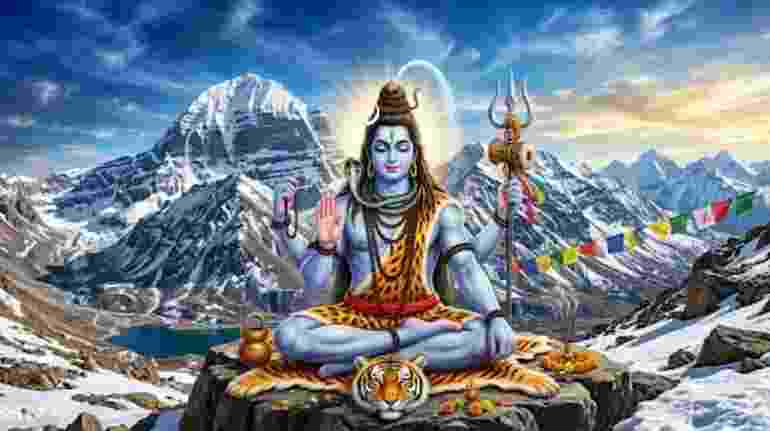
In Hindu religion, the month of Saavan is considered very sacred and the most favorite month of Lord Shiva. During this entire month, crores of Shiva devotees remain engrossed in the devotion of Mahadev, observe fast and worship. The form of Lord Shiva is quite different and unique from all other gods and goddesses. Vibhuti is present on his body, snake is present around his neck, half moon is present on his head and Ganga is present in his hair. But do you know that all these symbols of Mahadev are not just a part of his form, but the biggest lessons of life like wisdom, patience, courage and balance are hidden in them?
Let us know the real spiritual meaning of 11 major symbols associated with Lord Shiva:
1. Trishul: Balance of past, present and future
Lord Shiva’s weapon ‘Trishul’ is made of three thorns. It shows the creation, preservation and destruction of the universe. Additionally, it symbolizes the three forms of time—past, present and future, reminding us that Mahadev is beyond the cycle of time.
2. Damru: The first sound and continuity of the universe
It is believed that this entire creation started with the sound of Damru. The music of Damru reflects the continuous cycle and change of life. It teaches us that change is a natural law in life.
3. Third Eye: End of ignorance and negativity
The third eye of Mahadev symbolizes knowledge, insight and higher consciousness. According to mythology, when Shiva opens his third eye, ignorance, ego and all negative forces are destroyed.
4. Half Moon: Peace of mind and emotional balance
The half moon (moon) adorned on Shiva’s forehead symbolizes the balance of time and mind. Just as the moon keeps waxing and waning, similarly happiness and sorrow keep coming in life. This symbol teaches us to remain calm in every situation.
5. River Ganga in matted hair: kindness and control over uncontrolled power
Mother Ganga emerging from Shiva’s locks is a symbol of purity and compassion. When the speed of Ganga could have been destructive for the earth, Shiva calmed her speed by gathering her in his hair. It teaches us the lesson of controlling our power and energy in the right direction.
6. Snake around the neck (Vasuki): Fearlessness and control over desires.
The poisonous cobra snake wrapped around the neck of Mahadev shows that a seeker should have complete control over his fears and uncontrollable desires. It gives the message of remaining calm and alert even in adverse circumstances.
7. Neelkanth: Sacrifice, courage and protection of others.
During the churning of the ocean, when Shiva drank Halahal poison to save the entire universe, his throat turned blue. The ‘Neelkanth’ form of Shiva inspires self-sacrifice, courage and drinking poison (tolerating evils) for the welfare of the society.
8. Vibhuti (Bhasma) on the body: impermanence and renunciation
Lord Shiva applies the sacred ashes of the cremation ground on his body. This ash reminds us that this material world and body is perishable. Therefore, a person should leave pride and focus on humility, renunciation and spiritual progress.
9. Tiger Skin: Victory over ego and lust
Shivaji sitting on the tiger skin shows that he has completely conquered his ego, pride and violent desires. It symbolizes the inner strength that comes from self-control.
10. Rudraksha Rosary: Peace, protection and spiritual awakening
According to mythological beliefs, Rudraksha originated from the tears of Lord Shiva. Rudraksha rosary provides peace, security and spiritual energy to the mind. Shiva devotees wear it for their meditation and chanting.
11. Nandi and Shivalinga: Unalloyed devotion and infinite energy
-
Nandi: Nandi, the vehicle of Lord Shiva, is a symbol of patience, faith and loyalty. In temples, Nandi always faces Shivalinga, which shows unwavering devotion towards God.
-
Shivalinga: Shivlinga is a symbol of the formless and infinite form of Lord Shiva. It represents cosmic energy and the fundamental basis of creation.