 look news india

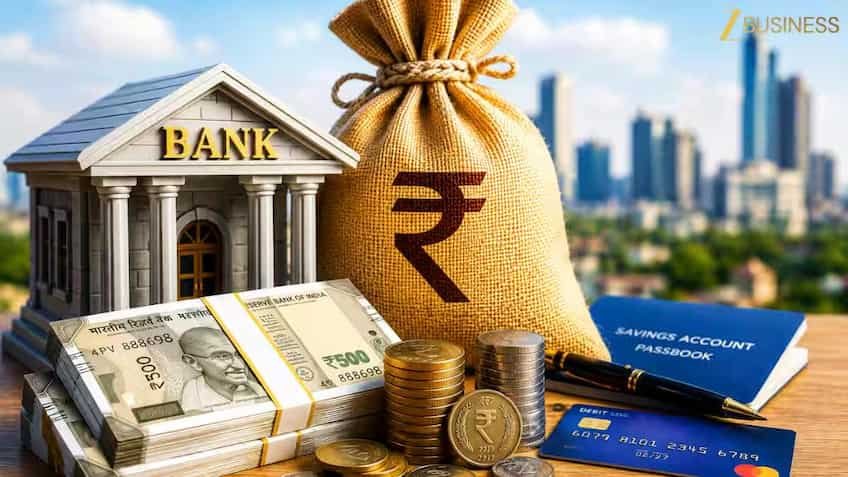
There is hardly any working or middle class family in India which does not have a savings account of some bank or the other. Be it receiving monthly salary, making everyday UPI payments or keeping cash aside for emergency expenses, a savings account is every citizen’s first financial need. However, most of the account holders do not pay much attention to the interest earned on the amount deposited in their savings account and consider it only as a safe place to keep money. Since the deregulation of interest rates by the Reserve Bank of India (RBI), different banks in the country offer different interest rates depending on their balance sheet, availability of cash and attracting customers. From Lucknow, the capital of Uttar Pradesh, Kanpur, Noida and Varanasi to metro cities across the country, this question often arises among bank customers that if they keep a huge amount like ₹ 1 lakh, ₹ 5 lakh or ₹ 10 lakh in their savings account, then how much return will they get from the bank at the end of the year.
The interest received in savings account completely depends on which bank your account is in and what is the current interest rate of that bank. Major government banks of the country (like SBI, PNB, Bank of Baroda) usually offer interest ranging from 2.70% to 3.00% per annum. Whereas, big private banks (like HDFC Bank, ICICI Bank, Axis Bank) offer interest of 3.00% to 3.50%. In contrast, small finance banks (like AU Small Finance Bank, Equitas, Ujjivan) and some new private banks (like IDFC FIRST Bank, IndusInd Bank) offer annual interest ranging from 4.00% to 7.00% or even higher on different balance slabs to attract customers.
Let us understand the direct calculation of annual and monthly returns on deposits of ₹1 lakh, ₹5 lakh and ₹10 lakh based on different interest rates:
| Amount deposited | 2.70% (Major Government Banks) | 3.00% (large private banks) | 5.00% (Mid-Size/Private Bank) | 7.00% (Small Finance Bank) |
| ₹1,00,000 (1 lakh) | ₹2,700/year (about ₹225/month) | ₹3,000/year (about ₹250/month) | ₹5,000/year (about ₹416/month) | ₹7,000/year (about ₹583/month) |
| ₹5,00,000 (5 lakh) | ₹13,500/year (about ₹1,125/month) | ₹15,000/year (about ₹1,250/month) | ₹25,000/year (about ₹2,083/month) | ₹35,000/year (approximately ₹2,916/month) |
| ₹10,00,000 (10 lakh) | ₹27,000/year (about ₹2,250/month) | ₹30,000/year (about ₹2,500/month) | ₹50,000/year (approximately ₹4,166/month) | ₹70,000/year (about ₹5,833/month) |
This comparison clearly shows that if you keep ₹10 lakh in a normal savings account of a conventional government bank at 2.70%, you will get only ₹27,000 in a year. Whereas, if the same amount is kept in a bank with a higher interest rate (7%), then the annual interest reaches ₹ 70,000, that is, a huge difference of ₹ 43,000 is seen directly.
This huge difference in interest rates is based on the business model of banks and their cost of raising funds. Leading banks like State Bank of India (SBI) and Punjab National Bank (PNB) have a vast network of branches and a strong Current Account-Savings Account (CASA) base of crores of customers. Therefore, they do not face shortage of funds and maintain huge deposits even by keeping low interest rates. In contrast, small finance banks and new private banks are in dire need of raising liquidity to expand their deposit base and disburse loans. This is why they go for high interest rates.
However, before keeping money in small finance banks, it is important to understand that most banks adopt ‘Tiered Interest Rate’ model. This means that the uniform 7% rate is not applicable on the entire ₹10 lakh. For example, many banks offer 3.5% interest on the first ₹1 lakh, 5% on the portion between ₹1 lakh to ₹5 lakh and 7% or 7.25% on additional amounts above ₹5 lakh. As far as security is concerned, under the Deposit Insurance and Credit Guarantee Corporation (DICGC) rules of the Reserve Bank of India, the principal amount of every customer up to ₹ 5 lakh and the interest on it in every scheduled commercial bank and small finance bank of the country is fully insured and protected by the government.
This old misconception still persists among many account holders that banks pay interest on the minimum balance left in the account between 10th and 30th of the month. The Reserve Bank had completely abolished this rule years ago. Under the present system, it is mandatory for all banks to calculate interest on the basis of ‘Daily End-of-Day Balance’.
The official formula for calculation is as follows:
Daily interest = (Closing balance of that day × Annual interest rate) / (365 or 366 days)
The bank’s computer system records the total balance left in your account every day at 12 o’clock in the night and adds the day’s interest on it. By adding these daily interests for the month, a quarterly figure is prepared. Most banks credit this interest to your account at the end of every three months (March, June, September and December). At the same time, some modern banks are now depositing interest directly into the accounts of their customers on monthly payout basis, due to which the customers get the compounding effect a little faster.
Ignoring income tax rules while keeping money in a savings account can lead to tax notices later. Many people believe that the interest earned on savings account is completely tax-free, whereas it is not so. Under Section 80TTA of the Income Tax Act, ordinary individual taxpayers below 60 years of age get a direct tax exemption of up to ₹ 10,000 on the total interest earned from savings accounts in a financial year.
If the total interest from all your savings accounts combined exceeds ₹10,000, that extra amount is added to your total taxable income (Income from Other Sources) and you have to pay tax on it as per your applicable tax slab. For example, if you earned interest of ₹30,000 on ₹10 lakh, then ₹10,000 will be tax-free and the remaining ₹20,000 will be taxed as per your tax slab (e.g. 20% or 30%). At the same time, for senior citizens above 60 years of age, interest up to ₹ 50,000 is completely tax-free under Section 80TTB, which includes interest on both savings accounts and fixed deposits. The matter of relief is that banks do not deduct TDS on savings account interest, but it is mandatory to declare it while filing ITR.
If you keep a large amount like ₹5 lakh or ₹10 lakh in your savings account and are disappointed with the low interest rate, then ‘Auto-Sweep / Sweep-in Facility’ can be the most effective financial weapon for you. Almost all the major banks of the country provide this facility free of cost. In this system, you set a minimum limit in your savings account—say ₹25,000 or ₹50,000. As soon as the balance in your account exceeds this limit, that extra money is automatically converted into a Fixed Deposit (FD) of 1 to 2 years, which starts earning strong FD interest of 6.5% to 7.5%.
The biggest beauty of this facility is that your cash liquidity is never disrupted. If you suddenly need ₹2 lakh for a big expense, check payment or through UPI, the bank system immediately breaks the same portion of the FD and reverse-sweeps it into savings without any penalty. This means you get the freedom of a savings account along with the high interest of a fixed deposit.
According to financial experts and certified financial planners, keeping more cash in a savings account than just enough to cover 3 to 6 months of family expenses and emergency fund is an ‘economic loss’. The direct reason for this is ‘inflation’ i.e. the rate of inflation. If the retail inflation rate in the country is running around 5 to 5.5 percent and your bank is giving you 2.70% or 3% interest, then in reality the purchasing power of your money is decreasing by more than 2% every year.
Therefore, the money that you do not want to use for the next 1 to 3 years should be parked in liquid mutual funds, ultra-short term funds, arbitrage funds or a 1-year short-term bank FD instead of keeping it in a dormant savings account. These options provide returns ranging from 6.5% to 7.5% and if needed, the money is returned to your bank account within one to two days. It is wise to keep the emergency fund in savings and auto-sweep and invest the remaining surplus in instruments that give better returns.