 look news india

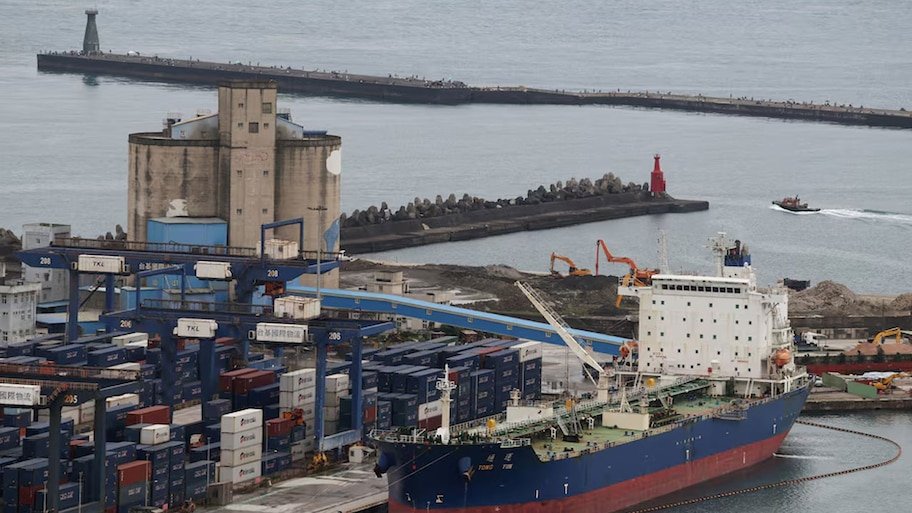
Once again there has been a major earthquake in the global energy market. The international crude oil supply system has collapsed after a massive drone attack on the strategic energy infrastructure of Saudi Arabia, the world’s largest oil exporter. After Saudi Arabia’s most important ‘East-West Pipeline’ (Petroline) was targeted, as a precautionary measure, the operation of this entire pipeline has been stopped with immediate effect. This pipeline, which transports crude oil from the Gulf region to Yanbu port on the Red Sea, is considered the lifeline of Saudi Arabia. As soon as the news of the attack spread, there was panic in global commodity exchanges and the prices of international standard Brent crude and American West Texas Intermediate (WTI) recorded an unprecedented rise. The closure of this pipeline, amid already ongoing tensions in the Strait of Hormuz, has shocked energy analysts and oil importing countries around the world, as it was the only safe corridor through which oil could be safely taken out without having to bypass the narrow sea lanes of the Persian Gulf.
Crude oil prices in the international futures market have touched the highest level in the last four months following the decision of the Saudi Energy Ministry and oil producing company Aramco on pipeline shutdown. Brent crude on the London Intercontinental Exchange (ICE) crossed the psychological level of $100 and traded around $109 per barrel with a daily jump of more than 4.5 per cent. At the same time, American WTI crude also strengthened by more than 4.2 percent and crossed $ 104 per barrel. In the last one week, a huge jump of about 8 to 10 percent has been recorded in the prices of crude oil. According to data from the International Energy Agency (IEA) and OPEC, the supply chain was already very narrow due to limited oil reserves in the market and production cuts by many countries. In such a situation, this latest geopolitical attack has created panic in oil futures deals, due to which hedge funds and foreign institutional investors have started buying heavily in crude contracts.
The East-West Pipeline has the capacity to carry about 5 million to 7 million barrels of crude oil per day. This quantity is approximately 4 to 5 percent of the total daily oil supply of the entire world. In normal times, when the movement of merchant ships in the Strait of Hormuz is disrupted due to the activities of the Iranian Navy or regional rebel groups, Saudi Arabia sends crude from its eastern oil wells to the Yanbu export terminal on the west coast through this 1200 km long underground pipeline. Now, due to the attack on this pipeline, the arrival of oil at Yanbu Terminal has come to a halt and the limited inventory present there is said to be sufficient for export only for 5 to 7 days. On the other hand, Yemen’s Houthi rebels are continuously carrying out missile and drone attacks on merchant ships around the Bab-el-Mandeb Strait and Perim Island, located at the southern end of the Red Sea. Recently a commercial oil tanker was attacked off the coast of Oman. This means that the safe transportation of oil on both sea and land fronts has been blocked, which has refreshed the fears of an oil crisis like the 1970s.
After crude oil prices skyrocketed above $100, the biggest question arising in the minds of India’s 140 crore citizens and automobile drivers is whether the prices of petrol and diesel are going to increase in the country. India imports about 85 to 88 percent of its total crude oil needs from abroad, with Saudi Arabia among the top oil suppliers to India. About 9 percent of the total Saudi oil coming to India was loaded from this Yanbu port. What is a matter of relief is that the state-owned oil marketing companies—Indian Oil Corporation (IOCL), Bharat Petroleum (BPCL) and Hindustan Petroleum (HPCL)—have kept the prices of petrol and diesel completely stable in the daily rate cards released this morning. Indian refineries have an average of 15 to 20 days of crude stock and strategic petroleum reserves, due to which prices at petrol pumps have not been increased immediately. However, petroleum industry experts believe that if crude oil remains above $100 in the global market for the next two weeks, there will be huge pressure on the under-recovery margins of oil companies and a decision on partial increase in retail prices may have to be taken after the review meeting.
Fuel prices for petrol pumps across the country are updated daily by Indian oil companies at 6 am. Today, despite crude touching $109 in the global market, stability remains a relief for domestic consumers. capital of uttar pradesh Lucknow In India, the price of petrol remains stable at Rs 94.65 per liter and diesel at Rs 87.76 per liter. National Capital Delhi In India, 1 liter petrol is available for Rs 94.72 and diesel for Rs 87.62. economic capital Mumbai In India, due to local VAT and cess, petrol is being sold at Rs 103.44 per liter and diesel at Rs 89.97 per liter. Kolkata In India, petrol is Rs 103.94 and diesel is Rs 90.76 per liter, while Chennai The price of petrol has been recorded at Rs 100.75 and diesel at Rs 92.34 per liter. The cheapest fuel in the country is from the Union Territory of Andaman and Nicobar. port blair Available in India, where petrol is around Rs 84.10 and diesel at Rs 79.74 per litre. In contrast, Andhra Pradesh Chittoor Due to high local taxes in the district, petrol is being sold at the highest level of Rs 118.34 and diesel at Rs 106.06 per litre.
The impact of international crude oil prices is not limited to filling the car tank only, but it affects the broader macro-economic fabric of the entire country. For the Indian government, crude crossing $100 becomes a direct factor in increasing the current account deficit and trade deficit. Whenever crude oil becomes costlier by $10 per barrel internationally, India’s import bill increases by billions of dollars annually, putting pressure on the Indian rupee against the dollar. Additionally, about 70 per cent of long distance freight transport within the country is carried by trucks and heavy diesel vehicles. If diesel prices increase in future, transporters immediately increase freight rates. This has a direct impact on the prices of green vegetables, fruits, pulses, edible oil, milk and other essential commodities coming in the markets. As a result, retail inflation (CPI Inflation) starts rising in the country, which ultimately prevents the Reserve Bank of India (RBI) from cutting interest rates.
To deal with this unexpected crisis that broke out in the Middle East, the Ministry of Petroleum and Natural Gas of the Government of India has started an internal review. India has Strategic Petroleum Reserves (SPR) located in underground rock caves in Visakhapatnam, Mangaluru and Padur, which are capable of meeting the country’s crude oil requirement of about 9 to 10 days in an emergency. Along with this, Indian oil refineries have started diversification of their crude oil imports long ago. India is also continuously purchasing crude oil from Russia, Iraq, United Arab Emirates (UAE), America and West African countries, due to which India does not have complete dependence on any one country or a particular sea route. Nevertheless, if repairs on Saudi Arabia’s East-West Pipeline take longer and attacks on ships in both the Strait of Hormuz and the Red Sea continue, global shipping freight and marine insurance premiums will increase manifold. According to energy experts, the next 72 hours are crucial as to how soon Saudi Arabia announces the restoration of safe operation of the pipeline.