 look news india

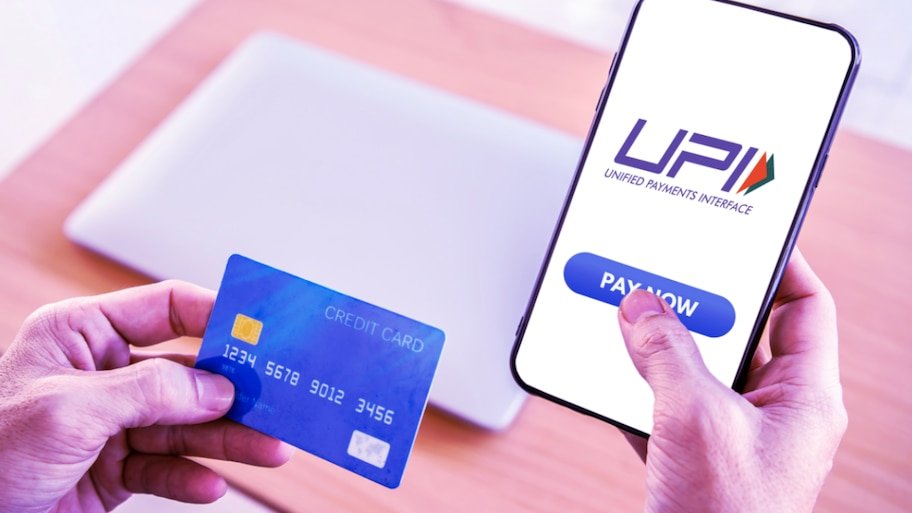
A new confusion had arisen among merchants and credit card holders after the National Payments Corporation of India (NPCI) and the Finance Ministry ordered to impose 0.40 percent merchant discount rate (MDR) on select merchant transactions above ₹2,000 from October 15, 2026. This question was increasingly being raised in social media and business organizations whether the new MDR of 0.4% will now be deducted on UPI payments made through RuPay Credit Card on UPI linked to smartphones or credit lines provided by banks? Merchants were worried whether the old MDR of 1.5% to 2% on large credit card payments would be reduced to 0.4%, or would there be a double charge for scanning with a credit card? Completely ending this deepening doubt, the Department of Financial Services (DFS) of the Finance Ministry and NPCI have issued official clarification. The government has clarified that the new concessional MDR framework of 0.40% is purely for direct Bank Account to Merchant deals. Credit-linked UPI transactions—including RuPay credit cards and approved credit lines from banks—are not covered by this new 0.4% framework and will continue to be governed by their old independent rules.
According to the detailed fact-sheet (FAQ) released by the government, there is a world of difference in the financial nature of UPI payments made through direct savings account and UPI payments made through credit cards. When a consumer sends money directly from his bank account by entering his UPI PIN, it is his own deposited money which is deducted from one account and transferred to another in real-time. In this the bank does not have to bear any credit risk (risk of default) nor does it have to lend to anyone. Therefore, to maintain this basic network, a minimum rate of 0.40% (maximum cap of ₹300) has been fixed on merchant payments above ₹2,000.
On the contrary, when a consumer links his RuPay credit card to UPI and scans the QR code, the bank provides the customer with an interest-free short-term loan for 45 to 50 days. In this process the issuing bank (Card Issuing Bank) has to bear the entire financial risk of cost of funds, billing cycle expenses, reward points, cashback and above all default if the customer does not repay the money on time. This is why credit products can never be kept at the same rate as a normal savings account payment switch. NPCI has clarified that credit-linked digital transactions will be regulated under the existing regulatory regime for credit card products commensurate with their risks and costs.
Linking UPI with credit cards is allowed only to credit cards with indigenous ‘RuPay’ network in India. It is important for every merchant and cardholder to understand the current MDR regime applicable to:
-
Zero MDR on payments up to ₹2,000: Under the special rule of Reserve Bank of India and NPCI to promote small merchants, if a customer makes a payment of up to ₹ 2,000 to a small merchant through RuPay Credit Card through UPI, then Zero MDR is applicable. That means no commission is deducted from the small shopkeeper.
-
Standard credit card rates on payments above ₹2,000: If a customer makes a payment of more than ₹2,000 through RuPay Credit Card at a major merchant, mall, supermarket or showroom, then the normal credit card merchant discount rate is applicable at that merchant, which usually ranges between 1.50% to 2.0%.
-
New 0.4% rule not applicable here: The government has made it clear that the rule of 0.40% which will be effective from October 15, 2026, will not be applicable to this category. If a merchant accepts a UPI payment of ₹5,000 from a customer through Rupay credit card, then the MDR will be applicable not at 0.4% (₹20), but around 1.5% to 2% as per the merchant agreement of the credit card.
The biggest and pleasant aspect for the common consumers in this entire policy development is that there will be zero impact on the customer’s pocket. Whether you do UPI from your savings account or pay by scanning the QR code from your Rupay credit card, as a customer you will not have to pay even ₹1 extra. Merchant Discount Rate (MDR) is entirely a ‘merchant-side’ commercial agreement between the shopkeeper and his bank.
According to the strict rules of the Reserve Bank of India (RBI), no merchant can demand more than the MRP of a product or service, nor can it add ‘credit card surcharge’ or ‘convenience fee’ to the customer’s bill when making UPI payment through credit card. If you buy shoes worth ₹3,500 at a store and make the payment through UPI with your Rupay credit card, then exactly ₹3,500 will be debited in your credit card statement. If any shopkeeper asks you for extra 2% by saying “You have scanned with UPI having credit card”, you can immediately complain to the National Consumer Helpline (1915) or to the bank whose QR machine is installed at that shop.
Confusion was also being spread among small traders, grocery shops and tea-snack stalls across the country whether they would now have to pay huge commission on customers’ credit card payments. NPCI has already addressed this in a very clear and transparent manner:
-
P2PM Merchants are completely secure: All small merchants with monthly UPI turnover up to ₹1 lakh fall in the P2PM (Person-to-Person-Merchant) category and no MDR is applicable to them.
-
Freedom to accept or stop credit card payments: Banks and fintech apps that provide merchant QR codes (like PhonePe Business, Google Pay for Business, Paytm Merchant) give full discretion to the shopkeepers whether they want to enable or disable the ‘RuPay Credit Card on UPI’ feature on their QR code. If a small shopkeeper does not want 1.5% to 2% MDR of his credit card to be deducted on deals above ₹2,000, he can go to the settings of his merchant app and disable ‘Accept Credit Card Payments’ in one click. By doing this, customers will be able to make payment on that QR only from their savings account.
For quick understanding of consumers and merchants, here is a direct comparison of the fee structure of both the digital mediums effective from October 15, 2026:
| scale/feature | General UPI (from bank account) | RuPay Credit Card on UPI |
| charge to customer | 100% zero (completely free) | 100% zero (completely free) |
| P2P (Person-to-Person Transfer) | Completely free (no charge) | N/A (Payable to Merchant only) |
| Merchant payments up to ₹2,000 | 0% MDR (legally mandated discount) | 0% MDR (discount for small merchants) |
| Merchant payments above ₹2,000 | 0.40% MDR (maximum ₹300 cap) | 1.50% to 2.0% Standard Credit Card MDR |
| Utility and government bills | Flat ₹5 token fee on above ₹2,000 | Credit card reward/fee rules of the respective bank |
| effective date | New framework from 15 October 2026 | Existing credit card rules continue as before |
After this double clarification from the government and NPCI, the path to Digital India has become completely transparent and controversy-free. By excluding credit card related UPI payments, the central bank has ensured that the credit risk management of banks remains intact and the provision of 50 days interest-free credit and reward points to customers is not affected.
The best strategy for you as a conscious consumer is to use UPI linked to your general savings account for small daily expenses—like milk, vegetables, fruits, medicines and utility bills. At the same time, use UPI with your Rupay Credit Card on purchases made on major electronics, hotel bookings, air tickets or organized branded stores, so that you get the full benefit of reward points and 50 days credit period. Staying away from rumors and half-baked news and knowing the correct rules makes you a strong and financially wise citizen.