 look news india

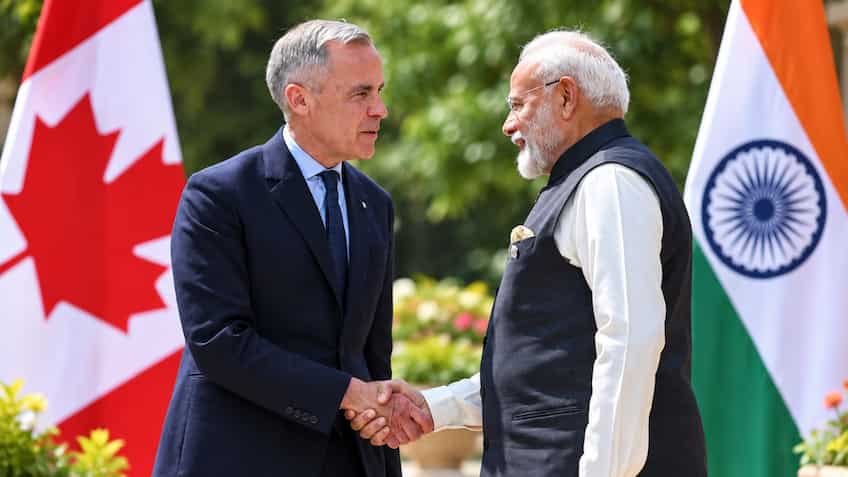
Bilateral relations between India and Canada, which have been going through diplomatic turmoil and bitterness for the past few years, have once again started showing strong signs of positive change. Canadian Prime Minister Mark Carney has officially confirmed on the sidelines of the United Nations General Assembly (UNGA) meetings that Indian Prime Minister Narendra Modi can visit Canada in December this year.
This possible visit is being considered not only as a symbol of the reinstatement of High Commissioners and resumption of diplomatic dialogue between the two countries, but also through this, the pending historical dispute between the two countries will be resolved. Comprehensive Economic Partnership Agreement (CEPA) But there is every possibility of getting the final approval. This will be the first full bilateral summit between the top leadership of the two countries, which is being seen as a major turning point geopolitically and economically after the serious controversies and allegations that arose during the tenure of former Canadian Prime Minister Justin Trudeau.
Speaking to the media during the UN General Assembly session in New York, Canadian Prime Minister Mark Carney said, “We are making excellent progress in our trade negotiations with India. This is an exceptionally important relationship on many levels—people-to-people ties, security and defense cooperation, and on the trade and economic front. Prime Minister Modi will visit Canada around December and I look forward to hosting him.”
Behind this aggressive initiative by the Carney administration to improve relations with India is its economic diversification policy. Amid the changing trade environment and tariff policies in the US, Canada is giving top priority to trade partnerships with its fastest growing market like India to reduce the heavy US dependence of its economy.
The history of Free Trade Agreement (FTA/CEPA) negotiations between India and Canada goes back more than a decade. The talks were stopped midway in August 2023 due to political disputes. However, following the consensus reached during the G20 meetings in 2025, the Terms of Reference were set afresh during Prime Minister Carney’s visit to India in March 2026.
Recently, the fourth round of talks was concluded in Mumbai between Indian Union Commerce and Industry Minister Piyush Goyal and his Canadian counterpart Maninder Sidhu. Both countries have decided that the talks will be ‘fast-tracked’ and its 5th round is going to start from 5 October 2026.
Key economic dimensions of this agreement:
-
Doubling the size of business: At present the goods and services trade between the two countries is in the range of about 11 to 15 billion dollars. Under the agreement, by increasing bilateral trade by 2030 $70 billion (about ₹5.8 lakh crore) A common target has been set to reach.
-
primary sector: In this agreement, duty-free access will be given to digital trade, agriculture and food products, automobile parts, chemicals, textiles, clean technology, critical minerals (lithium, potash) and services sectors.
-
Mobility of Indian professionals: An agreement is likely to be reached on easing work visa and movement rules for Indian IT professionals, students and researchers.
About 18 lakh people of Indian origin reside in Canada, which is more than 4% of the total population there. Apart from this, around 4 lakh Indian students are pursuing higher education in Canadian universities. Normalization of education, visas and commercial flights will provide direct relief to millions of migrant families.
Along with the normalization of diplomatic relations, both countries have also established a new institutional framework for security cooperation and intelligence exchange at the level of National Security Advisors (NSAs) and legal agencies. India’s stand has always been clear on its sovereignty, strict vigil on separatist elements and security of embassies, on which the Canadian side has assured full cooperation within the ambit of law.
If PM Modi’s visit to Canada in December is concluded and the much-awaited trade agreement is sealed, it will be considered a major strategic and diplomatic victory for Indian foreign policy. This would send the message that despite differences, India is capable of pursuing economic interests without compromising its sovereign concerns.
The upcoming 90 days of talks are going to lay the foundation of a new and strong chapter in the modern history of both the countries.