 look news india

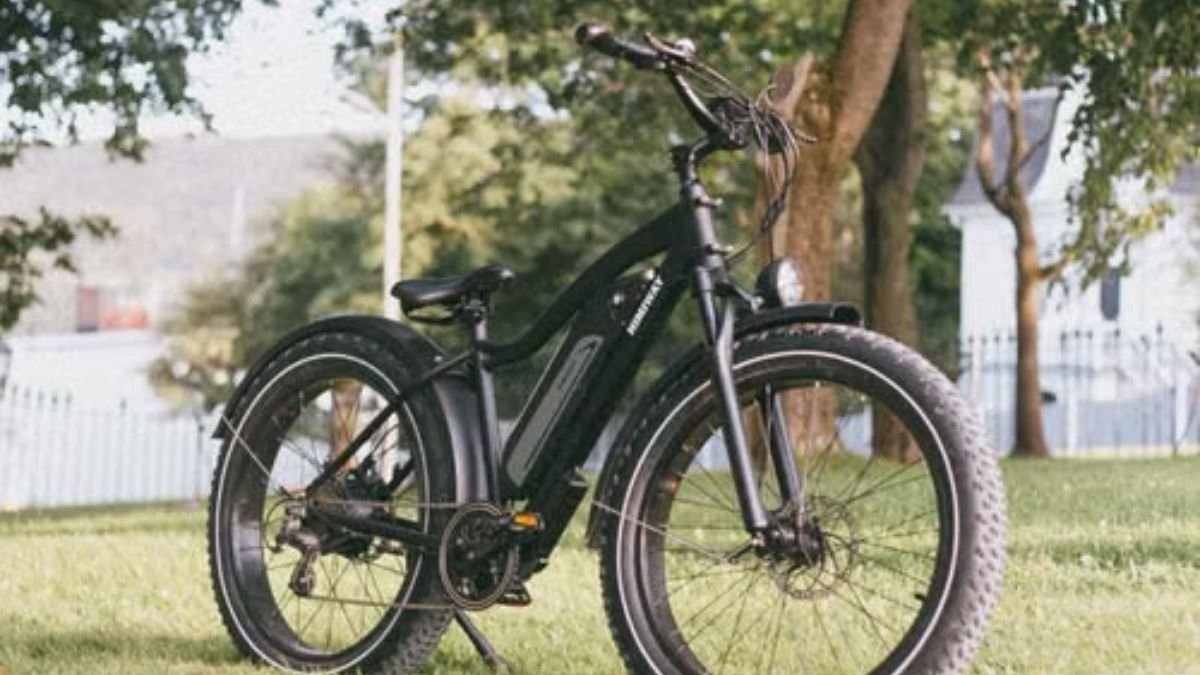
The popularity of Electric Cycle (E-Cycle) is increasing rapidly as an eco-friendly and economical ride in urban and rural areas of the country. Due to rising prices of petrol, relief from traffic jams and increasing awareness towards fitness, a large number of people, from school students to office going youth and delivery partners, are adopting e-cycles. However, due to substandard batteries being sold in the market without any standards, uncontrolled speed and ignorance of safety standards, many accidents and fire incidents have come to light in recent times. Taking this seriously, the Central Government and concerned technical bodies have issued a comprehensive new draft to tighten the rules related to manufacturing, safety and operation of e-cycles.
The main objective of this new draft is to make electric bicycles running on Indian roads technically more safe, stronger and environment friendly. After the implementation of the new rules, many important changes will be seen for both e-cycle manufacturers and buyers.
The government’s existing Central Motor Vehicles Rules (CMVR) and the new proposed draft clearly classify e-cycles between normal bicycles and motorized vehicles.
According to the new rules, only those electric bicycles will be kept out of the purview of the Motor Vehicles Act i.e. in the ‘non-motorized/micro-mobility’ category, whose maximum motor capacity is 250 watts (250W) and whose maximum speed 25 kilometers per hour (25 km/h) Will not exceed.
If an e-cycle is within both these limits (250W and 25 km/h), then:
-
He will not need to register with RTO.
-
It will not be mandatory for the driver to have a driving license.
-
There will be no mandatory third-party insurance or road tax to be paid for the vehicle.
-
Teenagers and students aged 14 to 16 years will also be able to legally drive it on public roads.
However, it has also been made clear in the draft that if a manufacturer or dealer sells an e-cycle with a motor of more than 250 watts or a speed of more than 25 km/hr, then it will be legally considered as an electric two-wheeler (Moped/Electric Scooter), for which registration, number plate, helmet and driving license will be mandatory.
The draft rules have also brought technical clarity regarding the operating mechanism of electric bicycles.
-
Pedelec (Pedal-Assist E-Cycle): This is a model in which pedaling is necessary to propel the bicycle forward and the motor only provides electric assist to reduce the effort of the rider. As soon as the rider stops pedaling or the speed reaches 25 km/h, the motor automatically cuts off the power supply. The new draft talks about giving priority and encouragement to the pedelec model.
-
Pure Throttle (Throttle-Only E-Cycle): Many companies are selling bicycles that operate only with the throttle (accelerator) of the handle, without pedaling. The draft proposes to make it mandatory for throttle-only models to install speed governors and cut-off sensors to prevent accidents due to sudden uncontrolled speed.
In view of the incidents of fire in electric vehicles, battery quality has been given highest priority in the new draft. Now the lithium-ion battery packs used in e-cycles will have to undergo stringent tests by the Bureau of Indian Standards (BIS) and Automotive Industry Standards (AIS).
Key technical requirements under the draft:
-
Thermal Runaway Protection: Advanced Battery Management System (BMS) will be mandatory to prevent the battery from catching fire due to excessive heat or temperature rise during charging.
-
Waterproof and dustproof rating: Keeping in view the monsoon and Indian road conditions, minimum IP65/IP67 protection standards are being set for the battery and controller.
-
Ban on un-authorized speed hacking: It has been instructed in the draft that the controller unit should be such that the speed cannot be increased above 25 km/hour by tampering with its software or hardware.
-
Smart Charger Standard: Only certified chargers with auto-cutoff will be provided to protect against overcharging and short circuit.
To prevent accidents occurring at night or in low light, new rules have also been proposed in the draft regarding the visual and braking system of e-cycles:
-
Electronic motor cut-off brake: As soon as the brake lever is pressed, the power supply to the motor should be cut off immediately, so that the bicycle can stop immediately in an emergency.
-
Disc or Hi-Grip V-Brake: Advanced braking system will be mandatory to stop a bicycle running at a speed of 25 km/hr at a safe distance.
-
360-Degree Reflective Markings: It will be necessary to install high quality retro-reflective tape and reflectors on the wheel spokes, pedals and frame.
-
Integrated Front and Rear Lights: Front LED lights connected to the battery for visibility in the dark and rear tail-lights that come on when the brakes are pressed are proposed to be made mandatory in all new models.
Although there is no legal provision for heavy challan for e-cycles of less than 250 watts, the draft from road safety experts and the transport ministry has made a strong advisory for riders to wear personal protective equipment:
-
There is a risk of serious head injury due to a fall at a speed of 20 to 25 km/hour, hence always wear an ISI marked cycle helmet while riding an e-cycle.
-
Never ride the e-bicycle in the rightmost fast lane of high-speed expressways or main highways; Always use cycle tracks or service lanes.
-
Give proper hand signals while turning on the road and completely avoid cycling while listening to songs with earphones.
By making this draft notification public, the government has sought objections and suggestions from industry experts, manufacturers and the general public. Final notification will be issued after reviewing these suggestions.
Industry experts believe that these strict rules will eliminate local e-cycles with substandard and unsafe kits from the market and consumers will be able to get strong, durable and safe electric bicycles of international standard. While certification and use of better safety components may lead to a slight increase in the prices of e-cycles initially, in the long run this step will take sustainable and safe micro-mobility to new heights in India.