 look news india

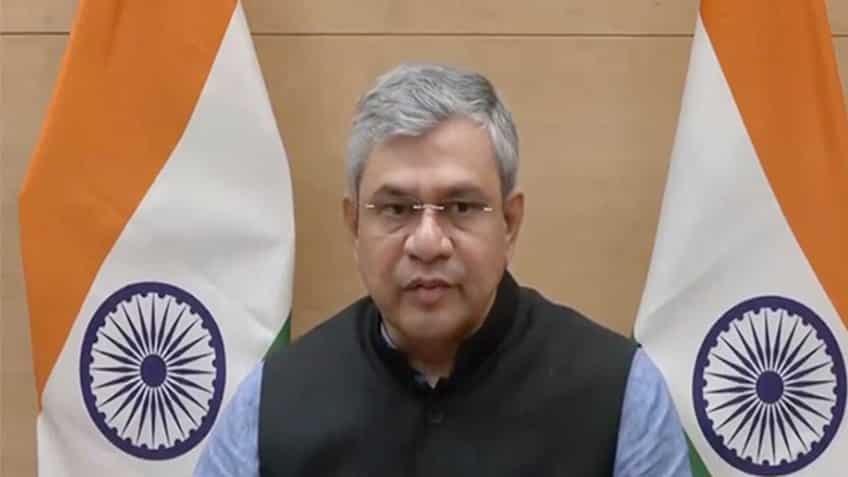
Indian Railways has planned one of the largest track expansion drives ever to modernize and future-proof the country’s transport network. Union Railway Minister Ashwini Vaishnav announced on Wednesday that the country’s 7 major high-density rail corridors to be converted into 4-lane (Four-Tracking) Is being converted into.
The main objective of this ambitious infrastructure project of Railways is to increase the speed of passenger trains running between major metros, to get rid of the jams on the outskirts and to strengthen the capacity of freight transportation manifold.
Only 16% network but 41% traffic: Why was 4-lane expansion necessary?
Underlining the importance of these seven high-density routes, the Railway Minister said that these corridors are only a part of the total railway network of the entire country. 16 percent are a part, but almost the entire country 41 percent rail traffic Passes through these routes alone.
Due to immense pressure, there were technical hurdles in starting new trains on these routes and trains were often delayed due to track sharing between goods trains and passenger trains. With the construction of four tracks, two tracks can be dedicated only for high-speed passenger/Vande Bharat trains and two tracks can be dedicated for general and goods trains, due to which operation of trains will be possible without any interruption.
These are the 7 major rail corridors of the country to be built with 4-lanes.
About 11,000 kilometers This network, spanning over 100 million people, includes routes connecting the country’s largest metros and industrial hubs:
-
Delhi – Howrah (Kolkata): This approximately 1,400 km long route is the busiest corridor in the country, where more than 120 passenger and 100 goods trains run daily.
-
Delhi – Mumbai: The main route of the Golden Quadrilateral, about 1,500 km long, on which 90+ passenger trains run daily.
-
Howrah – Chennai: Approximately 1,653 km long coastal corridor connecting eastern and southern India.
-
Delhi – Chennai: 2,174 km long lifeline route from North to South India.
-
Chennai – Mumbai: A 1,289 km long route connecting the trading centers of South and West India.
-
Mumbai – Howrah: Mainstay of coal, steel and passenger transport passing through central India.
-
Delhi – Guwahati: A strategically important corridor connecting North-East India with the capital and the rest of the country.
Kavach 4.0 and speed of 160 km/h: journey will be fast and safe
Along with four-laning, all these high-density routes are equipped with Indian Railways’ indigenous Automatic Train Protection System. ‘Kavach 4.0’ Is being fully equipped.
Semi-high-speed track upgradation work is already going on at a rapid pace on Delhi-Howrah and Delhi-Mumbai routes, which will enable trains to run at a speed of 160 km per hour. With four tracks, Vande Bharat, Rajdhani and Amrit Bharat trains will not have to stop for overtaking, resulting in a direct saving of 2 to 4 hours in travel time.
Boost to economy and huge reduction in pollution: a boon for the environment
Increasing the capacity of the railway network will not only provide convenience to passengers, but will also be of great benefit to the country’s economy and environment:
-
Affordable Logistics Cost: By increasing the average speed of goods trains from 25 km/hr to 50-60 km/hr, raw materials will reach industries faster and at lower cost.
-
Decline in carbon emissions: If more freight is transported by rail instead of road, millions of liters of diesel will be saved and carbon footprint will reduce.
-
Relief from waiting list: In future, Railways will be able to run more number of special and regular trains to meet the additional passenger demand.
Under the vision of ‘Developed India 2047’ under the leadership of Prime Minister Narendra Modi, this 4-track masterplan of Railways is going to change the face of the Indian transport system.