 look news india

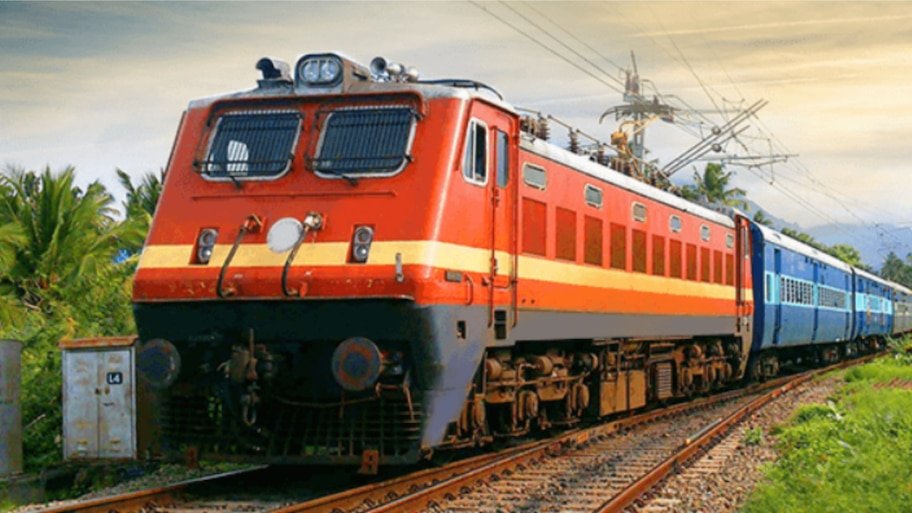
Lakhs of employees and officers working in Indian Railways are issued Railway Passes and Concessional Ticket Orders (PTOs) for free travel under welfare facilities by the department. There is often a common belief among the general public that a railway employee or his family can travel anywhere in the country completely free of charge by just showing the pass in any train, in any compartment. However, this assumption is not entirely correct. Under the service rules of Indian Railways and the guidelines of the Board, strict conditions, class limits and train restrictions have been set for the travel of employees.
1. Is railway pass valid in every train?
Privilege Pass given to railway employees is not applicable in all trains of the country:
-
Normal and Superfast Mail/Express: The pass is fully valid in regular express, mail, passenger and suburban local trains.
-
Premium Trains (Rajdhani, Shatabdi, Vande Bharat, Duronto, Gatimaan): Employees can use the pass on these trains, but there are strict quota and rank/pay-level requirements. Only limited seats (Pass Quota) are reserved for pass holders in every premium train.
-
Luxury and tourist trains (completely no-entry): Railway Pass is not valid at all in Maharaja Express, Palace on Wheels, Golden Chariot or special tourist and Bharat Gaurav trains operated by IRCTC. To travel in these special trains, railway employees also have to buy full tickets like ordinary passengers.
2. In which class can I sit? Mathematics of position and pay level
No employee can sit in any class (like directly in First AC or Executive Class) as per his wish. Eligibility for the pass depends on the pay matrix level and group (Group A, B, C, D) of the employee:
-
Group ‘A’ and higher officers: They receive Gold, Silver or Bronze metal passes and First Class ‘A’ passes, under which they are eligible for First AC, Second AC or Executive Class (EC) of Vande Bharat while on duty or privilege.
-
Group ‘B’ and ‘C’ (Supervisor and Middle Pay Level): They get First Class or Second Class ‘A’ pass, through which they can travel in 2nd AC, 3rd AC or Vande Bharat Chair Car (CC).
-
Group ‘C’ and ‘D’ (Starting Pay Level): Employees in their initial years of service get a second class pass, allowing them to travel only in sleeper or second seating (2S).
If an employee wants to travel in a higher class than his entitlement, he has to pay the fare difference as per rules.
3. Is travel through the pass unlimited?
Railway employees do not get unlimited free travel throughout the year. As per board rules:
-
Non-Gazetted employees of Group ‘C’ and ‘D’ only per annum for the first 5 years of service. 1 set privilege pass Get it.
-
per year after completion of 5 years of regular service 3 set privilege pass are given.
-
Gazetted officers per year 6 sets pass There is eligibility up to.
-
Even after retirement, employees are given the facility of a limited number of ‘Post Retirement Supplementary Passes’ (PRCP) depending on the length of service.
4. PTO (Privilege Ticket Order) is not completely free
In addition to the pass to employees every year 4 sets PTO Facility is also available. PTO is not a free pass, but a discounted voucher. On booking tickets through PTO, the employee will be entitled to the normal fare. 1/3rd Fare The share has to be paid from one’s own pocket.
5. Cannot board the coach without confirmed reservation
In earlier times, the concept of directly boarding the train by showing paper pass has now completely ended after the e-pass (HRMS portal) system.
To travel in reserved class (AC or Sleeper), the employee has to first go to the IRCTC portal or railway counter and book the ticket using his pass number. If the seat is not confirmed or RAC and remains waiting, the employee cannot travel in the reserved compartment without permission.
Thus, Railway Pass is certainly an employee welfare benefit, but it is completely bound by rules, fixed quota and administrative restrictions.