 look news india

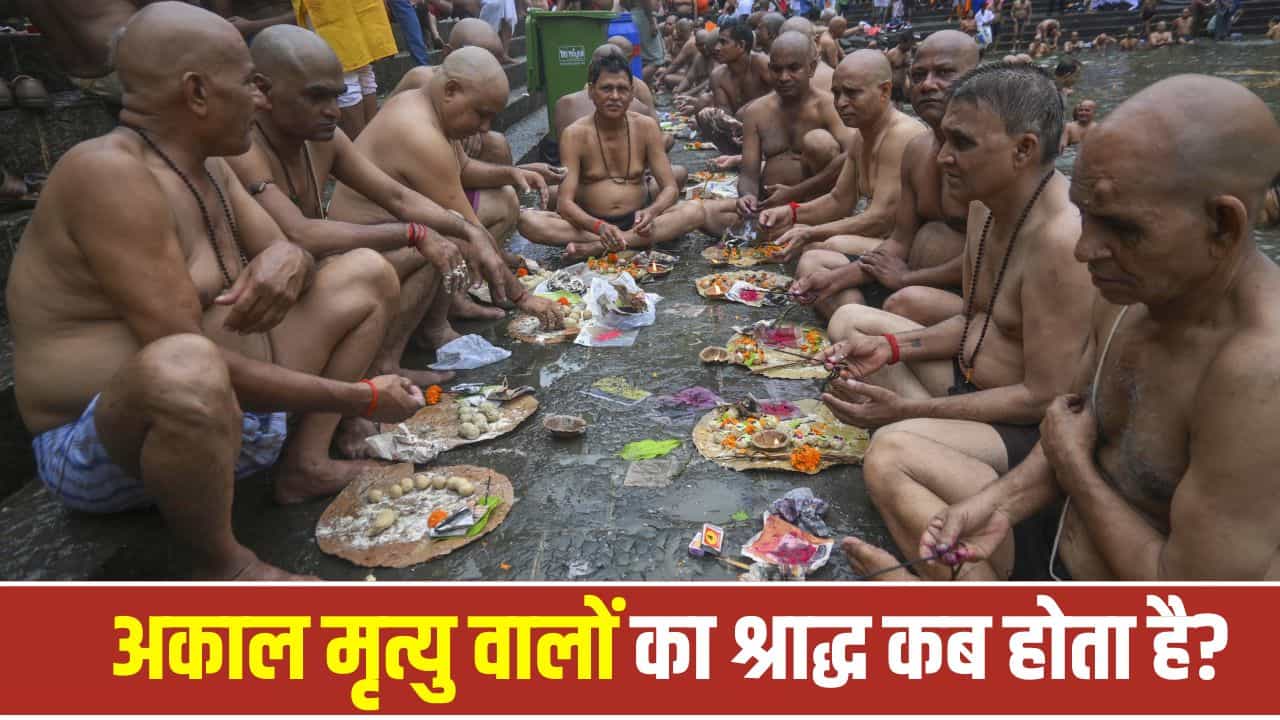
In Sanatan Dharma, the sixteen-day Mahalaya i.e. Pitripaksha, which lasts from the full moon of Bhadrapada month to the new moon of Ashwin month, has extraordinary spiritual significance. This fortnight is considered a sacred time to express gratitude towards the ancestors, to get rid of their debts and to offer Pind Daan and Tarpan for the peace of their souls. Under normal circumstances, when a person dies after completing his natural age, his Shraddha is performed in Pitripaksha according to his date of death. However, when a family member dies untimely, unnaturally or in a sudden accident, many doubts and questions arise in the minds of the family members regarding their Shraddha. In the scriptures, special dates, strict rules and specific rituals have been given for the salvation of such disturbed souls.
What is premature death and why is its Shraddha different from normal dates?
According to Garuda Purana and Matsya Purana, human life has a fixed natural age. When a person dies prematurely not due to natural old age or general physical weakness but due to accident, road accident, burning in fire, drowning in water, poisoning, snakebite, murder, suicide, epidemic, fall of lightning or injury by weapon, then he is kept in the category of ‘untimely death’. It is described in the scriptures that the worldly desires, lusts and attachments of a soul who dies untimely death suddenly remain unfulfilled. In such a situation, their soul keeps wandering in ghost form or air form and they are not able to attain salvation easily. This is the reason why it is considered mandatory to perform Shraddha of the ancestors who died untimely and not on their usual date of death, but on a special date prescribed by the scriptures and on a special Vedic method, so that they can get freedom and peace from the tortures of Yamalok.
On which date is Shraddha performed for the family members of those who die untimely death?
In the scriptures, ‘Chaturdashi Tithi’ is considered best and reserved for the Shraddha of the family members who died untimely death:
-
Chaturdashi Shraddha (Ambhat or Ghayal Chaturdashi): Chaturdashi date of Krishna Paksha of Pitru Paksha is called ‘Ghayal Chaturdashi’ or ‘Shastra Hat Chaturdashi’. If a family member has died in war, by being hit by a weapon, in a terrorist attack, in a vehicle accident, by suicide, by poison or in any violent incident, then their Shraddha should be performed only on this Chaturdashi date. Irrespective of the actual date of his death, offering him tarpan on this special day directly brings peace to his soul.
-
Option of Sarvpitri Amavasya: If the family members are not aware of the exact date and time of a person’s death, or due to some reason the Shraddha on Chaturdashi is missed, then on the last date of Pitripaksha i.e. ‘Sarvapitri Moksha Amavasya’, collective Shraddha and Tarpan can be performed for all the known and unknown ancestors who died untimely death.
Complete and authentic method of untimely death Shraddha
While performing Shraddha for ancestors who died untimely death, utmost purity, concentration and correct method have to be followed:
-
Selection of Kutap and Rohin period: Shraddha rituals should always be performed in the eighth Muhurta of the day i.e. ‘Kutap Kaal’ (between 11:30 pm to 12:30 pm) or ‘Rauhin Kaal’. Performing Shraddha in the morning or after sunset is completely prohibited.
-
Purity of Tarpan and Kusha: Sit facing south. Wear the sacred ring of Kusha on the ring finger. Mix pure water, Ganges water, raw cow’s milk, black sesame seeds, barley and white flowers in a bronze or brass vessel and offer water three times from the anjali of both the hands to the pitritirtha (root part of the thumb) and chant “Tasmai Swadha Namah”.
-
Process of Pind Daan: Mix cooked Arwa rice (or barley flour), cow’s milk, ghee, honey and black sesame seeds and form round balls. Place these bodies on the seat of Kusha and worship them duly taking the name and clan of the family member who died untimely death.
-
Method of offering Panchabali: After the food is prepared, first take out portions of food for five living beings. These include ‘Gobali’ (for cow), ‘Shwanabali’ (for dog), ‘Kakabali’ (for crow – considered the messenger of Yama), ‘Devadibali’ (for gods and ants) and ‘Pipilikadi Bali’. It is considered mandatory to feed crow and black dog in Shraddha for untimely death.
-
Brahmin feast and dakshina: Invite an able, virtuous and knowledgeable Brahmin to the house respectfully and make him sit towards the south and serve food. Kheer, puri and satvik vegetables should be mandatory in the food. After the meal, give clothes, grains and Dakshina and touch their feet and seek blessings.
Narayan Bali and Tripindi Shraddha: A great solution for the liberation of the troubled soul.
If there is an untimely death of a person in the family and after that there are problems like continuous unrest in the house, obstruction in the growth of offspring, serious illnesses or sudden loss of money, then it is considered to be a symptom of ‘Pitra Dosh’ or ‘ghost obstruction’. In such cases the normal annual Shraddha alone is not sufficient; This requires special penance rituals:
-
Narayan Bali and Nagabali Vidhan: This is a special Tantric and Vedic ritual, which is performed to free the soul of untimely death from the ghostly form by worshiping the form of Lord Shri Hari Vishnu. In this, an idol of gold, silver or flour is made and the funeral rites are performed and the mantras of Ekadshah Shraddha are recited.
-
Tripindi Shraddha: When the proper Shraddha of an ancestor who died untimely death has not been performed for three generations, then ‘Tripindi Shraddha’ is performed in the name of Brahma, Vishnu and Mahesh for the peace of the three types of unsatisfied souls – Satvik, Rajasik and Tamasik.
-
Major pilgrimage sites: For Narayan Bali and Tripindi Shraddha, ‘Gaya Tirtha’ of Bihar (Phalgu River and Vishnupad Temple), ‘Trimbakeshwar Jyotirlinga’ of Maharashtra, ‘Badrinath Dham (Brahmakpal)’ of Uttarakhand, ‘Prayagraj Sangam’ of Uttar Pradesh and ‘Pihova Tirtha’ of Haryana are considered to be the most proven places in the country.
Avoid these mistakes during Shraddha and do this great donation
Never use iron or plastic utensils in the Shraddha of relatives who died untimely death; Always use copper, brass, silver or clay plates only. Use of red or black flowers, stale food and extremely spicy spices is prohibited in the puja. On the day of Shraddha, do not turn away any beggar empty handed. On this day, donation of shoes, slippers, umbrella, black sesame seeds, urad dal, blanket, food grains and cow ghee is considered as great donation. Apart from this, by reciting the seventh or eleventh chapter of Gita and lighting a mustard oil lamp under the Peepal tree and offering water, the ancestors who died prematurely are satisfied and bestow blessings of happiness, prosperity and security on their descendants.