 look news india

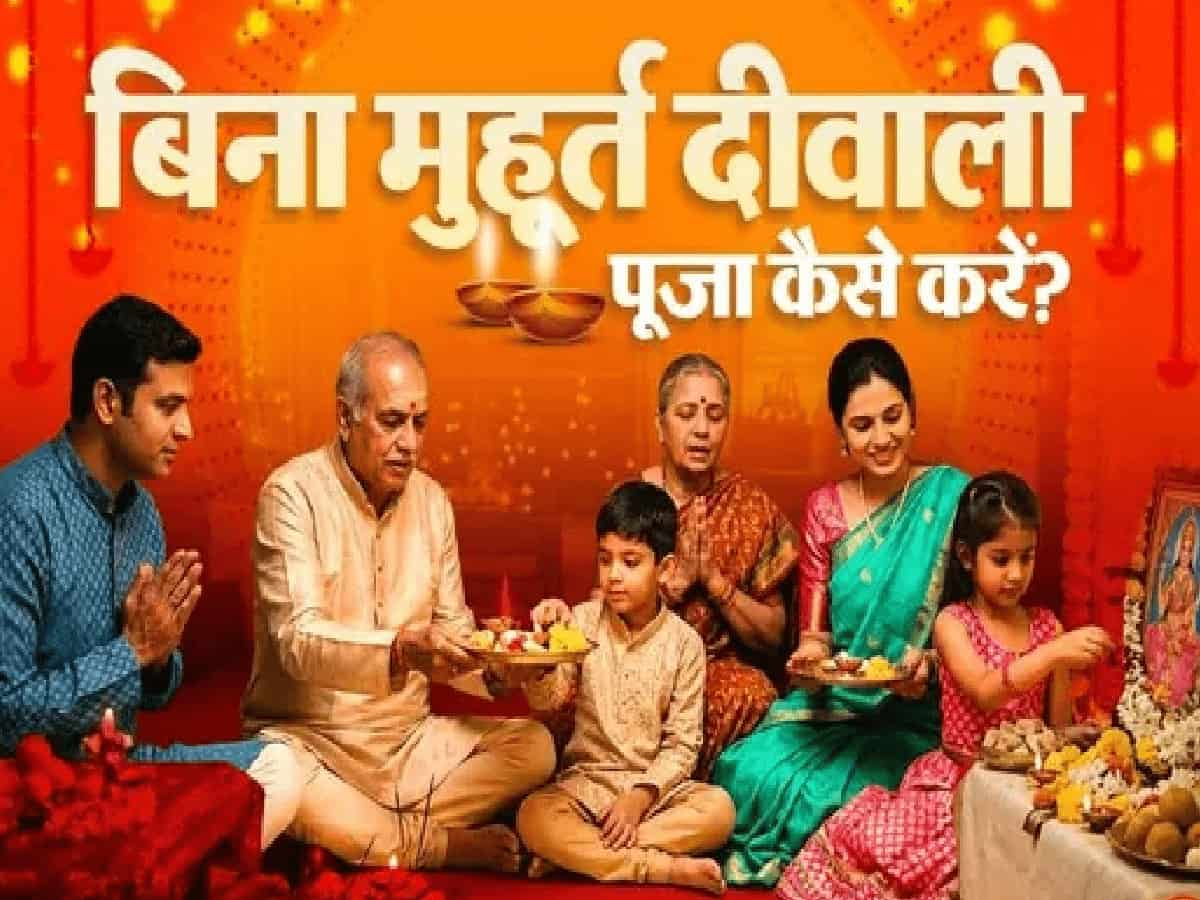
Diwali, the great festival of light and prosperity in the Sanatan tradition, is being celebrated with great joy, unwavering devotion and enthusiasm all over the country and the world. The tradition of worshiping Goddess Mahalakshmi, the presiding deity of wealth and Lord Shri Ganesha, the giver of Riddhi-Siddhi, on the holy Amavasya date of Kartik month has been going on since time immemorial. People welcome the arrival of Goddess Lakshmi by decorating their homes, establishments and workplaces with colorful lights, Toran, Rangoli and traditional earthen lamps. According to the scriptures, worshiping Mahalakshmi on the evening of Diwali in Pradosh Kaal and Sthira Lagna brings happiness, peace, prosperity and unbroken opulence to the family.
However, many times due to Diwali rush, last minute shopping from the market, meeting relatives and friends, office responsibilities or travel delays, many devotees are not able to perform the puja at the scheduled main time in the evening. In such a situation, a feeling of guilt, guilt and regret creeps in that the auspicious time of the biggest festival of the year has been missed. If for some reason this has happened to you too and you have not been able to worship Goddess Lakshmi and Lord Ganesha in the evening, then there is no need to be disappointed or worried at all. A very good and auspicious alternative to this situation has been provided in the religious scriptures and Vedic calendar, through which you can worship with full devotion even late at night and get complete auspicious results.
According to Vedic Astrology and Tantra Shastras, the entire night of Diwali is considered a ‘Siddha Ratri’ or ‘Kalratri’ in itself. Every moment of this night is filled with cosmic energy. It is mentioned in the scriptures that if a householder is not able to worship during Pradosh Kaal in the evening, then he can worship Mahalakshmi duly during ‘Nishith Kaal’ at midnight. Nishith period is considered extremely rare, confidential and quickly fruitful from the classical point of view. Practitioners of Tantra Shastra, Mantra Sadhana and Yantra Siddhi especially wait for this period, because at this time the Tamo Guna in the environment calms down and positive energies are at their peak.
According to almanac calculations, the very auspicious time of Nishith Kaal will start from 11:38 pm on the night of 8th November 2026 and it will continue after midnight i.e. till 12:31 am on 9th November. Thus devotees will get a very sacred time period of about 53 minutes at midnight for special sadhana and worship of Goddess Lakshmi. During this auspicious time, whoever recites the Beej Mantras, Sri Sukta or Kanakadhara Stotra of Goddess Lakshmi with a calm mind, concentrated mind and pure feelings, gets the same spiritual results as the evening puja but many times more profound.
Calculation of time has great importance on the day of Diwali. For the devotees who were able to perform the puja on time, the time of Pradosh Kaal in the evening was fixed from 5.31 pm to 8.09 pm. Within this time period, from 5:54 pm to 7:50 pm, the most important and auspicious time of Sthira Lagna i.e. ‘Taurus Kaal’ was present. In the scriptures, Taurus ascendant is considered stable, which means that by worshiping Lakshmi in this ascendant, money and wealth remain stable in the house and unnecessary wastage is stopped.
But for those who have missed this time due to some reason, Nishith Kaal is like a boon. There is a clear mention in the scriptures that in devotion, emotion has primacy over time. Even if the evening stable ascendant has passed, the influence of ‘Leo ascendant’ remains active during the Nishitha period, which is considered a symbol of strength, courage, victory and inner opulence. Therefore, this auspicious time of night should be utilized well without any mental stress.
Worshiping Goddess Lakshmi alone on the day of Diwali is prohibited in the scriptures. According to religious beliefs and mythology, the first revered Lord Ganesha is considered to be the adopted son of Mother Lakshmi. When Mother Lakshmi freed herself from her ego and understood the importance of good wisdom in the functioning of the universe, she accepted Lord Ganesha as her son and gave the boon that wherever he would be worshipped, it would be mandatory to worship Lord Ganesha first. If only money comes without wisdom, discretion and the destroyer of obstacles, Ganesha, it can lead to destruction and downfall; Therefore, to maintain the balance of intelligence and wealth, both are worshiped together.
Along with this, the worship of Yaksharaj Lord Kuber, who is considered the real guardian and treasurer of wealth, also has special significance on the night of Diwali. Mother Lakshmi is the mistress of wealth and Kuber ji manages and distributes that wealth. While worshiping during Nishith period, spread a red cloth on a clean platform and install Kuber Yantra or their idol along with the idols of Goddess Lakshmi and Ganesh Ji. First of all do Aachman and sanctification, after that offer Durva, Roli and Modak to Lord Ganesha. After that, offer lotus flowers, cowries, Kamalgatta, Akshat and kheer-batasha to Goddess Lakshmi. While meditating on Lord Kuber, offer him white sweets and yellow flowers. Light a four-sided lamp of pure desi ghee and chant ‘Om Hreem Shreem Shreem Shreem Kuberaya Ashta-Lakshmi Mam Grihe Dhanam Puray Puray Namah’ or the seed mantra of Mahalakshmi ‘Om Shreem Hreem Shreem Kamle Kamlalaye Prasidh Prasidh’ at least 108 times in a calm manner. In this way, this simple and emotional ritual performed at midnight will completely destroy all the financial problems and defects in your life and pave the way for happiness and prosperity.