 look news india

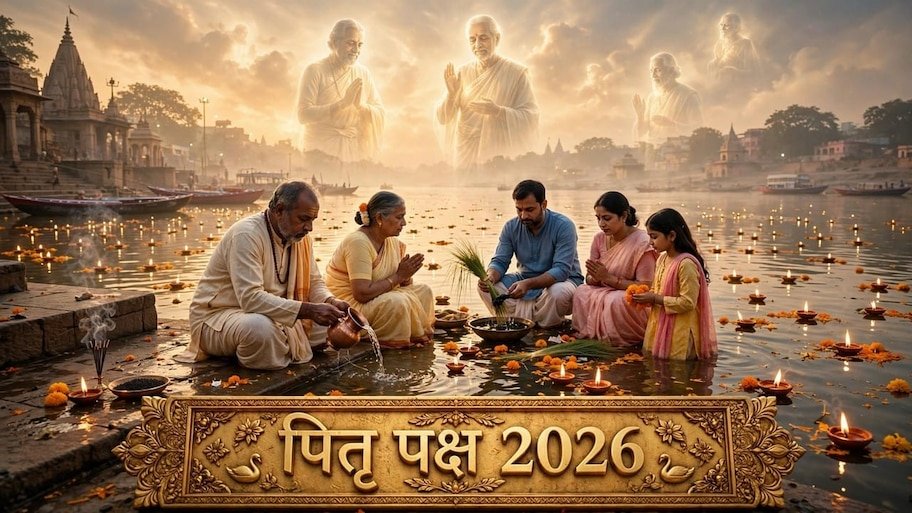
In Sanatan Hindu religion, the period of Pitru Paksha i.e. Mahalaya is considered to be the most sacred and sensitive time for offering gratitude, reverence and tarpan to ancestors, ancestors and departed souls. According to religious beliefs, during these 16 days of Pitru Paksha, the doors of the ancestral world open and our ancestors visit the homes of their descendants in a subtle form so that they can be satisfied by taking food, water and Shraddha. Pitru Paksha will start in the year 2026 Saturday, 26 September 2026 It is being concluded with the Shraddha of Bhadrapada Purnima on Saturday, October 10, 2026 It will coincide with Sarvapitri Amavasya (Mahlaya Amavasya). Lakhs of devotees will offer Pind Daan and Tarpan for their ancestors at Tirtharaj Prayagraj of Uttar Pradesh, Kashi (Varanasi), Gayaji (Bihar), Ayodhya, Naimisharanya to Delhi, Lucknow, Kanpur and major religious ghats across the country. According to Garuda Purana and Nirnay Sindhu, a person who performs proper Shraddha and charity for his ancestors, his family is blessed with longevity, health, happiness of children and financial prosperity and the serious ‘Pitra Dosh’ of the horoscope gets calmed forever.
According to the astronomical calculations of the Hindu calendar, on the date (be it Shukla Paksha or Krishna Paksha) of a person’s death, his annual Parvana Shraddha is performed on the corresponding date of Krishna Paksha of Pitru Paksha.
The authentic details of all 16 Shraddha dates based on Drik Panchang for the year 2026 are as follows:
| Date of Shraddha (Tithi) | Scheduled Date (2026) | Day | especially valid for what purpose |
| Purnima Shraddha | 26 September 2026 | Saturday | For the departed ancestors on Bhadrapada Purnima |
| Pratipada Shraddha | 27 September 2026 | sunday | For Shraddha of Pratipada Tithi and maternal grandparents. |
| Dwitiya Shraddha | 28 September 2026 | monday | For the ancestors who died on Dwitiya Tithi |
| Tritiya Shraddha / Maha Bharani | 29 September 2026 | Tuesday | Special Shraddha of Tritiya Tithi and Maha Bharani Nakshatra |
| Chaturthi Shraddha | 30 September 2026 | Wednesday | Ancestors of Chaturthi Tithi and Panchami Coincidence |
| Panchami/Shashthi Shraddha | 01 October 2026 | Thursday | Shraddha of the family members calmed down on Panchami and Shashthi Tithi |
| Saptami Shraddha | 02 October 2026 | Friday | Offering of offerings to deceased ancestors on Saptami Tithi |
| Ashtami Shraddha | 03 October 2026 | Saturday | Shraddha of ancestors and father’s side on Ashtami Tithi |
| Navami Shraddha (Matri Navami) | 04 October 2026 | sunday | For mother, grandmother, grandmother and married women of the family. |
| Dashami Shraddha | 05 October 2026 | monday | For the ancestors who passed away on Dashami Tithi |
| Ekadashi Shraddha | 06 October 2026 | Tuesday | Indira Ekadashi fast and Ekadashi date Shraddha |
| Dwadashi Shraddha (Magha Shraddha) | 07 October 2026 | Wednesday | Shraddha of Sannyasis, Yetis, Sages and Saints and Magha Nakshatra |
| Trayodashi Shraddha | 08 October 2026 | Thursday | For the ancestors and dead children of Trayodashi Tithi |
| Chaturdashi Shraddha (Injured Shraddha) | 09 October 2026 | Friday | Shraddha of ancestors who died due to accident, weapon, poison or untimely death |
| Sarvapitri Amavasya (Mahalaya) | 10 October 2026 | Saturday | Collective Shraddha of all known and unknown ancestors and forgotten ancestors |
Some special dates in the 16 days of Pitru Paksha have immense spiritual and scriptural significance which every family must keep in mind:
-
Matri Navami or Avidhwa Navami (4 October 2026): Ashwin Krishna Navami is called ‘Matri Navami’. This day is reserved for the Shraddha of those deceased mothers, grandmothers, grandmothers and married women of the family who died while their husbands were alive. If someone does not remember the date of death of his mother properly, then he can get her full blessings by performing her Shraddha and Brahmin feast on the day of Matri Navami.
-
Dwadashi Shraddha (7 October 2026): Shraddha on Dwadashi Tithi is especially performed for those departed souls who had taken Sannyasa during their lifetime, or who were sadhus, ascetics or ascetics.
-
Chaturdashi Shraddha (9 October 2026): It is also called ‘Ghayal Chaturdashi’ or ‘Shastra Hat Shraddha’. Shraddha of those relatives or ancestors who have died in a road accident, arson, drowning, poisoning, weapon attack, war or any unexpected famine tragedy is performed only on Chaturdashi Tithi. There is a prohibition on performing Shraddha of ancestors who died a normal natural death on Chaturdashi.
-
Sarvapitri Amavasya / Mahalaya (10 October 2026): This is the most important and last day of Pitru Paksha. If you have forgotten the date of death of any of your ancestors, or for some reason have not been able to perform Shraddha in the entire fortnight, then by offering Tarpan and Pind Daan on the day of Sarvapitri Amavasya, all the known and unknown ancestors of the family get salvation. After performing Shraddha on this day, the ancestors are satisfied and return to their world and the holy festival of Shardiya Navratri starts from the very next day i.e. 11 October 2026.
Often people unknowingly make the mistake of performing Shraddha at the time of morning puja, whereas in the scriptures the afternoon time has been prescribed for performing ancestral rituals. According to Matsya Purana and Manusmriti, worship of Gods in the morning and offering to ancestors in the afternoon is fruitful.
To perform Shraddha rituals in Pitru Paksha, the day is divided into three major Muhurtas:
-
Kutup Muhurat: Around 11:45 AM to 12:35 PM in the afternoon. The eighth auspicious time of the day is called Kutup Kaal, which is considered best for offering offerings to ancestors.
-
Rohina Muhurat: From 12:35 PM to 01:25 PM. This is the ninth Muhurta of the day, in which the water given directly satisfies the ancestors.
-
Afternoon Kaal: From 01:25 PM to 03:45 PM. According to the scriptures, the work of Shraddha, Pind Daan and Brahmin food should be completed before the end of the afternoon.
Remember that Shraddha is never performed after sunset, during night time or during Brahma Muhurta; By doing this the ancestors remain unsatisfied.
On the day of Shraddha, it is not enough to just provide food to the Brahmin, but the ritual of ‘Panchbali’ is considered most essential to deliver the food to the ancestors through various creatures of nature. After the food is prepared, 5 different morsels are taken out on a leaf or banana leaf:
-
Gobali (for cow): The first plate is taken out for the mother cow, because 33 crore gods and goddesses reside in the cow and she is considered to be the destroyer of all ancestral debts.
-
Kakabali (for crow): The second morsel is given to the crow. According to religious beliefs, crow is considered the messenger of Yamraj; Eating food by a crow means that your offering has reached the ancestors directly.
-
Dog sacrifice (for dog): The third morsel is fed to the dog, who is considered the protector of the path of Bhairav and Yama.
-
Devadibali (for the gods): The fourth part is dedicated to water or fire in honor of the deities of all directions.
-
Pipilikadibli (for ants): The fifth gram of sugar and flour is put near the holes of ants and small insects.
Only after offering food to these five living beings, the Brahmin is fed satvik food and his feet are touched by donating clothes, dakshina and sesame seeds as per his capacity. While offering tarpan, it is mandatory to use black sesame, barley, pure kush and Ganga water.
Pitru Paksha is a period of remembrance and renunciation of ancestors, hence it is mandatory to follow some strict religious rules during this 16 day period:
-
Full stop on auspicious works: During Pitru Paksha, auspicious and festive activities like marriage, engagement, house warming, Mundan Sanskar, laying the foundation of a new house or buying a new vehicle are considered completely prohibited.
-
Satvik food and drink: During this period, onion, garlic, meat, fish, liquor and stale food should be completely avoided in the house. The use of gram, lentils, mustard greens, brinjal and cumin is prohibited in the food of Shraddha.
-
Avoidance of cutting hair and beard: The main doer (son or family member) performing Shraddha should avoid cutting beard, hair or nails for these 16 days and should observe celibacy.
-
Do not disrespect the guest and the suppliant: These days, do not turn away any saint, beggar, poor or animal or bird coming to your door empty handed; It is believed that ancestors can come in any guise to test you.
-
Avoid iron utensils: It is according to the scriptures to use copper, brass, silver or leaf utensils instead of iron or steel utensils for cooking or serving Shraddha food.
If during these 16 days, you offer even an Anjali Tarpan of water remembering your deceased parents and ancestors with true heart, purity and devotion, then the blessings of the ancestors protect the entire family from troubles and give them the blessing of prosperity and progeny growth.