 look news india

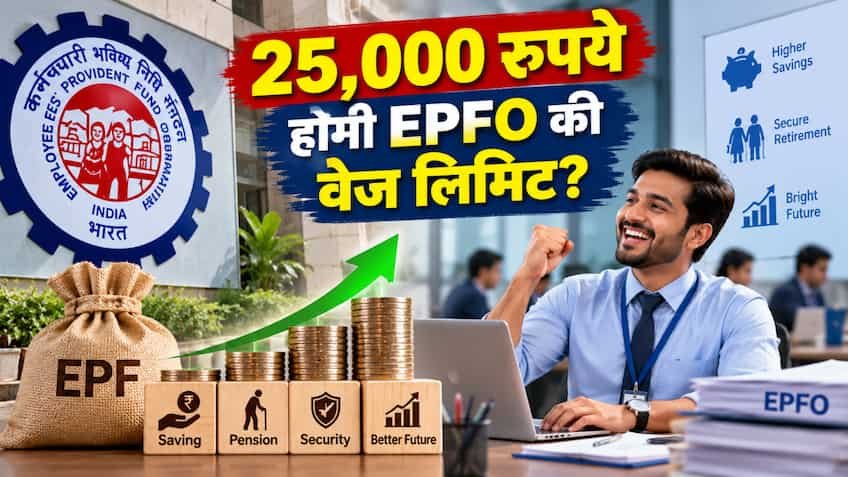
A big historic decision has come out for crores of salaried employees working in the organized sector of the country and those who are outside the scope of social security. The Union Cabinet meeting chaired by Prime Minister Narendra Modi has formally approved the proposal to directly increase the statutory wage ceiling from ₹ 15,000 to ₹ 25,000 per month for mandatory coverage under the Employees’ Provident Fund Organization (EPFO).
This policy change has happened after a long gap of 12 years. Earlier in September 2014, the Central Government had increased the PF wage ceiling from ₹6,500 to ₹15,000. It was considered imperative to revise this limit in view of the drastic changes in minimum wage rates, industrial pay scales and cost of living in the last decade. With the implementation of this new decision, more than 51 lakh additional employees of the country will be able to directly join the mandatory security system of EPF and pension.
Under the Employees Provident Fund rules, both the employee and the employer (company) contribute 12-12 percent of the basic salary and dearness allowance (DA). The entire mathematics of monthly deductions and credits will change as the salary limit increases from ₹15,000 to ₹25,000:
| Item(Particulars) | Old limit (₹15,000 base) | New limit (₹25,000 base) | net monthly change |
| Employee’s EPF Contribution (12%) | ₹1,800 | ₹3,000 | +₹1,200 |
| Employer’s EPS Contribution (8.33%) | ₹1,250 | ₹2,083 | +₹833 |
| Employer’s EPF Contribution (3.67%) | ₹550 | ₹917 | +₹367 |
| Total monthly deposit in PF account (EPF+EPS) | ₹3,600 | ₹6,000 | +₹2,400 |
Note: The government budgetary contribution of 1.16% to the Employees’ Pension Scheme (EPS) will also increase proportionately based on the new limit of ₹25,000.
The increase in the salary limit will have different effects on the pay slips of employees in the immediate and long term:
-
Reduction in take-home salary: Employees whose basic salary is more than ₹ 15,000 (say ₹ 20,000 or ₹ 25,000) and whose company used to deduct PF till now only at the minimum ceiling of ₹ 15,000, will now have an additional deduction of up to ₹ 1,200 every month in the name of PF from their salary. Due to this, the cash in hand (Take-Home Pay) will reduce slightly.
-
Long Term Wealth Creation: The salary may appear a little less in the immediate term, but this additional amount will be safely deposited in the employee’s PF account with an attractive interest rate of 8.25% fixed by the government. Due to compounding interest in the long run, the lump sum fund received at retirement will become many times larger.
The most revolutionary benefit of this decision will be on the lifetime monthly pension received under the Employees Pension Scheme 1995 (EPS-95).
Under the official formula for calculating EPS pension:
$$\text{Monthly Pension} = \frac{\text{Pensionable Salary} \times \text{Pensionable Service Years}}{70}$$
Till now, the maximum pensionable salary in this formula was capped at only ₹ 15,000, due to which an employee could not get a monthly pension of more than ₹ 7,500 even after completing a maximum service of 35 years.
Now as soon as the base salary becomes ₹25,000, the range of pensionable salary will increase by 66.67%. The direct result of this will be that the maximum monthly pension of employees who have completed 35 years of service will directly increase from ₹ 7,500. ₹12,500 per month It will be done. There will also be a guaranteed increase in the monthly pension of employees with 15 to 30 years of service by ₹2,000 to ₹4,500 per month depending on their service period.
Till now the rule was that if a new employee starts a job in a company where his basic salary is more than ₹15,000 to ₹1, then it was not legally mandatory for him to become a member of EPFO. Many companies kept these employees out of PF coverage to save costs.
Now every new employee drawing basic salary up to ₹25,000 will be mandatorily brought under the ambit of EPFO. From this:
-
Employees will get legal rights to retirement savings and pension.
-
The free life insurance cover available under the Employees Deposit Linked Insurance (EDLI) scheme will also increase due to increase in the wage limit.
-
Workers coming into the formal workforce from the unorganized sector will get the direct benefit of a portable and secure social security mechanism.