 look news india

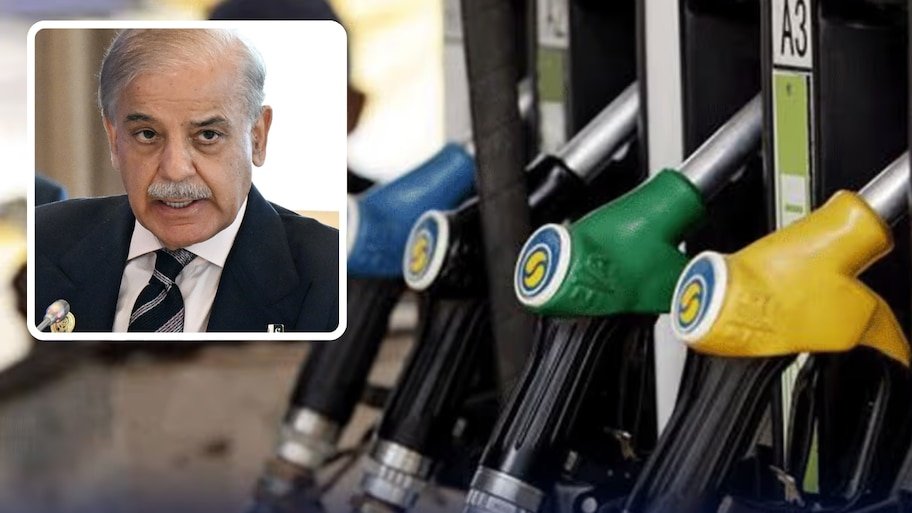
Petrol is now going to be sold at two different prices in neighboring Pakistan, which is struggling with economic poverty, record-breaking inflation and strict discipline from the International Monetary Fund (IMF). Retail prices of petrol in Pakistan have crossed the historical level of Rs 370 per litre, which has broken the back of the middle class and daily wage labourers. To curb the growing public anger and social dissatisfaction, Prime Minister Shehbaz Sharif has formally announced a new targeted subsidy scheme i.e. ‘Prime Minister Fuel Relief Scheme’. Under this historic decision, a huge discount of Rs 100 per liter will be given directly to the poor section of the country, working class, delivery boys, students and small vehicle drivers of the country. In Islamabad, Federal Minister for Information Ataullah Tarar, Minister of State for IT and Telecommunications Shaza Fatima Khawaja and Minister of State for Finance and Petroleum Ali Pervez Malik held a joint press conference to make public the technical and financial aspects of this much-awaited scheme. The government has bluntly said that for the first time in the country, different prices of petrol are being fixed for the rich and the poor through digital technology.
The benefit of this concessional fuel policy of Shahbaz Sharif government will not be given to everyone indiscriminately, but strict grading and monthly limit (quota) has been set for it. The government has completely kept large SUVs, luxury sedans and commercial fleet owners out of this subsidy. According to the draft of the scheme, motorcyclists, three-wheeler auto rickshaw and Qingqi drivers will be given a direct rebate of Rs 100 per liter on a maximum of 20 liters of petrol every month. This means that a typical bike rider will get a maximum direct financial saving of Rs 2,000 per month. On the other hand, a quota of 30 liters per month has been set to provide relief to owners of small cars with engine capacity up to 800 cc, such as Suzuki Mehran, Alto or Bolan, used by lower-middle class families. 800cc car drivers will get a maximum savings of up to Rs 3,000 every month. As soon as the fixed monthly limit is reached, the concerned driver will have to buy fuel at the normal market price only.
The biggest challenge of this scheme was how to identify the real needy without preventing middlemen, black marketing and fraud. Most of the benefits of Universal Subsidy given in previous governments were availed by the rich class. This time the Shahbaz Sharif government has used ‘Fingerprint of Digital Data’. According to Minister of State for IT Shaza Fatima, the entire identification process has been linked in real-time to the citizen’s national identity card (CNIC), SIM verification data of Pakistan Telecommunication Authority (PTA) and vehicle database of the provincial Excise and Taxation Department. The most basic condition laid down is that the mobile SIM must also be compulsorily issued in the name of the citizen in whose name the CNIC is registered. If a person applies from a SIM registered in someone else’s name, the telecom database will immediately reject his request. Along with this, it has also been made mandatory that the concerned two-wheeler or small car should be registered in the name of the applicant in the records of the Excise Department. A person can avail this subsidy on only one vehicle.
To save citizens from visiting government offices or standing in long queues, the entire process has been made SMS-based so that even feature phone users without internet can take advantage of it. First of all, the citizen has to send a message in a prescribed format to 9771 short-code from his registered mobile number. In the message box, you have to write ‘REG’ and space, then enter your 13 digit CNIC number without any dash, then space and enter the vehicle number, provincial code (eg PB for Punjab, SD for Sindh, ICT for Islamabad) and date of vehicle registration. As soon as this information is sent, the system will match it with all the government databases and send a message confirming the registration within a few seconds. Whenever the beneficiary has to go to the petrol pump, he will send ‘TOK’ to 9771 from his phone. In return he will receive a confidential digital token code. As soon as this token is shown to the employee posted at the petrol pump, the system will verify how much quota is left for that month. Bike riders will get a token of 5 liters at a time, which will give them a direct discount of Rs 500, while a 10 liter token will be valid for car drivers.
The government has made a strategy to implement this complex and sensitive system in a phased manner instead of imposing it on the entire country at once. Federal Petroleum Minister Ali Pervez Malik clarified that in the first phase it is being launched as a pilot project at about 150 major petrol pumps in the Islamabad Capital Territory. After testing the system’s server load in Islamabad, feedback from point of sale (POS) machines and pump staff, it will be fully implemented in Punjab, Sindh, Khyber Pakhtunkhwa, Balochistan as well as PoK (so-called Azad Kashmir) and Gilgit-Baltistan within the next 24 to 48 hours. All major oil marketing companies (OMCs), especially Pakistan State Oil (PSO), Shell and Total Parco, have been ordered to sync their software with the government central server. To ensure that there is no delay in payment to petrol pump dealers, the State Bank of Pakistan (SBP) and the Finance Ministry have set up an escrow fund from where the concessional payment of Rs 100 per liter will be transferred to the dealers’ accounts on the same day.
This step of Shehbaz Sharif is also surprising the economic experts, because the International Monetary Fund (IMF) has always been strongly opposed to any kind of unfunded subsidy in the energy sector. Pakistan is currently bound by the tough conditions of the IMF’s $7 billion bailout package. In such a situation, the question was arising that from where will the government bear the financial burden of this discount of Rs 100? Finance Ministry sources say that the government will not increase its budget deficit for this, but it will be balanced by ‘cross-subsidy’ and restructuring of petroleum levy. That is, additional cess and levy will be imposed on big and luxury vehicles, the revenue from which will be used to subsidize small vehicle drivers. Pakistan imports more than 90 percent of its crude oil requirement. Due to the ongoing geopolitical tension in West Asia and the Red Sea crisis, crude oil prices are rising in the international market, due to which Pakistan’s foreign exchange reserves are under constant pressure. The government’s argument is that reducing taxes would have completely emptied the government treasury, hence the only practical way left to provide relief to the common man was by giving a targeted direct subsidy of Rs 100.
As soon as the scheme was announced, government departments have also become active regarding digital security. The IT Ministry has warned the public that cyber criminals and fake gangs become active under the guise of such schemes. Clear instructions have been given to the citizens that at the government level, no OTP, bank account PIN or token number will be asked from any user through phone call, WhatsApp message or clicking on an unknown link. Registration is possible only through simple text message to number 9771. An appeal has been made not to download any unauthorized app and to beware of fake social media posts. The government has also clarified that if any dealer or consumer is found re-selling (black marketing) of petrol, his CNIC will be blocked forever and legal action will be taken by canceling the vehicle registration.