 look news india

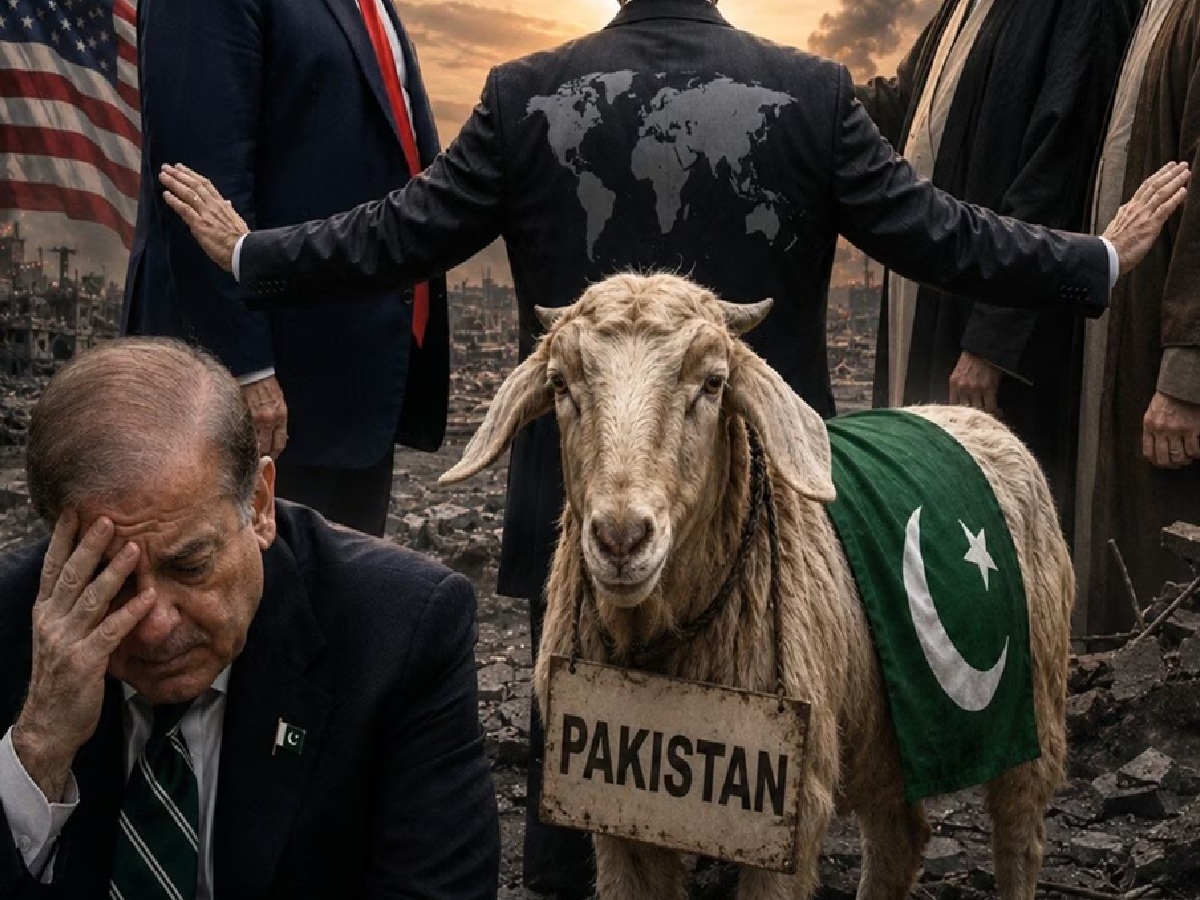
After the war broke out in West Asia between America and Iran, Pakistan’s image as ‘Chief Mediator’ has been completely destroyed. Despite weeks of heavy diplomatic lobbying and posturing, the fragile ceasefire has been broken, deeply shocking to Pakistan. Amidst Tehran’s attacks on US military bases in Bahrain and Kuwait and Washington’s fearful retaliation, the apparatus of Prime Minister Shehbaz Sharif and Army Chief Asim Munir seems helpless. Islamabad now stands at such a juncture in diplomacy where instead of becoming a mediator, it has reached the position of being surrounded by both sides and becoming a ‘fall guy’ i.e. a scapegoat.
Islamabad MoU proved to be a paper tiger: Both superpowers rejected the agreements
The so-called ‘Islamabad MoU’ prepared by Pakistan to reduce tension is now proving to be just a paper tiger. Pakistan certainly condemned the attacks on Saudi Arabia by Iran-backed Houthi rebels, but it did not tolerate the aggressive stance of Washington and Tehran. US President Donald Trump has made it clear that he is no longer in the mood for any kind of negotiation or agreement with Iran. After this tough stance, all efforts of Pakistan to organize peace talks have become completely ineffective.
Experts warn: Pakistan will be blamed if peace talks fail
US-based international affairs expert Michael Kugelman has warned that if US-Iran peace talks fail completely, the entire blame will be placed on Pakistan. According to Kugelman, Pakistan may be accused of inexperience and of promoting failed negotiations without any solid basis. Within just a month of the ceasefire breaking, Islamabad’s global position has become extremely weak, due to which it may have to suffer serious diplomatic losses at the regional and global levels.
Islamabad stuck in strategic blunder: Iran’s tough stance on Hormuz Strait
Javad Heran-Nia, director of Tehran’s Center for Scientific Research, believes that the ‘Islamabad MoU’ was never meant to resolve core disputes. This was only a temporary means to temporarily open the Strait of Hormuz and avoid war. Iran considers its strategic control over Hormuz very important and it does not want to lose it at any cost. Unless the strategic balance of power between Washington and Tehran changes, the role of a mediating country like Pakistan will remain limited.
Shahbaz and Asim Munir run out of options: dependence on both America and Iran becomes a compulsion
According to Dania Thafar, Executive Director of the Gulf International Forum, Pakistan has run out of diplomatic maneuvering space after the recent missile attacks and aggressive actions. Pakistan is highly dependent on both the US and the Gulf countries for its economic and political needs. But at this time, since both Iran and America have reached the Escalation Phase, Pakistan is proving to be completely unsuccessful and helpless in reducing the tension or bringing both of them to the negotiation table.