 look news india

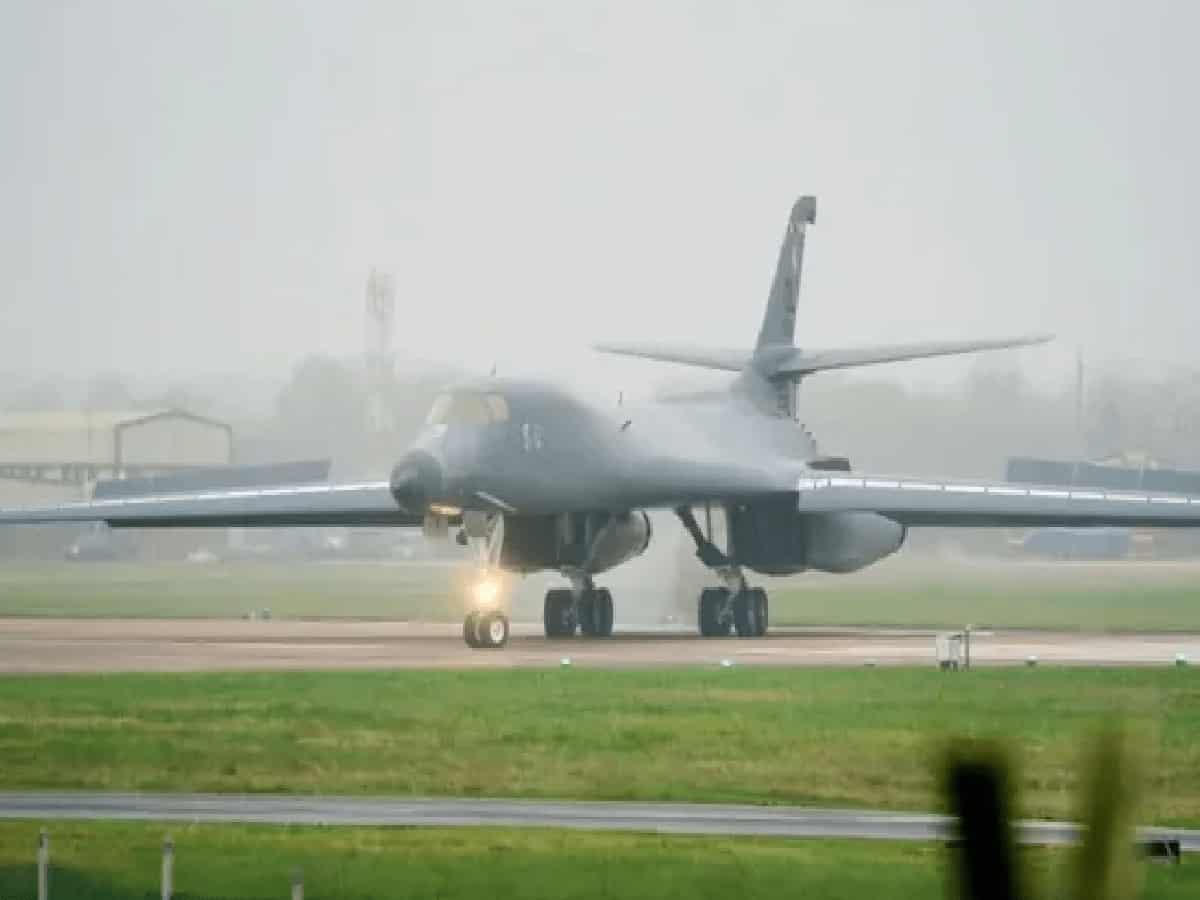
The global security apparatus and international intelligence agencies perked up when a highly sensational indictment was made public in a federal court in the United States. A dreaded prisoner lodged behind the bars of the high-security Brooklyn prison in New York had defied all the restrictions of the prison system and woven a deadly plot to target a major military airbase in Britain. The primary target of this plot was the British airbase where United States Air Force strategic bombers are deployed. The detailed investigation report by the US Department of Justice and the Federal Bureau of Investigation (FBI) clearly underlined the fact that this network was directly receiving instructions and financial support from Iran-backed proxy terrorist groups.
The seriousness of the matter can be gauged from the fact that this conspiracy was not limited to papers or planning only, but the preparations to implement it at the ground level had reached its final stage. This international conspiracy was exposed when security agencies tracked three suspicious vans moving towards the perimeter and sensitive access routes of British airbases in the last week of September. Immediately after this, British and American intelligence agencies came into action and busted this entire syndicate through technical surveillance and digital communication tracking. In this case, the US federal court has officially framed serious charges of terrorist conspiracy against the three main conspirators – Mohammad Bakr Saad Dawood al-Saadi, a dual citizen of Iran and Iraq, Iranian citizen Mohsin Mohajri and Iraqi citizen Mohammad Ali al-Hasani. Of these, Al-Saadi is already in US captivity, while the remaining two are still absconding internationally.
The most shocking aspect of this investigation is that the main leader Mohammed Bakar Saad Dawood al-Saadi was arrested last year in another security case and was kept under strict surveillance like solitary confinement in New York’s Brooklyn Jail. Despite this, there was no check on his nefarious intentions. Misusing the phone and video calling facility provided to the prisoners inside the jail for limited communication with their family members, he had made arrangements to send his secret messages to the handlers based in Iran. Instead of talking directly to his bosses, al-Saadi would call his mother and sister in Iraq and use them as intermediaries to send instructions to a third party so as to avoid the automated surveillance radars of security agencies.
According to audio tapes and digital transcripts presented in court by federal prosecutors, al-Saadi used highly sophisticated terrorist codewords disguised as normal words during the conversations. He used everyday words like ‘work’ and ‘job’ to describe a major destructive attack or a weapons consignment. In a phone recording he is heard confirming directly with his sister whether their old ‘work’ has been canceled or merely postponed for some time. Not only this, while sitting inside the jail itself, he gave concrete instructions to another member of the network, Mohammad Ali Al-Hasani, to transfer huge amounts of cash and logistics funds, so that the fuel and equipment expenses of the teams and vehicles conducting recce near the British airbase could be met.
The joint report of the US anti-terrorism squad and intelligence agencies has also revealed that this module was not limited to targeting British airbases only. According to investigators, this Iran-backed network has direct links to more than 20 serious terrorist plots and attacks operating across Europe and the United States. The priorities of this module included damaging the vital military infrastructure of Western countries as well as carrying out deadly attacks on the religious and social institutions of the Jewish community.
The report revealed a very horrifying incident and said that in the month of April this year, operatives of this gang had carried out a planned attack on the premises of a major Jewish charitable organization (charity) located in London. During this attack, the attackers present in the field live streamed the entire incident from their cameras, which the conspirators were watching live on their laptops and mobile screens and sending congratulatory messages to each other. The very next day, the same network targeted a synagogue in London for arson and vandalism. Commenting on this entire incident, US Homeland Security and Justice officials have made it clear that the threat of proxy terrorist networks sponsored from foreign soil against Western democracies and their global allies is not a theoretical concept, but an extremely dangerous and active reality.
After this sensational revelation and security lapse, there has been a stir in the defense ministries of Britain and America. The Royal Air Force (RAF) Fairford Air Base, located in Gloucestershire, Britain, which is considered the largest and most important forward base of the US Strategic Air Command in Western Europe, has implemented the highest level of security protocols. American B-52 and other strategic bombers deployed at RAF Fairford have been recalled to the US with immediate effect as a precautionary measure following the activity of suspicious vans around British airbases and revelations of a prison-run terror network.
Military analysts believe that the way a suicide attack using drones or explosive-laden vehicles on a foreign airbase was planned using communications channels within the prison system is a serious alarm bell for modern security management. After this case, Britain’s counter-terrorism police and security service MI5 has tripled the perimeter security around all sensitive military bases, ammunition depots and airbases across the country. At the same time, a review of the phone and video calling rules of foreign terrorist prisoners in New York’s correctional institutions has been started so that any such syndicate spreading global unrest from beyond the prison walls can be rooted out.