 look news india

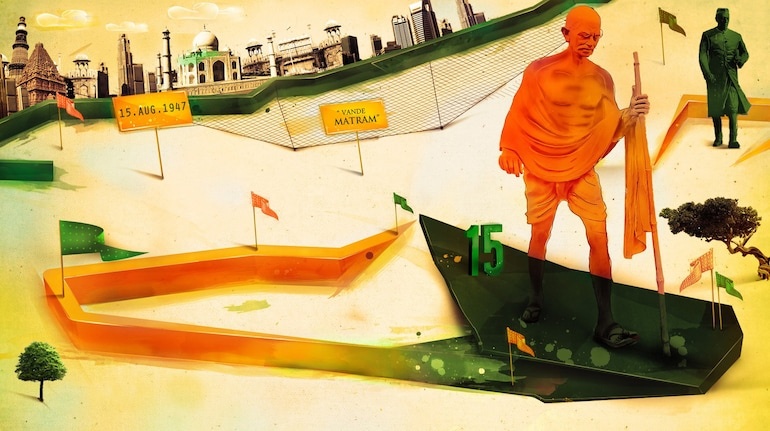
The time of India’s independence i.e. 1947 and today’s time appear completely different from each other from the economic point of view. At the time of independence, the Indian economy was in its nascent stage and at that time the value of money in the country was many times higher than it is today. In those times, even one paisa, two paisa and ten paisa used to have a strong position in the market. With pocket money of just one rupee, any person could easily buy ration for the whole week for his family or all the daily needs. In today’s times, when a ₹100 note gets spent within minutes as soon as it comes out of the pocket, everyone is shocked to hear the prices of the 1947 era. While India has set new records on the technological, infrastructure and economic front in the last 78 years, there has also been an unprecedented increase in the prices of everyday items due to inflation and inflation.
Gold: Starting from Rs 88, the journey reached the sky
In Indian society, gold has always been seen not just as a jewellery, but as a safe investment and a symbol of wealth. In the year 1947, when the country became independent, the price of 10 grams (one tola) of pure gold was only ₹ 88.62. In that period, even a common man could easily buy gold by saving a little money. However, with time, due to changes in the global economy, international market equations and decline in the value of rupee against the dollar, a record rise was seen in the price of gold. There was an unprecedented rise in gold prices after the 1970s and 1980s. Today in the year 2026, the price of 10 grams of 24 carat gold has crossed the figure of ₹ 75,000 to ₹ 80,000 per 10 grams. That means, in the last seven and a half decades, a historic increase of thousands of times has been recorded in the price of gold.
Petrol: Historic flight from 27 paise per liter to Rs 102
In today’s time, whenever there is a fluctuation in the prices of petrol and diesel, it directly impacts the budget of the common citizen and the freight fares. But can you imagine that in 1947, when the first petrol pump started in India, the price of 1 liter petrol in the country used to be only 25 to 27 paise. At that time, only a few people in the entire country had private cars or two-wheelers and petrol was considered a luxury item. International crude oil prices rose after the global oil crisis of the 1970s. In India, petrol was sold for around ₹4.20 per liter in 1990, which increased to ₹33.71 in 2004 and reached ₹72 in 2014. At present, in the year 2026, the price of 1 liter petrol in the major metros of the country remains between ₹ 100 to ₹ 102 per liter.
Changing mathematics of milk, sugar and daily ration
There has been a wide change in the prices of common man’s kitchen and daily food items in the last few years. At the time of independence in 1947, the price of 1 liter full cream milk was only 12 paise. At the same time, the price of 1 kg sugar was available at only 40 paise and 1 kg rice was available at just 12 paise. The price of a basic vegetable like potato at that time was 25 paise per kilogram. With the passage of time, food prices continued to rise due to increase in agricultural costs, transportation expenses and increasing demand. Today in the year 2026, the price of 1 liter full cream milk has reached around ₹ 66 to ₹ 68, while sugar is being sold at ₹ 40 to ₹ 44 per kg and good quality rice is being sold at ₹ 40 to ₹ 80 per kg. The ration which used to be available for just ₹ 5 in 1947 for the whole month, today requires thousands of rupees to be spent.
From bicycle to air travel: changing prices of transportation
The price revolution in means of transport tells the whole story of India’s development. In the era of 1947, the most favorite and accessible ride for the common man was the bicycle. At that time, a branded new bicycle was available for just ₹ 20 to ₹ 25, whereas today even an ordinary bicycle costs between ₹ 4,500 to ₹ 5,000. If we talk about long distance journeys, in 1947 the first class train fare from Delhi to Mumbai used to be only ₹ 123, which has today increased to several thousand rupees in premium trains. Similarly, in 1947, the flight fare from Delhi to Mumbai was around ₹ 140, which was considered a huge amount for a common citizen of that time, but today the average fare of the same flight remains between ₹ 5,000 to ₹ 8,000.
The truth about falling value of rupee and growing economy
At the time of independence i.e. in 1947, the value of the Indian rupee was considered almost equal to the US dollar (1 dollar = 1 rupee). However, the rupee devalued over time due to India’s economic policies, wars, trade deficit and global market changes. While on one hand the prices of things have increased hundreds of thousands of times, on the other hand the average income of common citizens and per capita income have also increased several times. While in 1947 the average monthly income of a family was between ₹10 to ₹50, today the average monthly income of the middle class has increased from ₹30,000 to ₹50,000. This historical data of inflation and rising prices not only shows the economic picture of changing India, but also shows how much lifestyle and purchasing power have changed over time.