 look news india

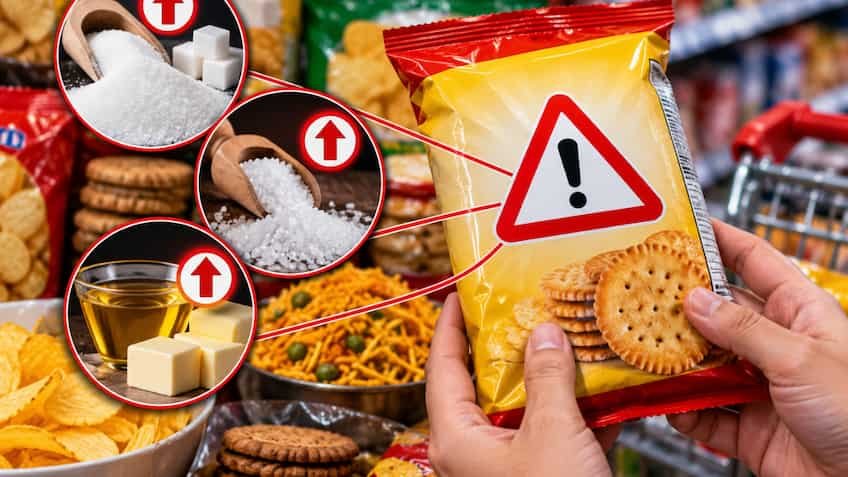
The colorful packets of chips, biscuits, bhujia, packaged juices and instant noodles adorning the supermarket shelves will no longer be able to attract customers on the basis of attractive advertisements and ‘healthy’ claims. Taking the biggest and toughest step in the history of food safety of the country, the Food Safety and Standards Authority of India (FSSAI) has formally proposed a Front-of-Pack Warning Label for packaged food before the Supreme Court. Strong rebuke from the Supreme Court and Justice J.B. Following the tough stand of the Pardiwala-led bench, the regulator has made it clear that it will be mandatory to put a big red stop-sign like red hexagonal warning on the front of any food product whose sugar, salt or saturated fat exceeds the prescribed limit. This change can prove to be a milestone in public health amid the increasing lifestyle diseases due to bad eating habits in all the cities of the country including Delhi, Mumbai, Lucknow, Patna, Jaipur.
According to the six-page compliance affidavit filed by the regulator in the apex court, the need to look for the nutritional chart in fine print on the back of the packet will now be eliminated. The new warning label will be a six-cornered red hexagon like the traffic ‘STOP’ sign. Within this red mark it will be declared clearly and in capital letters which ingredient in the product poses a risk to health. According to the food item, it will be mandatory to write ‘HIGH SUGAR’ (high sugar), ‘HIGH SALT’ (high salt), ‘HIGH FAT’ or ‘HIGHLY SWEETENED BEVERAGE’ (highly sweetened beverage) on it. Not only this, this warning will be written in a font at least one point larger than the font size of the nutrition table printed on the back of the packet, so that a person of any age can immediately recognize it without wearing glasses or without getting confused.
This historic initiative became possible when the Supreme Court, while hearing the Public Interest Litigation (PIL) filed by an NGO named ‘3S and Our Health Society’, had expressed its strong displeasure over the laxity of the regulatory body. Making a scathing comment, the apex court had asked whether the government and the regulators want that the citizens and growing children of the country should continue to become victims of unhealthy eating habits? The main reasons for the rapidly increasing childhood obesity, type-2 diabetes, high blood pressure and fatty liver at an early age among children in the country are excessive hidden added sugar, sodium and saturated fats like palm oil in processed and ultra-processed foods. A small packet of chips or a bottle of carbonated drink often contained more than the recommended daily limit of salt or sugar, which the average consumer was not aware of.
FSSAI has proposed in the Supreme Court that this new rule be implemented in two phases, so that food processing companies can get time to change the formulation of their products and prepare new packaging designs. In the first phase, it is proposed to put this red warning label only on those products which contain sugar, salt or saturated fat. At least two or more elements above the prescribed limit Will be found. In the second phase, it will also be applied to those products in which even one nutrient exceeds the prescribed limit. However, a nationwide survey by independent consumer survey platform ‘Local Circles’ found that around 80% of Indian consumers have demanded that this warning should be implemented from day oneeven if only a single harmful substance in the product exceeds the prescribed limit. Consumers argue that biscuits and sweetened beverages are primarily high in sugar, so mandating the two ingredients would leave many unhealthy items out of the warning range in the first phase.
Under this new rule, it is proposed to keep some basic traditional ingredients out of front-of-pack labeling. According to the affidavit, Single Ingredient Products Such as pure desi ghee, mustard or sesame edible oil, ground common salt, sugar, jaggery and natural honey will be exempted from this red hexagonal warning, as these are basic raw ingredients and do not contain any added flavors or artificial processing. This rule will fully apply to those processed and packaged food items which are prepared in factories and sold for immediate eating or drinking. This will have a direct impact on big FMCG brands, who will now be forced to reduce the sodium and sugar levels in their chips, ready-to-eat namkeen, chocolate, bakery products and packaged drinks, otherwise the big red mark printed on the packet can directly affect their sales.