look news india

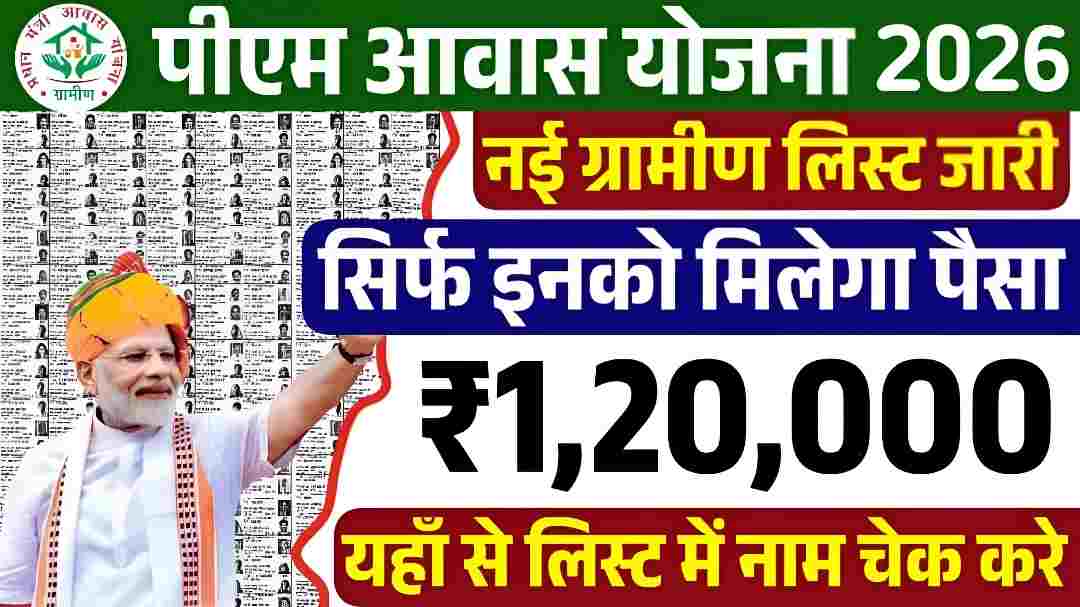
New Delhi. Further strengthening the resolve of ‘Housing for All’, the Central Government PM Awas Yojana New List 2026 Has been issued. This list of the year 2026 under the Pradhan Mantri Awas Yojana (PMAY) has brought a new ray of hope for lakhs of families who till now were forced to live in kutcha or dilapidated houses. In this time’s list, the government has laid special emphasis on transparent selection process and digital verification, so that the assistance amount reaches directly and only to the eligible beneficiaries.
PMAY-G and PMAY-U: Different benefits for rural and urban areas
The scheme is divided into two main categories, so that the dream of a pucca house can reach every corner of the country:
PMAY-G (Rural): In the plains to build houses for homeless families living in villages. ₹1.20 lakh and in hilly areas ₹1.30 lakh Direct financial assistance of Rs. Along with this, additional funds are also available for construction of toilets under Swachh Bharat Mission.
PMAY-U (Urban): On interest on home loans to people belonging to Economically Weaker Section (EWS) and Low Income Group (LIG) living in cities to buy or construct a house. Credit Linked Subsidy (CLSS) The benefit is given.
PM Awas Yojana List 2026: How to check your name online?
If you have applied recently or want to know the status of old application, you can see your name in the new list by following the steps given below:
step 1: Official website of Pradhan Mantri Awas Yojana [संदिग्ध लिंक हटा दिया गया] (rural) or pmaymis.gov.in Go to (Urban).
Step 2: Inside ‘Awaassoft’ tab on homepage ‘Report’ Click on Options.
Step 3: Now go to ‘Social Audit Reports’ section ‘Beneficiary details for verification’ Select.
Step 4: Here select your state, district, block and gram panchayat/ward.
Step 5: in the plan year ‘2025-2026’ Select and press ‘Submit’ button. The complete list will open in front of you.
Who are getting priority?
The government has given priority to certain categories while preparing the list for 2026:
Those families who have kutcha houses with zero, one or two rooms.
Female headed family (where the main member is female).
Scheduled Caste (SC), Scheduled Tribe (ST) and minority community families.
Disabled persons and landless agricultural labourers.
Payment of assistance amount: Directly into account through DBT
Government housing scheme money to end corruption DBT (Direct Benefit Transfer) Sends the amount in installments directly to the beneficiary’s bank account through .
First installment: To prepare the plinth level.
Second installment: When work is done up to window/lintel level.
Third installment: After the roof is cast and the work is completed.