 look news india

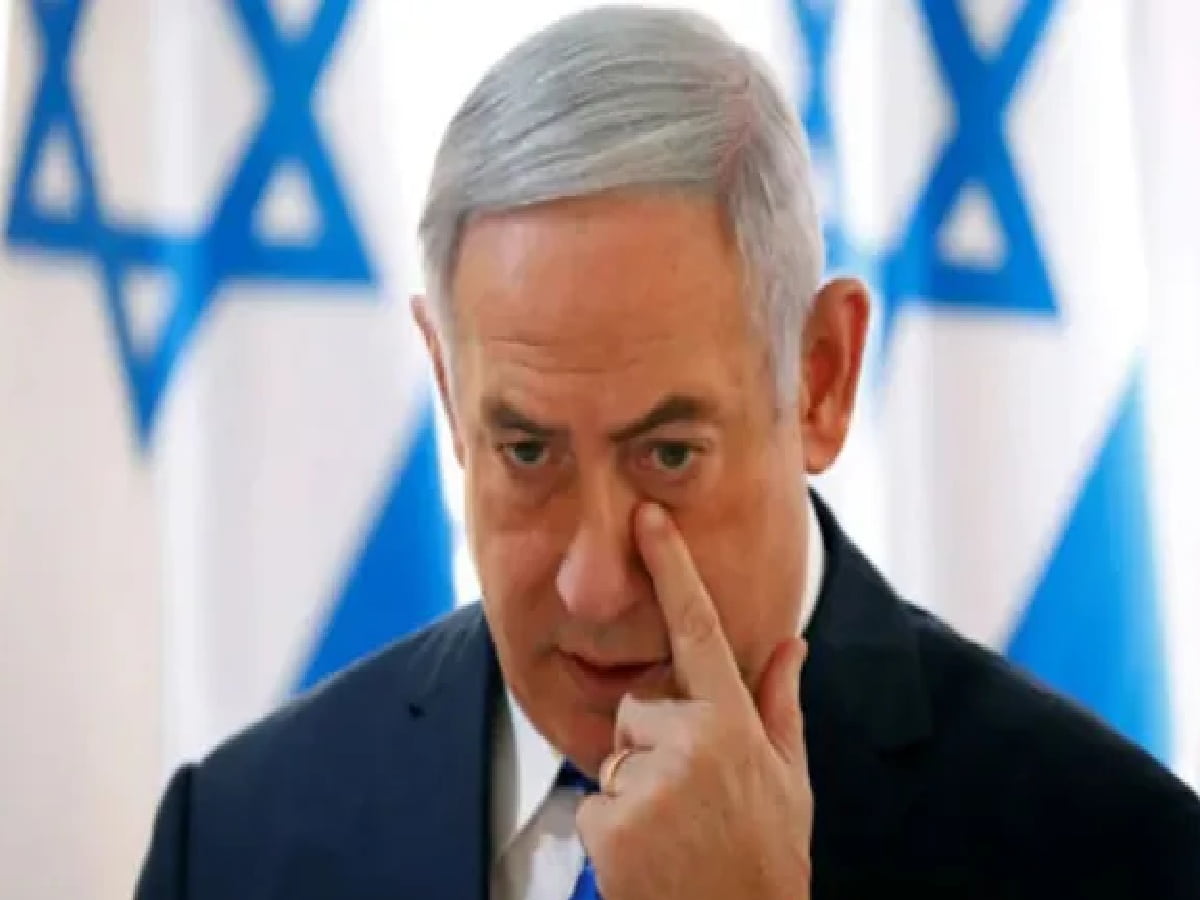
Central and strategically important country of Middle East politics Israel At this time, news that will bring a huge upheaval in international politics is coming out. The final and official results of the latest general parliamentary elections held in Israel have come out, which have completely confused the political picture of the country. Prime Minister Benjamin Netanyahu The right-wing and conservative faction led by Knesset has lagged behind the magic figure of government formation in the country’s parliament i.e. ‘Knesset’. According to the election results, Netanyahu’s faction is far from the required majority figure, while bringing a new turn in the country’s politics, Arab parties have proved themselves to be the biggest ‘kingmakers’ by registering a landslide victory on a total of 19 seats. Let us know in detail what are the equations behind this electoral dilemma of Israel and how the political future of Benjamin Netanyahu will now be decided.
Netanyahu’s right-wing group misses the magic number of majority, the situation of the opposition camp
According to the final figures released by Israel’s Central Election Committee, Prime Minister Benjamin Netanyahu’s right-wing political group got a total victory in this election. 53 seats Have been achieved. The minimum number required for any party or coalition to form a government in the Israeli Parliament. Clear majority of 61 seats This clearly falls short of Netanyahu’s figure.
On the other hand, if we look at the figures of the Election Committee, the opposition group has got a total 48 seats Have been found. Since none of the major political parties in the country have been able to single-handedly reach the magic figure of 61 seats, this hung parliament has made Israeli politics extremely exciting and uncertain. This time it is proving extremely difficult for Netanyahu to complete the figure of a government with his old far-right and ultra-conservative allies.
Arab parties become ‘kingmakers’ by winning 19 seats, will decide the key to power
The biggest and shocking aspect of this election has been that the people considered marginalized in Israeli politics Arab parties have won a total of 19 seats this time.. These Arab parties had a total of 10 seats in the outgoing Knesset (Parliament), and this time this figure of 19 seats has left behind their previous record (15 seats in 2020).
Since both the main factions (Netanyahu’s faction and the traditional opposition parties) are far from majority, the Arab parties that won these 19 seats have now become the real ‘kingmakers’ of Israeli politics. Now it will completely depend on the stance of these parties as to whose support or external cooperation they pave the way for government formation. If the figures for the Zionist opposition and these Arab parties are combined, the number reaches a total of 67, which also directly reflects the public’s strong opposition against Netanyahu and his hardline ministers (such as Itamar Ben Gvir and Bezalel Smotrich).
Demands of Arab parties and confusion of political equations
The role of these Arab parties and their priorities in Israeli politics are very clear. led by Yusuf Jabarin ‘Joint List’ The coalition (which is a united front of Hadash, Ta’al and Balad) has offered that they are ready to support an alternative government from outside the coalition. Furthermore, the Mansour Abbas-led ‘Ra’am Party have also indicated that if a viable and stable coalition is formed from the opposition camp, they may consider joining it (recall that the Ram Party also supported the Naftali Bennett-led government in 2021).
The main priority of these Arab parties is to oust Prime Minister Benjamin Netanyahu from power. In return, they are demanding concrete guarantees and assurances on issues such as curbing organized crime within the country, alleviating the severe housing shortage in Arab-dominated communities, and increasing government and infrastructure investment there.
Opposition’s promises and possible ways to form government
Israel’s opposition camp is currently facing a big political dilemma. Prominent opposition figures such as Eysenkot, former Prime Minister Naftali Bennett and Avigdor Liberman had previously publicly pledged that they would never rely on the support of Arab lawmakers to form a government. On the other hand, Prime Minister Benjamin Netanyahu has raised questions on the voting process and results after the elections, claiming that no Zionist party should ever join hands with Arab parties like ‘Ram’ or ‘Joint List’, because they consider them a threat to the country.
To break this political deadlock, analysts believe that now several ways remain:
-
First way: The opposition may go back on its old election promises and form a new full coalition government by entering into a direct partnership with the ‘Ram’ party.
-
Second way: The opposition parties should form a minority government including ‘Ram’ and persuade the ‘Joint List’ to support them from outside (just as Prime Minister Yitzhak Rabin ran the government in 1993).
-
Third way: If both these political equations fail, then Israel will once again have to new elections We may have to face this, or we may be forced to run a national unity government with Netanyahu.
The coming days are going to prove to be the most sensitive days in Israel’s political history, because it will decide who will take over the reins of the country and whether the wave of change brought by the voters will be fulfilled or not.