 look news india

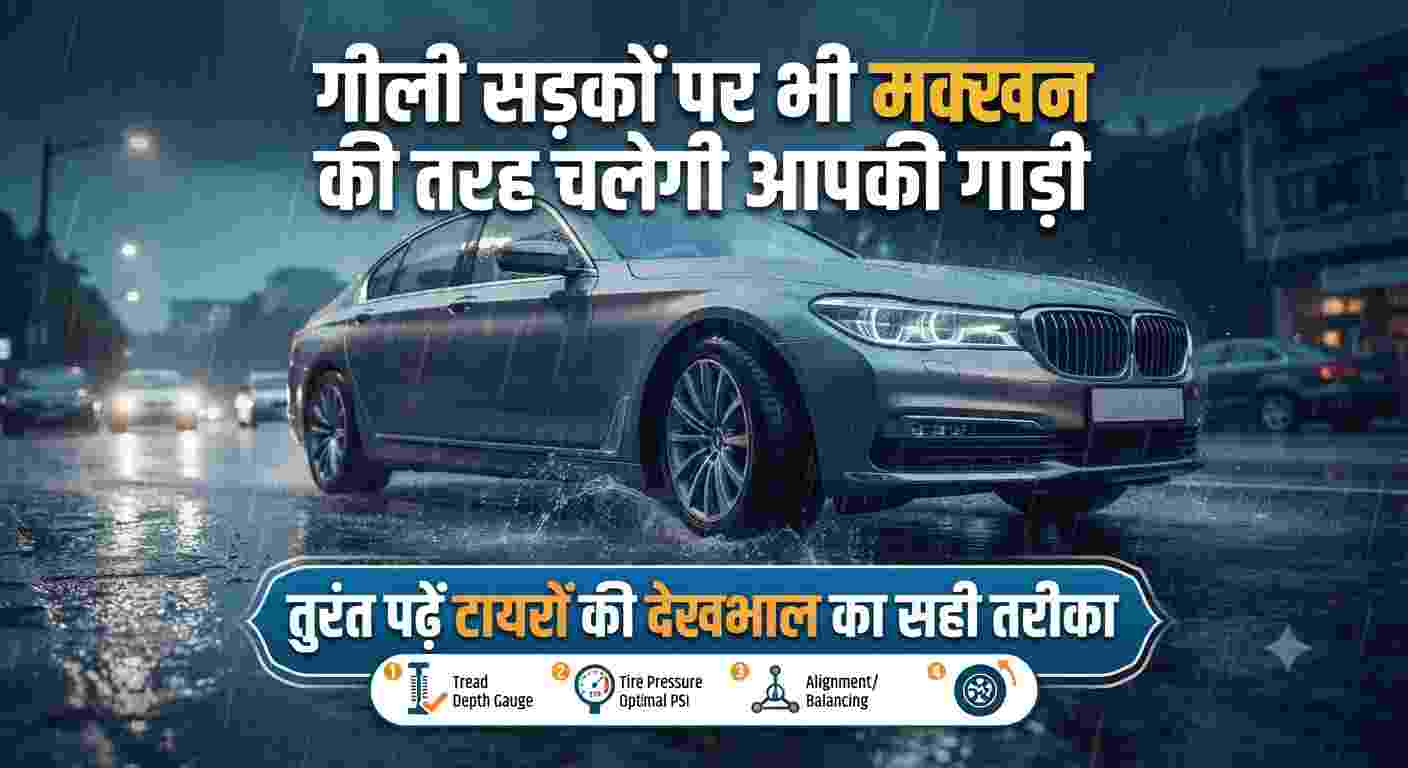
Headline: Monsoon Car Tire Care: The car will not slip even in the rain, will run like butter; Know this easy and correct way to take care of tyres.
Meta Description: Monsoon Car Tire Care and Safety Tips: Avoid the major danger of car slipping and hydroplaning on wet roads during the rainy season. Know 5 important maintenance tips related to tire tread depth, correct air pressure, wheel alignment and rotation.
Monsoon season certainly brings a pleasant journey, but it also proves to be the most challenging and risky time on the roads for drivers. Asphalt and concrete roads become extremely slippery during heavy rains and waterlogging. In such a situation, car tires play a more important role than the engine, brakes and power of the car, because these four wheels are the only means of contact between the road and the car. If tires are not properly maintained, the incidence of ‘hydroplaning’—that is, loss of control of the vehicle due to a layer of water forming between the tire and the road—and vehicle skidding during sudden braking increases during rainy days. According to automobile experts and mechanics, by keeping some basic things in mind, you can drive your car as smooth and safe as butter even on wet and muddy roads.
Regular check of tire tread depth and 2 rupee coin test
The deep lines and grooves on the surface of the tire are called ‘tread’. During the rainy season, the main function of these grooves is to quickly drain out the water present on the road so that the rubber of the tire can grip the road surface firmly.
-
Coin Test: If the tread of your tire is worn out, water cannot drain out and the vehicle immediately starts slipping. To check the condition of your tyre, insert a Rs 2 or Rs 1 coin directly into the tire groove. If the bottom of the coin or the number written on it does not disappear within 2-3 mm, then understand that the tread is worn out and it is time to replace the tire immediately.
-
It is considered mandatory to have a tread depth of at least 2 to 3 mm for safe monsoon driving.
Maintain correct air pressure: neither less, nor more
During rainy days, there is a constant change in temperature and humidity, which directly affects the internal pressure of the tire i.e. PSI. Many people underinflate their tires in the rain due to a misconception, whereas an underinflated tire is unable to wade through the water properly and starts wearing out faster from the edges. At the same time, an over-inflated tire reduces the grip on the road. Always inflate as per the standard PSI rating recommended by the car manufacturer (OEM) and get the pressure checked every 10 to 15 days only in case of cold tyre. If possible, use nitrogen gas instead of normal air, which maintains a stable pressure even with temperature fluctuations.
Importance of wheel alignment, balancing and tire rotation
Potholes and broken roads are common problems during rains. Wheel alignment and wheel balancing get deteriorated due to repeated impacts of the vehicle on potholes. Due to this, the vehicle starts pulling to one side and vibration is felt on the steering wheel.
-
Get wheel alignment and balancing checked every 5,000 to 7,000 kilometers.
-
Along with this, get ‘Tire Rotation’ done to ensure uniform wear of all four wheels. The front tires bear most of the load from the engine and steering, so replacing them at the front and rear tires are essential for safe driving.
Avoid sudden and hard braking, trust ABS system
It is necessary to make some changes in your driving style while driving on wet roads. Applying hard brakes suddenly on a waterlogged road can cause the tires to lock and the vehicle to spin uncontrollably.
-
Always maintain double the safe braking distance from the vehicle moving ahead as compared to normal days.
-
If your vehicle has ABS (Anti-lock Braking System), in an emergency, instead of repeatedly pumping the brakes, keep them fully pressed and steer safely.
-
Slow down the speed before turning on wet turns, avoid applying sharp brakes in the middle of the turn.
Always keep spare wheel (Stepney) and puncture kit ready.
Having a puncture on a deserted road during monsoon rains is no less than a major problem. Therefore, regularly check the air and condition of the main four tires as well as the spare tire kept in the boot space. Apart from this, keep a portable digital tire inflator and tubeless puncture repair kit in your vehicle so that in case of any emergency, you can easily reach a safe place without getting stranded.